Dairy farmers across Britain are waking up to crippling daily losses, with one industry leader revealing his operation is £1,800 worse off every single day just by opening its gates. This stark financial reality underscores a deepening crisis in the sector, where the cost of producing milk now far exceeds the price paid by processors.
The Stark Economics of Modern Dairy Farming
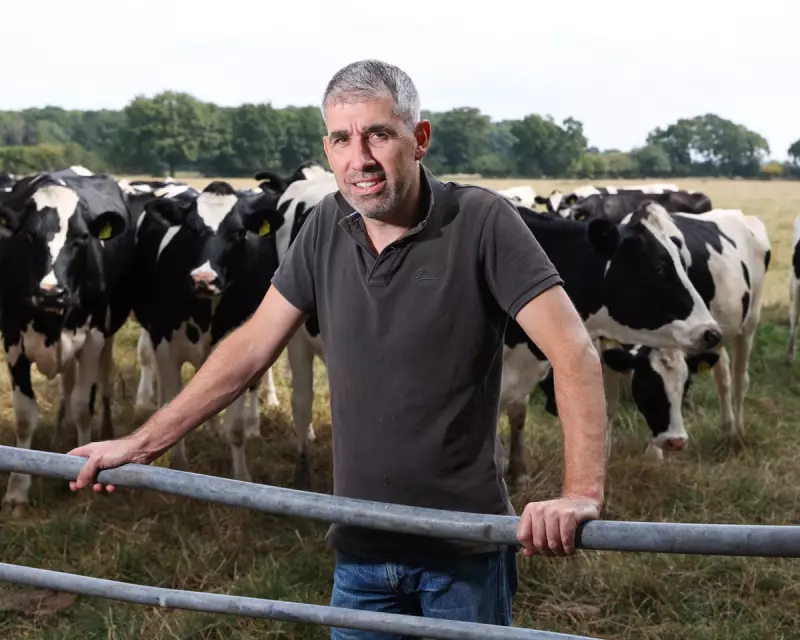
Paul Tompkins, a third-generation farmer running a 234-hectare farm in the Vale of York with 500 Holstein cows, typifies the national struggle. He can produce milk for approximately 40p per litre, but his processor pays him only 29p per litre. This significant gap means he operates at a substantial loss despite maximising efficiency. As chair of the National Farmers' Union (NFU) dairy board, Tompkins is not an isolated case; his production costs mirror the UK average.
"Every morning that I roll out of bed at 4.40am, I know I'm losing £1,800 that day, just by getting up," Tompkins states. He benchmarks against peers, confirming a widespread trend: "Every day we get up and try to do more with less." If prices stay at current levels, his farm faces an annual loss exceeding £660,000.

A Global Glut and a Perfect Storm
The root cause is a global oversupply of milk, where production is outstripping demand. "It is a scary time for producers," says farm consultant Mike Houghton of Andersons. He points to increased American output and sustained production in New Zealand, coupled with stagnant demand from key markets like China. "It all comes together and is a perfect storm. There is too much milk."
In the UK, production was 7% higher in the last quarter of 2025 compared to the five-year average, according to the Agriculture and Horticulture Development Board (AHDB). A dry spring in early 2025 led to a lack of grazing grass, prompting farmers to purchase then-cheap feed. This resulted in well-nourished cows producing record volumes, overwhelming processors and leading to milk being wasted.
Broken Systems and an Uncertain Future
The crisis is exacerbated by a lack of choice for many farmers, who are tied to local processors with little negotiating power on price. While some supermarkets like Tesco and Sainsbury's have cost-of-production contracts, and farmer cooperatives exist, these are not accessible to all. Robert Craig, chair of the Royal Association of British Dairy Farmers, summarises: "Unless you're on a cost-of-production-aligned retail contract now, you're losing money, or, at very best, breaking even."
This price shock lands on top of pre-existing burdens: soaring costs for fertiliser and fuel, chronic post-Brexit and pandemic labour shortages, and government plans for inheritance tax on agricultural assets over £2.5 million. The sector has already contracted dramatically, with nearly 20% of producers (over 1,700 farms) leaving since October 2019.
Mike Houghton predicts a further exodus, with up to 10% of remaining producers (around 700 farmers) potentially quitting. He questions the logic of investing in necessary infrastructure like slurry management when the milk price is so low. The government, facing a rural backlash, has pledged support through Environment Secretary Emma Reynolds, but concrete aid remains unclear.
Will Supermarket Prices Fall for Consumers?
While shoppers might hope falling wholesale prices translate to cheaper dairy, they face a significant lag. The AHDB indicates it takes an average of seven months for lower farmgate prices to filter through to retail. Grace Withers, AHDB's lead retail insight manager, notes butter prices may not drop until April, with the biggest falls from June, and cheddar prices potentially declining from July. Morrisons has recently cut some prices, but broader relief is slow.
Similarly, coffee shop patrons shouldn't expect cheaper cappuccinos soon. Jeffrey Young of Allegra Group explains that while milk is a cost, rent and rising minimum wage are more substantial burdens for cafes, making consumer price drops unlikely.
The future of Britain's dairy landscape hangs in the balance, caught between global market forces, relentless cost pressures, and a supply chain that leaves many producers powerless and facing ruinous daily losses.