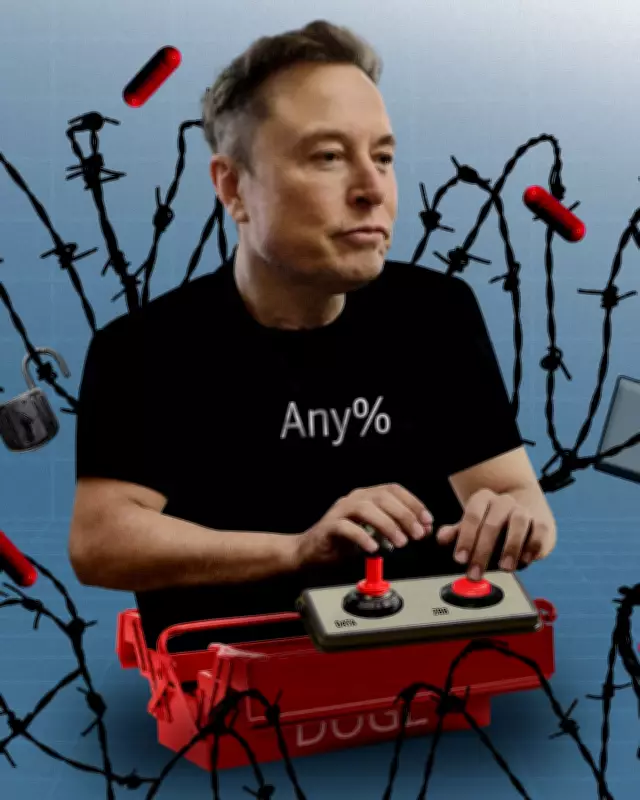
Elon Musk's Doge Initiative: A Gamified Government Overhaul
In 2025, Elon Musk assumed leadership of the newly created "Department of Government Efficiency," declaring traditional governments to be "big dumb machines" in need of complete technological transformation. Musk brought to Washington a unique blend of gaming culture, adolescent humor, and aggressive corporate restructuring methods, leading a team primarily composed of teenage coders and managers from his various companies.
The Gaming Mindset Applied to Governance
Musk's office featured an elaborate gaming rig with an oversized curved screen, while the Doge website implemented a real-time leaderboard tracking budget cuts. Beneath this playful exterior lay a serious conviction: the state was essentially a flawed database requiring optimization. Musk frequently referenced gaming terminology, describing his approach as seeking "God mode" - complete oversight of government systems.
The project's name itself derived from the popular Shiba Inu meme and cryptocurrency, with Musk embracing the title "Dogefather" and using cartoon dog imagery as official logos. This meme-based branding reflected Musk's belief that absurdity could be weaponized for serious political transformation.

Speedrunning Government Reform
Musk explicitly framed Doge as a "speedrun" of government reform, borrowing terminology from competitive gaming where players complete games as quickly as possible, often using exploits and glitches. He prioritized rapid implementation, setting unrealistic deadlines and pushing teams to work extended hours, sometimes sleeping on mattresses brought into government offices.
Within hours of President Trump's second inauguration, Doge programmers gained access to the US Office of Personnel Management systems, obtaining files on millions of federal workers. Days later, they sent mass emails offering employees the choice between voluntary departure with compensation or likely termination - mirroring Musk's earlier approach at Twitter.
Data Centralization and AI Integration
The initiative pursued unprecedented data integration across federal agencies, aiming to create a single repository containing taxpayer information, immigration records, and employment data. This centralization facilitated AI deployment, with Doge introducing automated systems to review regulations, cancel contracts, and identify diversity initiatives for elimination.
Peter Thiel's Palantir played a crucial role in this data integration effort, receiving substantial government contracts to break down information silos between agencies. The elimination of these traditional barriers, while increasing surveillance capabilities, removed important privacy safeguards that had previously checked government overreach.
Zero-Based Budgeting and Workforce Reduction
Musk implemented zero-based budgeting across government agencies, requiring each department to justify every expense anew rather than carrying forward previous budgets. While historically considered unworkable, Musk claimed new AI tools made this approach feasible through automated analysis of budget items.
The real effect was power concentration rather than cost reduction. Musk's team targeted what they identified as "bad data" - including undocumented immigrants, allegedly fraudulent benefit recipients, and employees deemed unnecessary. This approach blurred distinctions between financial optimization and political exclusion.
Immigration and Surveillance Expansion
Doge's most consequential data integration effort focused on immigration enforcement, creating a master database combining records from Homeland Security, IRS, Social Security, and voting systems. This system dovetailed with Immigration and Customs Enforcement's existing tracking capabilities, accelerating deportation efforts.
Musk promoted anti-immigrant narratives throughout this period, claiming without evidence that Democrats were importing undocumented immigrants to create permanent political majorities. His social media activity during 2024 included over 1,300 tweets about immigration and voter fraud, receiving approximately 10 billion views.

The Matrix Analogy and Political Philosophy
Musk frequently referenced "The Matrix" film franchise, describing his mission as "reprogramming the matrix" of government. This analogy reflected his belief that governance could be reduced to lines of executable code, with empathy representing a software vulnerability requiring elimination.
This philosophical approach extended to Musk's view of immigration and social programs, which he framed as "exploits" in Western civilization requiring technological fixes rather than humanitarian consideration.
Implementation Challenges and Legacy
Musk's 130-day tenure ended in May 2025 with mixed results. While Doge claimed $170 billion in savings, independent verification found only a fraction of these reductions materialized. Public backlash against perceived threats to social security and Medicare damaged Musk's popularity, while Tesla sales declined significantly.
Despite these setbacks, Doge established lasting changes in government surveillance capabilities and contractor integration. Musk's companies continued receiving defense contracts after his departure, including agreements for AI systems deployment on classified military networks.
Broader Implications for Governance
The Doge experiment revealed fundamental tensions between corporate efficiency models and democratic governance. While Musk approached government as a system requiring optimization, this perspective failed to account for the human dimensions of public service and social welfare.
The initiative demonstrated how gaming metaphors and startup methodologies could be weaponized for political restructuring, while simultaneously exposing the limitations of treating complex social systems as mere technical challenges requiring engineering solutions.
Ultimately, Doge represented both Musk's personal overreach and a broader structural shift toward increased contractor influence in government operations, particularly in surveillance technology and AI implementation. The blending of digital culture with political power that characterized the initiative continues to influence approaches to governance and technological integration in the public sector.