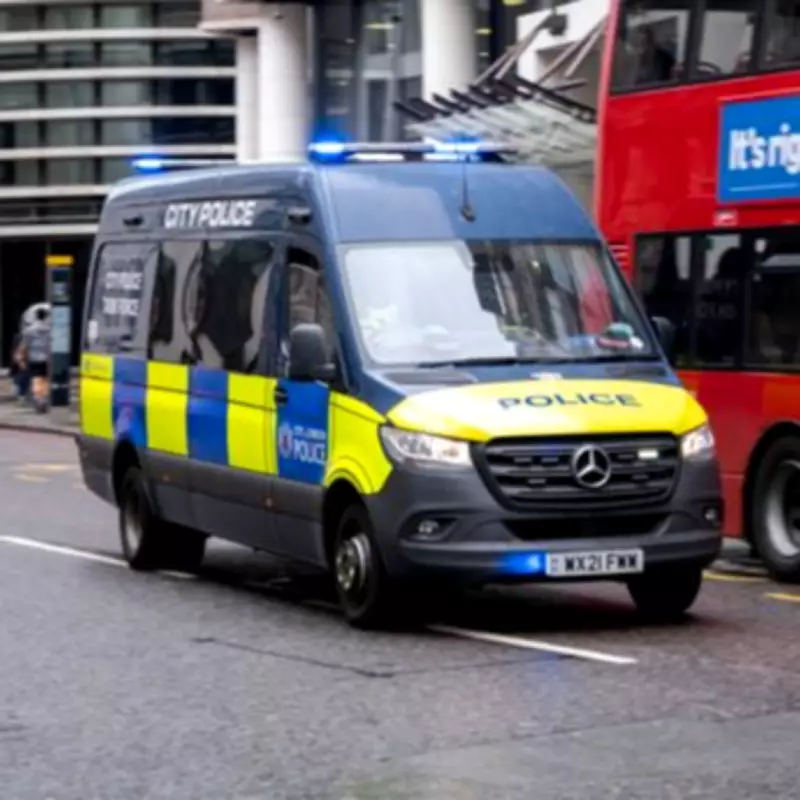
Former London Police Officer Granted Anonymity After Child Image Conviction
A former City of London Police officer, convicted for possessing indecent images of children, has been granted anonymity by the force due to concerns about their "health and wellbeing." The decision, made under Police Conduct Regulation 39, has sparked debate over transparency and public interest in police misconduct cases.
Case Details and Sentencing
Referred to as Former Officer A in official documents, the individual was arrested in February 2024 after indecent images of children were discovered on their mobile phone. The former officer pleaded guilty in court in September 2024 and was sentenced on May 8, 2025, to a Community Rehabilitation Order. Additionally, they were required to sign the Sex Offenders Register for a period of five years.
Although the officer resigned from the City of London Police in 2024, a misconduct hearing was convened on March 11, 2026, by Commissioner Peter O'Doherty. The panel concluded that the actions constituted gross misconduct, resulting in the officer being barred from serving in any police capacity in the future.

Anonymity Decision and Public Interest Concerns
The Commissioner's report notes that the anonymity decision was based on Regulation 39, which allows the force to prohibit publication of details related to proceedings. When questioned by the Local Democracy Reporting Service (LDRS), a City of London Police spokesperson explained that the decision followed a presentation by the former officer's legal representation regarding a development in their health and wellbeing.
The LDRS requested an internal review, emphasizing the public interest in naming the officer, but the spokesperson maintained that the process had concluded after careful consideration by the Chair. The spokesperson stated, "The former officer's legal representation applied for anonymity. The Chair carefully considered the application and granted it based on Police Conduct Regulations."
Commissioner's Statement on Misconduct
In his report, Commissioner O'Doherty wrote that the former officer had failed "to protect the safety of the most vulnerable of society, who are the very people that we are here to protect, thereby damaging the legitimacy of the City of London Police." He acknowledged some mitigation, such as the guilty plea, but stressed that the conviction "fundamentally" undermines public trust and confidence.
O'Doherty added, "Although the officer has since resigned from the police service, having considered all of the circumstances, I am satisfied that the conduct amounts to gross misconduct. The seriousness of the offence and the resulting criminal conviction would make continued service as a police officer untenable." He directed that the officer's details be placed on the barred list, effectively preventing re-employment in policing.
Police Response and Broader Implications
Chief Superintendent Sanjay Andersen, Head of Professionalism and Trust at City of London Police, condemned the crime, stating it "has no place in society" and expressing solidarity with abuse victims. She highlighted that the officer was suspended immediately upon arrest and that the criminal investigation was conducted by the Metropolitan Police Service.
Andersen noted, "Our police officers and staff work tirelessly to uphold the professional standards we expect. The officer pleaded guilty to crimes that fall far below those expectations." The barred list placement means the former officer cannot re-join any policing body, though they may apply for removal after five years.
This case raises important questions about balancing individual privacy rights with the need for accountability in law enforcement, particularly in offenses involving child protection. The use of anonymity in such instances continues to be a contentious issue within the criminal justice system.