Nigel Farage's Trump Connection Becomes a Political Liability for Reform UK
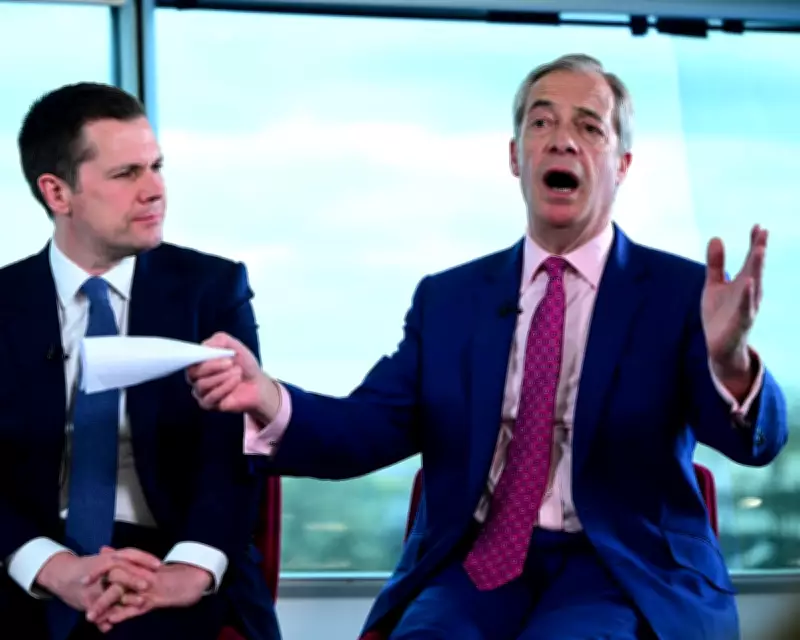
At a press conference held at Heathrow airport on Tuesday, Reform UK's Robert Jenrick and Nigel Farage unveiled a new pledge to cut the cost of living, but the event quickly shifted focus to a more pressing issue: Farage's association with former US President Donald Trump. This relationship, once a point of pride for the Reform leader, is now emerging as a significant barrier to voter support, according to recent polling data.
Polling Highlights Voter Concerns Over Trump Ties
New research from More in Common indicates that Donald Trump's favourability has plummeted even among Reform voters, who were previously the only UK party supporters to view him positively. The data shows that 23% of all voters polled last week listed "Farage's support for Trump" as the primary reason they would not vote for Reform UK. This concern is particularly pronounced among British women, with 25% citing it as a key deterrent.
Luke Tryl, executive director of More in Common, explained from focus group findings that the perception of potential chaos similar to Trump's policies, such as immigration raids, is "kryptonite" to would-be Reform voters. This is especially true for women and those in Reform's "second 15%," a demographic crucial for the party to gain traction and approach government formation. Voters struggle to understand why Farage maintains this association, making them hesitant to take a chance on his party.

Farage's Evolving Stance on Trump Amid Global Uncertainty
During the Heathrow event, Farage was questioned about whether his relationship with Trump is damaging his appeal to Reform's base. He responded candidly, stating, "I'm not going to lie about it, am I? I'm not going to pretend I don't know him. I do." Farage praised some of Trump's policies, such as border control and economic measures during his first term, but also acknowledged disagreements. He emphasized that Trump does not dictate Reform UK's policies, asserting, "I'm dictating policy to me."
However, Farage appeared less certain when discussing Trump's handling of international conflicts, such as the war in the Middle East. He admitted uncertainty about the true intentions behind US actions in Iran, reflecting a shift from his earlier, more assured statements. This ambiguity marks a departure from past years when Farage frequently boasted about his close ties to Trump, including claims of having the White House on speed dial.
Economic and Geopolitical Factors Compound Reform's Challenges
The ongoing war in the Middle East and its potential economic fallout add another layer of difficulty for Reform UK. While YouGov polling shows Reform voters are more positive towards US strikes than others, their overall expectations remain negative regarding geopolitical stability and household finances. With Reform voters as vulnerable as any to economic downturns, the daily uncertainties of global conflicts are becoming an additional problem for the party.
This situation contrasts sharply with the post-2016 era, when Trump suggested Farage would excel as Britain's ambassador to the US. The relationship has since evolved, with Farage facing mockery after a failed attempt to meet Trump at Mar-a-Lago during the war's early stages. As the political landscape shifts, the Trump-Farage dynamic continues to change, potentially impacting Reform UK's electoral prospects in the coming months and years.