Florida and Mississippi Governors Sign Proof-of-Citizenship Voting Bills
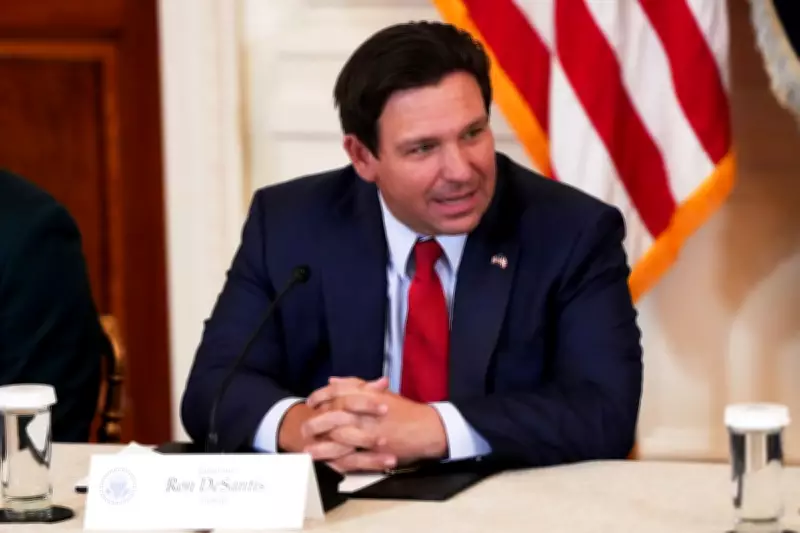
The governors of Florida and Mississippi signed legislation on Wednesday mandating documented proof of citizenship for voter registration. This move initiates a process to eventually remove voters who fail to provide such documentation from the rolls. With these actions, four states have now passed similar laws this year, following South Dakota and Utah, which enacted proof-of-citizenship bills in March.
National Context and Federal Stalemate
These state-level changes unfold as Donald Trump's signature restrictive voting bill, the Save America Act, remains stalled in the US Senate with minimal prospects for passage. The president is currently evaluating strategies to advance its provisions, which include documented proof-of-citizenship requirements for registration and strict photo ID mandates for voting. The most likely approach involves encouraging conservative states to adopt comparable voting restrictions independently.
Details of the Florida Legislation
The Florida law mandates the state department to identify registered voters potentially ineligible due to non-citizenship by cross-referencing state and federal records. Voters flagged as potentially ineligible will be contacted by registrars and required to submit documentation; failure to comply will result in removal from voter rolls. Additionally, the law updates acceptable voter ID types, adding US passport cards while eliminating retirement center IDs, public assistance IDs, neighborhood association IDs, and debit and credit cards. These changes are scheduled to take effect on January 1, 2027.

Mississippi's Shield Act and Political Rhetoric
In Mississippi, the Shield Act requires voter registration applications to be verified against the department of public safety's driver's license and identification data, as well as the United States Citizenship and Immigration Service's Systematic Alien Verification for Entitlements database to detect non-citizens. Governor Tate Reeves, a Republican, defended the law in a social media post, stating, "While states like California and New York flood their voter rolls with illegal aliens, Mississippi will do the opposite and defend Americans' right to determine the outcome of elections." He criticized Democrats for appeasing a radical base and outsourcing country management to unauthorized individuals.
Broader State Actions and Legal Challenges
Other states are also advancing voting restrictions. South Dakota's proof-of-citizenship law has been fast-tracked to take effect before the November midterms. Louisiana implemented a similar law in 2025, though it faces ongoing court challenges. New Hampshire eliminated an affirmation option for citizenship in voter registration, now requiring documentation, a law also under judicial review after a recent trial. Oklahoma has proposed a constitutional amendment to mandate proof of identity for all voting methods, which has cleared committee. In Kansas, bills requiring biannual checks for noncitizen voters using federal databases have passed both legislative chambers and are in conference committee.
Executive Orders and Federal Investigations
Beyond state legislation, voting rights activists anticipate executive orders from the president aimed at influencing state election administration. Draft terms are reportedly circulating among right-wing activists but have not been publicly released. Trump recently issued an executive order to create lists of eligible voters and restrict mailed ballots to those on the list, sparking immediate condemnation and legal threats due to constitutional concerns. Other potential orders mirroring the Save America Act would likely face swift federal court challenges, as the US Constitution grants election administration power to states and Congress, not the executive branch.
Parallel investigations by the FBI and US Director of National Intelligence Tulsi Gabbard into foreign election interference, based on public testimony and court documents, might inform future executive actions. However, Gabbard's recent annual threat assessment to Congress omitted references to foreign interference for the first time in a decade, though she emphasized ongoing vigilance against potential threats during Senate questioning last week.