Flávio Bolsonaro's Presidential Campaign: A Surname Strategy Under Scrutiny
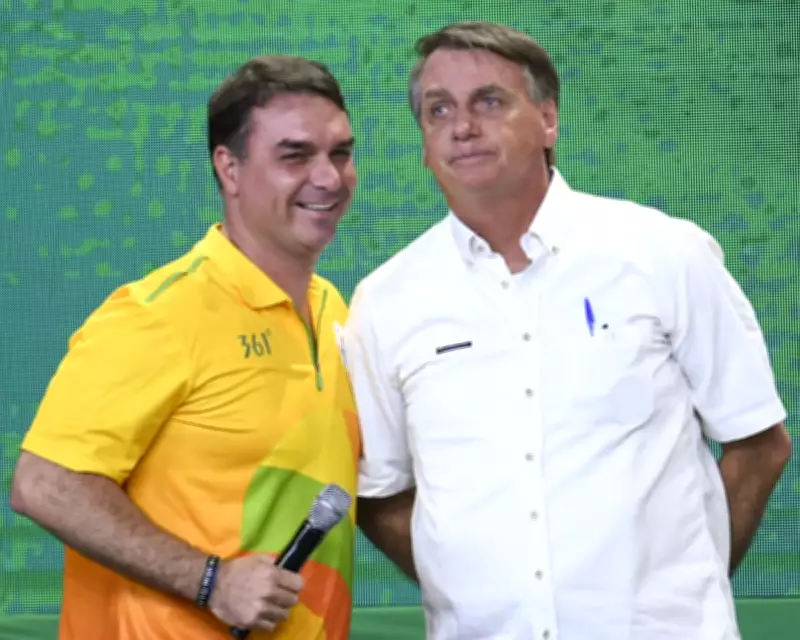
Flávio Bolsonaro, the eldest son of former Brazilian President Jair Bolsonaro, has announced his candidacy for the presidency, but his campaign appears to be strategically minimizing his famous surname. At a conservative conference in Grapevine, Texas, the 44-year-old senator was introduced and cheered by his first name alone, with supporters chanting "Flávio! Flávio! Flávio!" as he pledged to combat what he called "radical environmental and woke" agendas in Brazil.
The Bolsonaro Legacy: Asset or Liability?
Jair Bolsonaro, currently under house arrest after receiving a 27-year sentence for attempting to overturn the 2022 election results, remains a polarizing figure. He lost that election to left-wing rival Luiz Inácio Lula da Silva by a narrow margin of only 2 million votes, with polls indicating the 2026 contest could be equally tight. While the Bolsonaro name still commands significant conservative support—garnering 58 million votes in 2022—it also carries heavy baggage for many Brazilians.
Political analysts observe a deliberate effort to rebrand Flávio Bolsonaro as a moderate "Flávio," rather than emphasizing his connection to a family associated with anti-democratic actions and a pandemic response that resulted in over 800,000 COVID-19 deaths. Fabiana Moraes, a columnist for Intercept Brasil, notes that this strategy aims to attract voters who are neither progressives nor diehard Bolsonaro loyalists, sidestepping the widespread negative perceptions of his father.

Media and Marketing Tactics
The campaign's approach is reflected in media coverage and marketing materials. Several Brazilian newspapers have adopted the practice of referring to the candidate simply as "Flávio" in headlines, a move that left-wing critics decry as an attempt to obscure his hard-right origins. A campaign jingle played at rallies and on social media labels him "Zero Um" (Number One) and Flávio, omitting his surname entirely.
Moraes challenges the justification that "Flávio" is used because it is shorter than "Bolsonaro," pointing out that "Jair" is even shorter yet was not the preferred headline name during his presidency. She suggests that parts of Brazil's financial sector and mainstream media have already embraced this moderated image, with Flávio Bolsonaro even using gender-neutral language—a stark contrast to his father's notorious homophobia.
Opposition Response and Historical Baggage
Supporters of President Lula have quickly countered this rebranding effort. Congresswoman Luizianne Lins emphasized on social media, "It's Flávio Bolsonaro, not just Flávio. He must carry the surname of the dirtiest family in Brazil." Edinho Silva, president of Lula's Workers' Party, urged voters to recall the Bolsonaro family's governance, particularly during the pandemic, warning against forgetting the suffering it caused.
Beyond his father's legacy, Flávio Bolsonaro faces his own controversies. He has been linked to corruption allegations and associations with figures like Adriano Magalhães da Nóbrega, a police officer turned hitman, and Ronald Pereira, a paramilitary involved in the assassination of politician Marielle Franco. Bolsonaro has denied these connections, but they are expected to feature prominently in the upcoming election campaign.
Setbacks and Genetic Comparisons
Recent events have complicated Flávio Bolsonaro's image makeover. His speech at the Conservative Political Action Conference in Texas, where he questioned Brazil's voting system and called for international oversight, drew criticism for echoing his father's anti-democratic rhetoric. The conservative newspaper Estado de São Paulo editorialized, "Like father, like son ... Bolsonarista coup-mongering seems to be genetic," even as it repeatedly referred to him by his first name.
As the October election approaches, the strategy of surname-dropping will continue to be a focal point. Whether presenting himself as "Flávio" can sufficiently distance him from the Bolsonaro legacy—or if voters will insist on the full name and its associations—remains a critical question for Brazil's political future.