Justice Department Clarifies Four Men Named by Ro Khanna Have No Epstein Ties
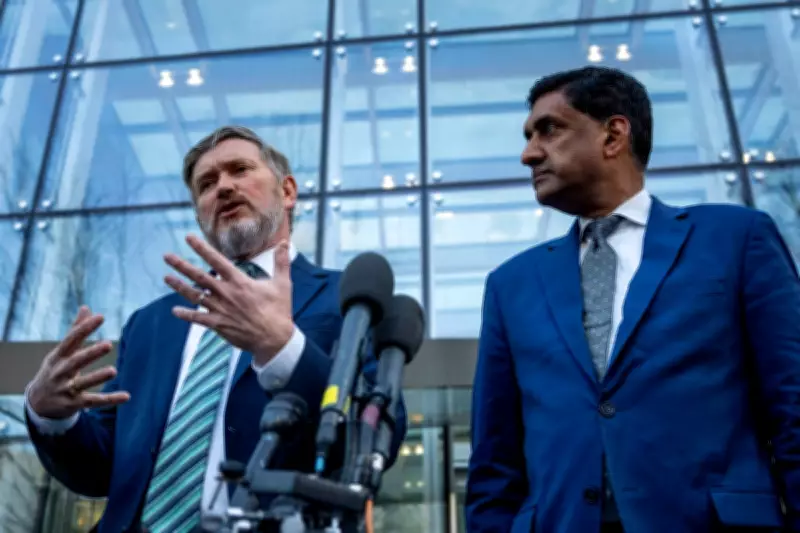
Representative Ro Khanna, a Democratic congressman from California, spoke to reporters outside the Department of Justice offices in Washington DC on February 9, 2026, amid a growing controversy over recently released files related to Jeffrey Epstein. Khanna had earlier read a list of six names on the House floor, claiming they were "wealthy, powerful men that the DoJ hid" in the Epstein documents. However, the Department of Justice has now clarified that four of those men have no apparent connection to Epstein whatsoever.
Photo Lineup Misidentified as Epstein Associates
According to the Department of Justice, the four individuals were part of a photo lineup assembled by the Southern District of New York for investigative purposes. A spokesperson from the office of Deputy Attorney General Todd Blanche stated, "Rep Ro Khanna and Rep Thomas Massie forced the unmasking of completely random people selected years ago for an FBI lineup – men and women. These individuals have NOTHING to do with Epstein or Maxwell." This revelation came after questions from the Guardian, highlighting a significant misunderstanding in the public release of the files.
Khanna, along with Republican Representative Thomas Massie of Kentucky, had been pushing for the unredaction of names in the Epstein files, arguing that some redactions were unlawful. Massie claimed credit on social media for forcing the justice department to remove redactions on a file listing 20 names, birthdays, and photos, including those of Epstein and Ghislaine Maxwell. Khanna then read some of these names on the House floor, inadvertently including individuals with no ties to the case.

Innocent Men Caught in the Crossfire
The Guardian contacted two of the men whose names were read out by Khanna. Both strongly denied any knowledge of Epstein. Salvatore Nuarte of Queens, New York, expressed frustration, saying, "I don't know if they know what they are doing over there at the justice department. But how can I clear my name?" He had called Khanna's office after learning his name was mentioned. Leonid Leonov, an IT manager in Queens, whose name was incorrectly listed in the files, also vigorously denied any connection, stating, "I don't even have a second or third degree connection to him. Never worked for him, nothing."
Both men acknowledged past arrests by the NYPD for unrelated crimes, which likely explains how their photos ended up in the law enforcement photo array. The other two men named, Zurab Mikeladze and Nicola Caputo, could not be reached for comment. A spokesperson for Massie clarified that the Caputo in the files was not an Italian politician with the same name, adding to the confusion.
Khanna and Massie's Push for Transparency
In response to the Department of Justice's explanation, Khanna posted on social media, "I wish DoJ had provided that explanation earlier instead of redacting then unredacting their names. They have failed to protect survivors, created confusion for innocent men, and have protected rich and powerful abusers. We must have full transparency and the truth." He also thanked the Guardian for reporting on the connection to the photo lineup.
Khanna's office shared an email sent to Nuarte, in which Communications Director Sarah Drory wrote, "The Department of Justice has not been transparent in what the list was or why they redacted and unredacted your name. We will make sure to be absolutely factual and truthful once we have these facts and certainly not fuel any misimpression DoJ has created." This underscores the ongoing tension between lawmakers and the justice department over the handling of the Epstein files.
Broader Context of the Epstein Files Release
The file containing 20 names and photos appears on the justice department's website four separate times, with varying redactions. By analyzing unredacted information from these versions, the Guardian found that 11 people on the list represented a diverse cross-section with ties to New York City, many with misdemeanor arrests by the NYPD. Five women on the list resembled Ghislaine Maxwell, and five men had similar characteristics to Jeffrey Epstein, suggesting the lineup was used for identification purposes.

The justice department had earlier told CBS News that the four men Khanna mentioned were "only included in this one document out of all the files. Wexner is referenced nearly 200 times in the files, and Bin Sulayem appears over 4,700 times." This highlights the disproportionate focus on these individuals compared to actual Epstein associates.
In a related development, after Massie and Khanna pushed to reveal that Sultan Ahmed bin Sulayem was the recipient of an email from Epstein mentioning a "torture video," the Emirati billionaire resigned from logistics company DP World. A legal representative for Leslie Wexner, another billionaire named by Khanna, stated that Wexner was viewed as a source of information in 2019 and cooperated fully, never being contacted again.
Massie, who co-sponsored the Epstein Files Transparency Act with Khanna, has criticized the justice department's handling of the files, noting that victims' names have appeared unredacted at times, while some associates' names were redacted. This incident raises questions about the balance between transparency and privacy in high-profile cases.