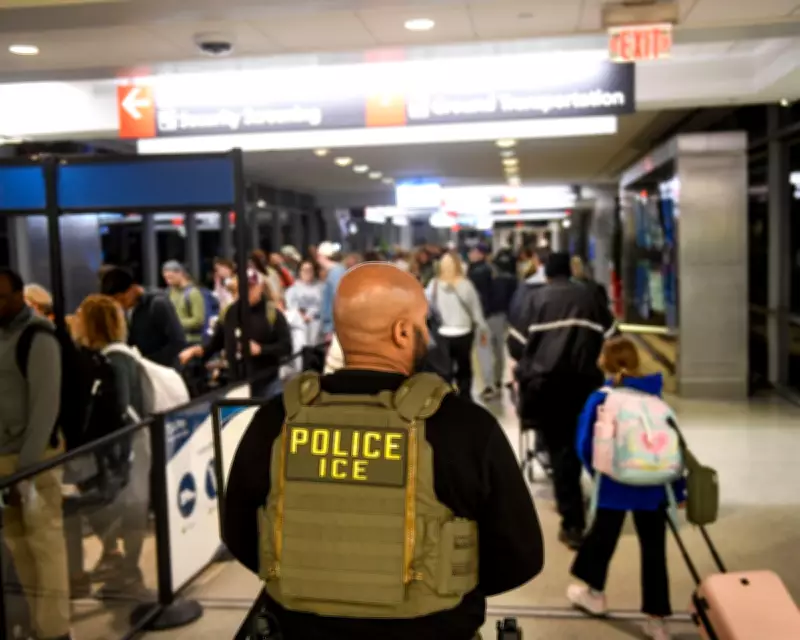
In a late-night vote that extended a weeks-long political impasse, US House Republicans rejected a bipartisan Senate agreement and passed their own stopgap funding bill for the Department of Homeland Security. This move prolongs a budget standoff that has severely disrupted air travel across the United States, forcing thousands of airport security personnel to continue working without compensation while passengers endure crushing delays at major airports.
House Vote Extends Funding Dispute
The House passed the Republican-sponsored measure by 213 to 203 votes on Friday evening, proposing full funding for DHS operations over an eight-week period. This legislation directly contradicted a Senate-passed deal that had excluded specific funding for Immigration and Customs Enforcement and border patrol agencies. The Republican bill instead includes complete funding for TSA staff alongside immigration enforcement personnel.
Political Standoff Creates Travel Chaos
The funding stalemate has created unprecedented disruptions at American airports since mid-February, when a partial government shutdown first left TSA employees without paychecks. Security lines have stretched to extraordinary lengths at major hubs like Houston's international airport, where staff have been forced to distribute water bottles to waiting passengers. According to White House reports, nearly 500 transportation security officers have resigned during the crisis, while unscheduled absences have surged dramatically.

Executive Action and Congressional Conflict
Despite the ongoing congressional deadlock, President Donald Trump signed an executive memorandum on Friday directing the administration to resolve what the White House termed an "unprecedented emergency situation" and secure funds to pay TSA salaries. The Department of Homeland Security subsequently announced that officers should begin receiving paychecks as early as Monday, March 30.
House Speaker Mike Johnson strongly criticized the earlier Senate bill, calling it a "joke" for withholding money from agencies responsible for implementing Trump's immigration enforcement policies. Johnson confirmed he had consulted with the president, who "understands exactly what we're doing and why, and he supports it."
Democratic Opposition and Reform Demands
Senate Democratic leader Chuck Schumer issued a forceful statement declaring that any funding measure "that locks in the status quo is dead on arrival in the Senate." Democrats have insisted they will fund critical homeland security functions but refuse to provide what Schumer described as "a blank check to Trump's lawless and deadly immigration militia without reforms."
The funding dispute centers significantly on Democratic demands for reforms to ICE, an agency facing nationwide criticism for its aggressive enforcement tactics. The Senate's earlier bill would have funded DHS operations except for ICE and border patrol through 2026, providing resources for TSA, the Coast Guard, and FEMA without including Democratic-proposed immigration reforms.
Impending Congressional Breaks Compound Crisis
The House vote occurred just before both chambers of Congress prepared to embark on two-week breaks, potentially extending the pain for air travelers and government workers. Everett Kelley, president of the American Federation of Government Employees, expressed profound frustration: "I have never been more disgusted by the failure of elected leadership in my life. Though TSA officers will be paid, FEMA workers, coast guard, CISA and other DHS employees are waiting on their back pay."
Kelley emphasized that affected workers are "American fathers and mothers and sons and daughters who serve our country every single day" while Congress left them without paychecks and "went on a two-week paid vacation on our dime."
Legislative Path Forward Remains Uncertain
Both congressional chambers must pass identical versions of any funding bill before it can reach the president's desk for signature. House Democrats, led by Hakeem Jeffries, are seeking to force a vote on the Senate's bipartisan measure, but face significant procedural hurdles in the Republican-controlled chamber.

The political fight has exposed deep divisions over immigration policy and government funding priorities, with Trump previously stating he would not sign any funding deal unless Congress also passed contentious legislation overhauling voter registration systems. While Republicans hold majorities in both houses, Senate rules require some Democratic support to pass budget measures, creating the current legislative gridlock that continues to disrupt essential government services and national travel infrastructure.