Human Rights Under Scrutiny in Reader Debate
In a recent MetroTalk letters section, readers engaged in a heated discussion about the current state of human rights and global politics, with one correspondent asking pointedly: 'When did human rights become a dirty word?' The debate, published on April 9, 2026, reflects diverse viewpoints on leadership, international conflicts, and societal values.
Defending Human Rights as a Fundamental Principle
Chris from Gateshead challenged the negative portrayal of human rights, particularly in response to a letter describing Sir Keir Starmer as 'a human rights lawyer' in a derogatory manner. Chris argued that human rights protections are essential, contrasting them with regimes where imprisonment without trial, religious persecution, and suppression of free speech are commonplace. The letter specifically mentioned certain Middle Eastern countries and Russia's treatment of LGBTQ+ individuals and political dissidents.
Linda Lee from Wallasey praised the Prime Minister's calm and measured approach to international tensions, suggesting it prevented immediate involvement in what she termed Donald Trump's 'illegal war.' She criticized the Conservative Party and Reform for their perceived policy reversals on the matter.

Iranian Protests and Opposition to Foreign Intervention
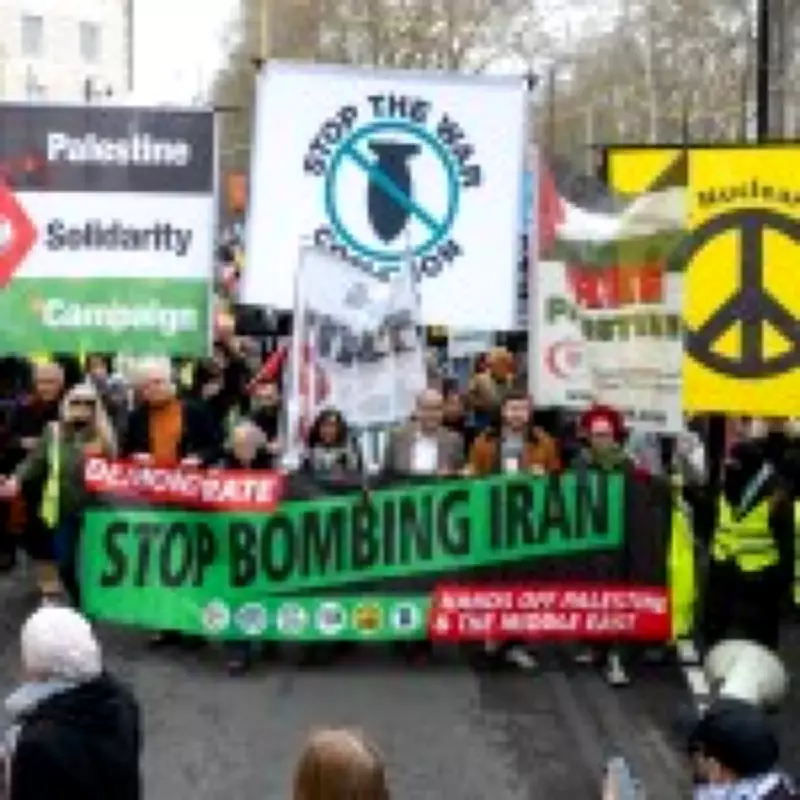
Ryan Cooper from London provided a firsthand account of an emergency demonstration outside Downing Street following Trump's threats against Iran. The protest highlighted the complex sentiments within the Iranian diaspora community, with many participants expressing opposition to both American imperialism and the Iranian theocracy. Placards carried messages such as 'No to imperialism, no to theocracy, freedom for the people of Iran' and 'We won't choose between our killers.'
Cooper emphasized that Iranians opposing their government do not support military intervention, quoting a placard that stated: 'You cannot bomb freedom into existence.' This perspective challenges simplistic narratives about international conflicts.
Political Satire and Space Exploration Contrasts
Julian Self from Wolverton offered satirical commentary, suggesting that with the de-escalation of global tensions, Trump could return to focusing on the Epstein Files. Meanwhile, Nathan Hazlett from Sunderland drew inspiration from the Artemis II mission to the moon, praising astronauts Wiseman, Glover, Koch, and Hansen for their vision of shared humanity.
Hazlett contrasted this with what he described as Trump's 'ultra-nationalist parochialism,' noting that the Artemis mission represents international cooperation despite political rhetoric. Jack Frazier from London added a cautionary note about space exploration, referencing historical conquests and suggesting that future encounters with extraterrestrial civilizations might not favor humanity.
Ongoing Dialogue and Reader Engagement
The letters section continues to invite reader participation on these and other topics, with Metro's Senior Politics Reporter Craig Munro answering political questions in a weekly newsletter. The discussion underscores the vital role of public discourse in shaping understanding of human rights and global affairs.