Hungary's Election Result: A Rare Beacon of Hope in a Troubled World
In a world often dominated by grim headlines—from conflicts in Iran, Lebanon, and Ukraine to the pervasive cost of living crisis—the recent election in Hungary has emerged as a rare piece of unequivocally good news. The defeat of Viktor Orbán's authoritarian, hard-right government after 16 years in power is a moment to celebrate, offering a glimmer of hope amidst the surreal and depressing global landscape.
A Shift in Power: Not a Liberal Revolution, But a Step Forward
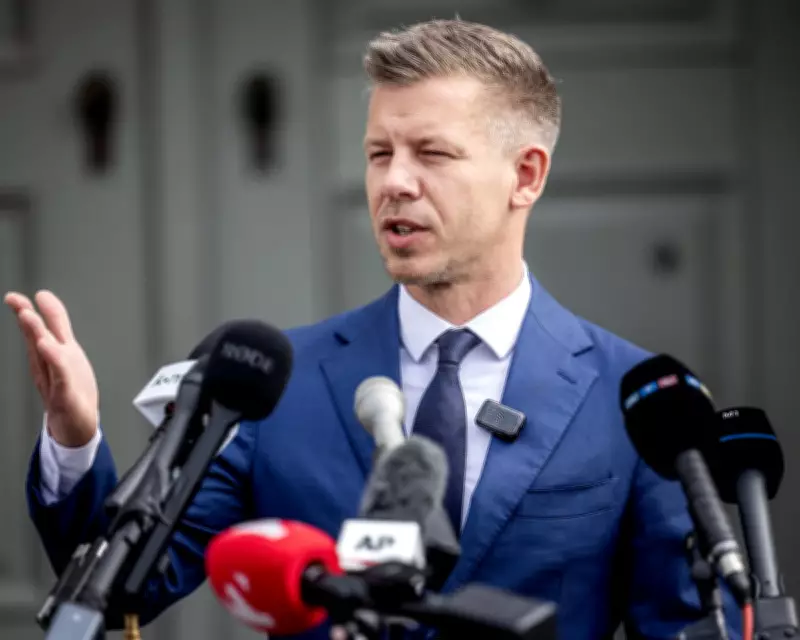
The incoming prime minister, Péter Magyar, is hardly a centre-left liberal; he stands firmly on the centre-right. However, in the context of Hungary's political evolution, this represents significant progress. Baby steps, as they say, are still steps forward. The removal of Orbán means that the €90 billion loan from the EU to Ukraine will no longer be blocked, and the innermost workings of the European Council will cease to be leaked to Vladimir Putin in real time. Most importantly, Hungarians are reclaiming their country from years of authoritarian rule.
JD Vance's Unintended Contribution to Magyar's Landslide Victory
One of the most satisfying aspects of this election outcome is the role played by JD Vance, the US vice-president. In a move that backfired spectacularly, Vance traveled to Hungary just days before the election to persuade voters to support Orbán. Instead, opinion polls immediately indicated that his intervention had the opposite effect, causing Orbán to haemorrhage support. This serves as a powerful reminder that voters deeply resent outside interference in their democratic processes. While this may not signal the end of global right-wing populism, it is undoubtedly a step in the right direction.

Reform UK's Struggles: The Nigel Farage Show Continues
Meanwhile, in the UK, Nigel Farage's efforts to portray Reform as more than a one-man band have fallen short. Despite appearances at press conferences with others, such as Tory defector Robert Jenrick, the impression remains that it is still the Nigel Farage show, with Jenrick often relegated to a silent supporting role—akin to Debbie McGee to Farage's Paul Daniels. Richard Tice, the deputy leader, occasionally emerges as Farage's punchbag, while Zia Yusuf serves as the party's rottweiler, ensuring Farage appears the moderate by comparison. Notably, Suella Braverman has yet to make an appearance with Farage, hinting at potential issues with women in the party's leadership.
Personal Reflections: Grieving a Beloved Pet and Considering a New Beginning
On a more personal note, the past year has been marked by the loss of Herbie, a beloved dog whose death left a profound void. The simplicity of the relationship—mutual love without complications—made the grief intense, with moments of seeing glimpses of him in empty spaces. After months of hesitation, the family is now considering welcoming a new puppy, recognizing that love can be extended without disrespecting Herbie's memory. Decisions about breed and gender remain, but the willingness to take that leap signifies a step toward healing and renewal.
Melania Trump's Baffling Press Conference: An Enduring Mystery
In the fast-paced news cycle, some events slip off the radar but deserve scrutiny. Melania Trump's unexpected press conference a week ago remains an enigma. With conflicting statements from the White House and a delivery that seemed scripted by an unknown author, the best guess was that she aimed to preempt a story linking her to Jeffrey Epstein. Yet, no such story has emerged, leaving the incident even more inexplicable. Melania continues to be a blank canvas, with AI arguably possessing more depth than her public persona.

The Timothée Chalamet Effect: Boosting Opera and Ballet Against All Odds
Finally, the so-called Timothée Chalamet effect has proven surprisingly impactful. When the actor declared opera and ballet outdated, it sparked a counter-movement that boosted ticket sales. Seattle Opera and the Royal Ballet in Covent Garden capitalized on this, with the latter's head, Alex Beard, noting a surge in engagement and sales. As a regular operagoer, while increased demand may make tickets harder to secure, there's a certain satisfaction in seeing Chalamet's hubris turned into promotional gold. Perhaps a similar strategy could fill seats at political satire shows, proving that laughter and critique are far from dead.