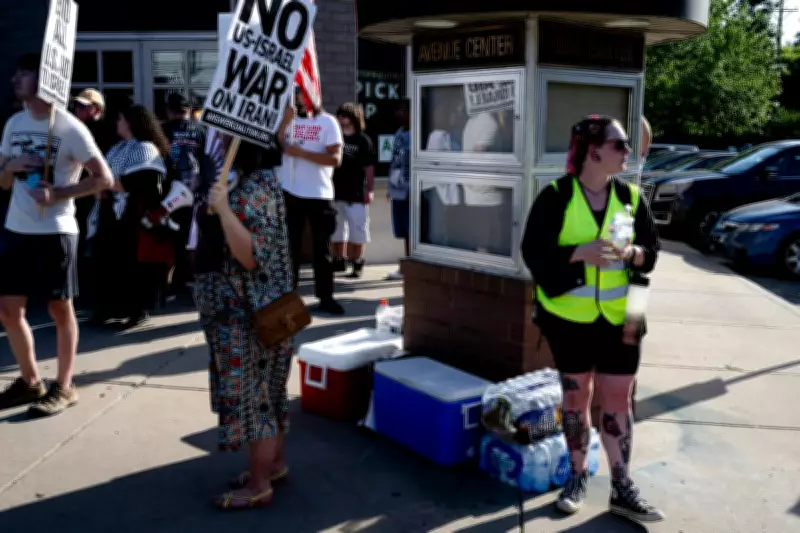
Trump's Iran War Ignites Backlash in Kentucky's Republican Stronghold
In the rolling hills and hollows of Appalachian Kentucky, where Donald Trump secured a commanding 65% of the vote in the 2024 election, a surprising wave of discontent is brewing. The US military's recent actions against Iranian nuclear facilities—a conflict launched without congressional approval—are stirring anger in this traditionally red region, where residents are questioning why billions are flowing overseas while their communities face deepening poverty and federal cutbacks.
A Region Caught Between War Abroad and Struggle at Home
Appalachian Kentucky remains one of America's most disadvantaged areas, haunted by shuttered coal mines and abandoned steel plants. Unlike many Republican-leaning regions, it lacks military-adjacent industries that might benefit from conflict spending. Instead, its residents face stark realities: approximately 40% of children in eastern Kentucky grow up in households below the federal poverty level, and devastating floods in July 2022 claimed 38 lives.
"This war is a slap in the face of rural Kentuckians," says McKenna Brashear, acting president of the Perry County Young Democrats from the tiny community of Viper. "With all the cuts we've seen, it's difficult to swallow that pill. That money could fund our schools, help educators get supplies, or support those struggling with rising gas prices."

Early estimates suggest the first twelve days of the Iran conflict cost American taxpayers approximately $16.5 billion—funds that many Kentuckians argue could transform their communities. Thousands have seen Supplemental Nutrition Assistance Program and Medicare support reduced by the Trump administration, while escalating utility prices push families back into poverty.
Complex Political Allegiances in Trump Country
Kentucky's political landscape defies simple categorization. Here, fervent churchgoers might embrace what they call "Jesus' socialism," while gun owners advocate for universal healthcare. This complexity extends to views on the Iran war, creating unexpected alliances and fractures.
Brandon La Voie, a lifelong Democrat who voted for Trump in 2024 after previously supporting Bernie Sanders, represents this political nuance. "I align with what a Democrat is supposed to be," he insists, yet he voted for Trump largely due to a local tragedy involving an undocumented immigrant. He rejects what he calls "the cultism" of partisan politics while supporting military intervention in Iran.
"People who sentence their children to death... there has to be intervention," La Voie argues, referencing the Iranian government's crackdown that reportedly killed up to 30,000 protesters. "Do I think it's a good idea? I think it was the only idea, unfortunately." He fears that without action now, his sons might face conscription in a larger future conflict.
Political Criticism Crosses Party Lines
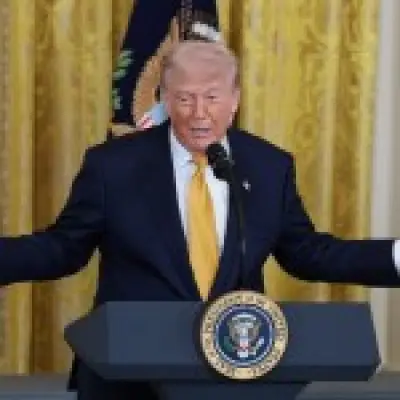
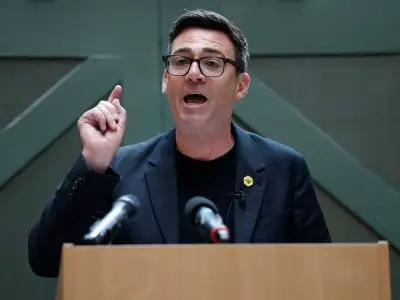
The war has drawn criticism from both sides of Kentucky's political aisle. Governor Andy Beshear, a potential Democratic contender for the 2028 presidential election, criticized Trump for failing to acknowledge Kentucky soldiers killed in the conflict during a March visit to the state. Notably, Trump didn't meet with the family of Sergeant Benjamin Pennington from Glendale, one of two Kentucky service members killed so far.
Republican voices are also raising concerns. Senator Rand Paul recently warned, "I don't think this war is going to be good for the Republican party to have high oil prices, high gas prices and the war lingering over our heads." Representative Thomas Massie, whose district includes much of northern Carter County, believes the conflict "will radicalize a new generation of terrorists" and questions how it helps families pay for groceries.
Economic Betrayal Fuels Populist Sentiment
Eastern Kentucky's economic disappointments have created fertile ground for populist appeals. On Industrial Parkway, just miles from the region's only interstate, lies a symbolic failure: a $2 billion aluminum mill plant that promised to revive manufacturing with $65,000-a-year jobs. By 2022, the project was abandoned—what Governor Beshear called "the worst and shadiest economic development deal in Kentucky's history."

This pattern of extraction and abandonment runs deep. "My grandfather was extracted from here to serve in Vietnam," says La Voie, who runs a restoration company. "He was exposed to Agent Orange and died from it. We are being hijacked." In Perry County, where per capita income falls below $30,000 and Trump outperformed Kamala Harris four-to-one, economic loss drives many toward religion for solace.
Religion and War in Evangelical Heartland
The Trump administration's framing of the Iran conflict in religious terms resonates in eastern Kentucky's evangelical Christian communities, where some interpret Middle East warfare as signaling the end times. "Religion is contributing to views on the war," observes Brashear, noting how faith intersects with political perspectives in this deeply religious region.
As the war continues with no clear resolution, Kentucky's political contradictions become increasingly apparent. In a land where Trump remains popular but poverty persists, where military service is honored but war spending questioned, residents grapple with competing loyalties. The conflict has become a litmus test not just for foreign policy, but for how America prioritizes its resources—and which communities bear the costs when those priorities shift toward distant battlefields rather than homegrown needs.