Senior figures within Israel's governing coalition have launched a fierce rejection of a White House-backed proposal for the administration of Gaza after the war, exposing deep fractures within Benjamin Netanyahu's government.
Far-Right Ministers Condemn "Original Sin"
Israeli Finance Minister Bezalel Smotrich, a prominent settler leader, publicly criticised Prime Minister Netanyahu on Sunday for what he termed an "original sin" – a failure to annex the Palestinian territory and establish new Israeli settlements. Smotrich argued that Israel should instead install a military government in Gaza to encourage Jewish immigration and long-term settlement, framing this as the only path to lasting security.
The backlash was triggered by the US announcement of a "Gaza executive board," an advisory body that would operate under a broader "board of peace" chaired by President Donald Trump. The board forms part of Trump's 20-point plan to end the conflict. Notably, the executive board includes Turkish Foreign Minister Hakan Fidan and Qatari diplomat Ali Al-Thawadi, both from nations that have been vocal critics of Israel's military campaign.

Diplomatic Tensions and Coalition Strain
Smotrich took specific aim at the inclusion of Qatar and Turkey, stating on social media platform X that "countries that inspired Hamas cannot be the ones that replace it." He insisted that nations which support and host Hamas must not be granted any role in Gaza's future, urging Netanyahu to stand firm even at the cost of a dispute with US emissaries.
In an attempt to manage the internal crisis, Netanyahu convened a meeting with his coalition partners on Sunday. His political survival depends on keeping these far-right factions within the government, parties that never supported the US-brokered ceasefire agreed in October. Netanyahu had already voiced his own objections on Saturday, stating that some appointments to the board were "not coordinated with Israel and were contrary to its policy," and instructed his foreign minister to contact US Secretary of State Marco Rubio.
Israel has repeatedly and strongly objected to any Turkish role in postwar Gaza, with relations between Ankara and Jerusalem deteriorating sharply since the war began in October 2023 following Hamas's attack on Israel.
Plan Details and Deepening Humanitarian Crisis
The White House plan envisions three bodies: the Trump-chaired board of peace, a committee of Palestinian technocrats to govern Gaza, and the advisory executive board. The Palestinian technocratic committee held its first meeting in Cairo on Saturday. A draft charter seen by Reuters indicates that member states must contribute $1 billion in cash if they wish their membership to last beyond an initial three-year term.
These diplomatic manoeuvres coincide with the US declaration that the Gaza truce plan has entered a second phase, shifting focus from ceasefire implementation to Hamas's disarmament and the establishment of transitional governance. This ambitious diplomatic escalation persists alongside ongoing Israeli military operations.
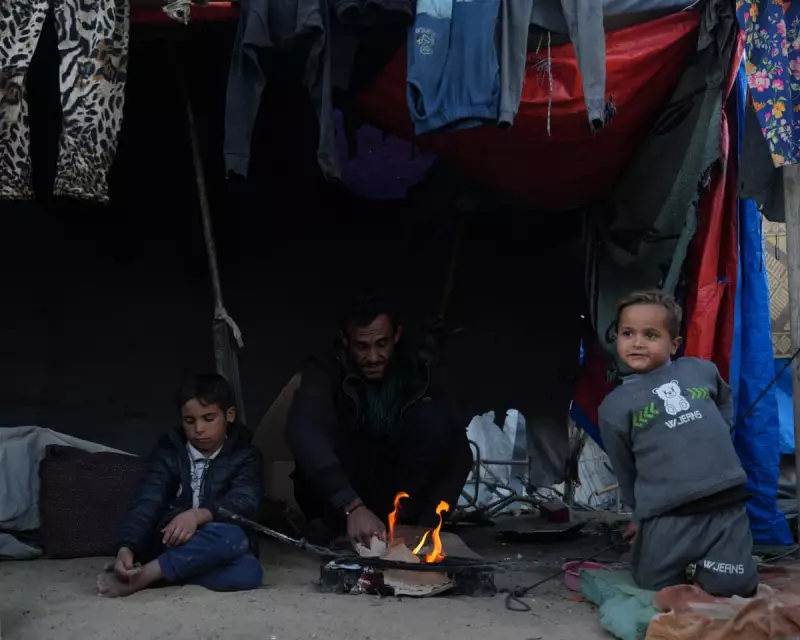
The humanitarian situation in Gaza remains catastrophic. While the intensity of airstrikes has reduced, violence has not ceased. The Palestinian health ministry reports that at least 451 Palestinians have been killed since the October ceasefire. Furthermore, severe winter storms have compounded the misery, causing flooding in overcrowded displacement camps. This week, high winds caused walls to collapse onto flimsy tents, killing at least four people. On Saturday, a 27-day-old baby died from severe cold, bringing the number of child deaths from hypothermia this winter to eight.
The stark rejection by Netanyahu's key coalition allies sets the stage for a significant political and diplomatic clash, casting serious doubt on the viability of the US-led postwar framework even as the civilian population in Gaza endures relentless suffering.