Kansas City Mayor Quinton Lucas Denounces 'Colonial' Police System Amid Red State Feud
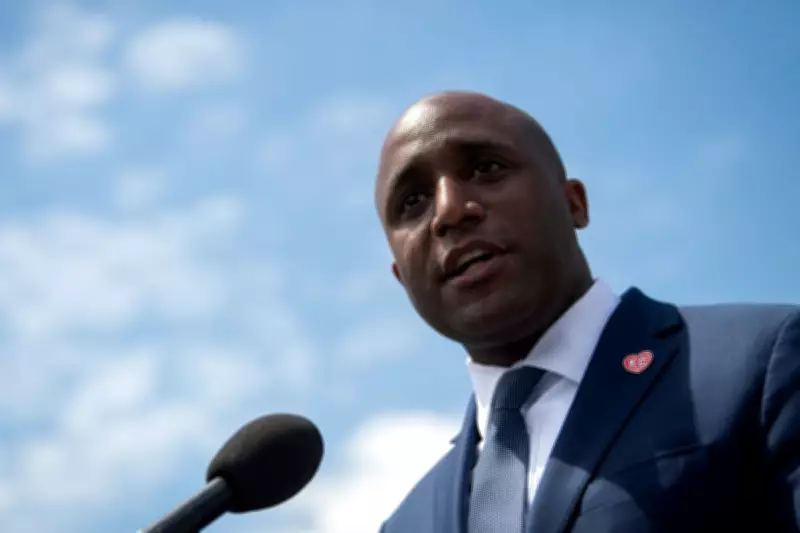
Kansas City Mayor Quinton Lucas has launched a scathing critique of his city's police department, labeling it a "colonial system" that is fundamentally at odds with the values of a diverse urban population. In a bold statement, Lucas asserted that the current policing structure is anti-Black, anti-immigrant, and undermines the voice of marginalized communities in navigating public safety issues.
A Unique Governance Challenge in America's Large Cities
Unlike most major U.S. cities, Kansas City's political leaders do not control their own police force. This anomaly stems from a legal artifact dating back to the Civil War era, compounded by conservative Missouri politics. A state commission, rather than local officials, operates the Kansas City Police Department, creating a governance rift in a Democratic stronghold where over three-quarters of voters supported Joe Biden in 2020 and Kamala Harris in 2024.
Kansas City finds itself as a blue city adrift in a sea of red. Missouri, a state where Donald Trump secured 57% of the vote in 2020 and 59% in 2024, features Republican supermajorities in both legislative houses, bolstered by gerrymandered districts. Successive Republican governors have capitalized on tough-on-crime rhetoric targeting urban areas, a strategy that has become standard for red states with blue cities.

Historical Roots and Modern Political Tensions
The state's control over Kansas City's police has deep historical roots. Initially established by Governor Claiborne Fox Jackson before the Civil War to manage weapons in St. Louis and Kansas City, the police board persisted despite early dissolution attempts. It was reinstated in 1939 to combat corruption under political boss Tom Pendergast, and Kansas City has since remained a frequent target for conservative Missouri politicians.
In recent years, this dynamic has intensified. Republican Governor Mike Kehoe signed legislation in March to return the St. Louis Metropolitan Police Department to state control, a move decried by Democratic lawmakers as racist. In Kansas City, the police commission comprises four members appointed by Missouri's Republican governor and the mayor, overseeing a $364 million budget and decisions on hiring, firing, and policy for over 1,200 officers.
Crime Rates and Funding Battles in a Divided System
Kansas City consistently ranks among the top 10 U.S. cities for homicide rates among populations over 100,000, placing eighth in 2025. Violence surged during the pandemic, with a 19% increase in homicides in 2020, followed by fluctuations that outpaced national trends. Efforts to implement violence interruption programs have been stymied, such as when former Police Chief Rick Smith ended such initiatives in 2017, only to see rates drop upon their reinstatement in 2023.
Mayor Lucas, elected on a crime reduction platform, faces significant constraints. Routinely outvoted by Republican commissioners, he criticizes the system for lacking transparency and accountability. Taxpayers fund police expenditures exceeding legislative mandates, yet the state-controlled board demands more, leading to conflicts over budget shortfalls and costly lawsuits, including over $11 million in settlements this year.
Conservative Backlash and Constitutional Mandates
A 2024 conservative backlash against "defunding the police" culminated in a Missouri constitutional referendum mandating that Kansas City allocate at least 25% of its municipal budget to policing. Despite opposition from Kansas City voters by a 2-1 margin, the measure passed narrowly statewide, with suburban areas in Jackson County supporting it 3-2. This underscores the political tightrope city leaders must walk in a bright red state.
Lucas has also pointed to Missouri's permissive gun laws as a contributor to urban violence. State law preempts local restrictions on gun ownership, preventing measures like red flag laws or bans on open carry. In response, Lucas is drafting local legislation to criminalize possession of "switches" that convert handguns into automatic weapons, leveraging federal laws to appeal to conservative legislators' tough-on-crime stance.

Voices of Criticism and Calls for Change
Gwen Grant, president and CEO of the Urban League of Greater Kansas City, has criticized the strained relationship between Lucas and former Governor Mike Parson, particularly during the George Floyd protests. She highlights issues with former Police Chief Rick Smith's handling of police-involved homicides of unarmed Black men, which fueled lawsuits and increased policing costs borne by residents without control over their police force.
Lucas emphasizes the need for systemic reform, arguing that the current setup hinders progress in violence prevention compared to other American cities. He calls for a shift away from treating crime as a political statistic and toward genuine solutions that address the root causes of gun violence, as demanded by Kansas City residents seeking safety and accountability.