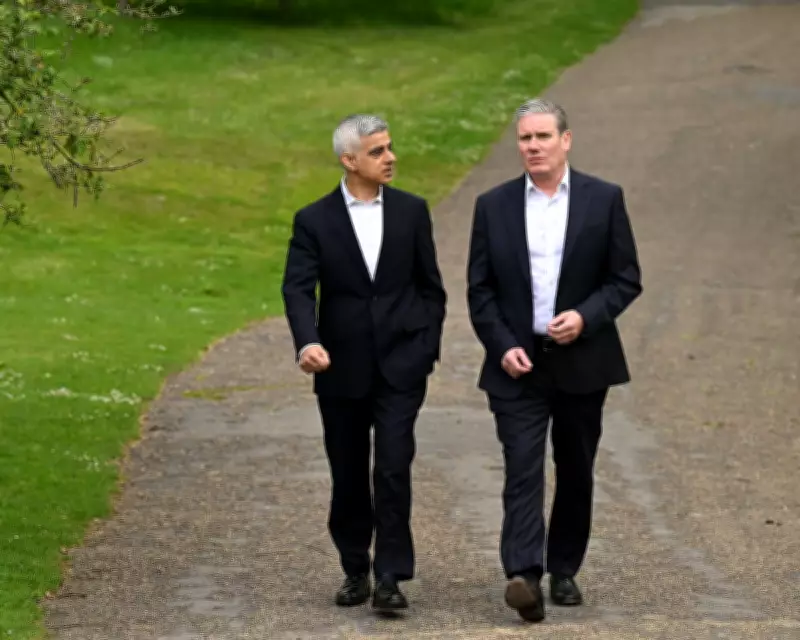
Khan's Allies Dismiss Cabinet Role Reports Amid Peerage Speculation
Allies of Sadiq Khan have firmly dismissed recent reports suggesting the London mayor could join Keir Starmer's cabinet if granted a peerage. However, they acknowledged that Khan could potentially join the House of Lords while continuing to serve as London mayor, a scenario that has precedent in British politics.
Downing Street and Labour Remain Non-Committal
Downing Street has characterized reports about Khan receiving a peerage after crucial May elections across England, Scotland, and Wales as "speculation." A Labour source similarly declined to comment on the matter, maintaining the party's official silence on what they consider premature discussions.
Khan's allies emphasized that any decision regarding a peerage would ultimately rest with No 10, but they categorically ruled out the possibility—reported by the Financial Times—that Khan might be brought into Starmer's cabinet to strengthen the government's frontbench team.

Khan's Political Journey and Current Focus
Sadiq Khan served as a London MP for a decade before stepping down in 2016 to pursue the mayoralty, which he has now won three consecutive times. As mayor, Khan has demonstrated success in building support beyond Labour's traditional base, attracting Green and Liberal Democrat voters to defeat Conservative opponents.
Sources close to the mayor revealed that Khan remains committed to focusing on the final two years of his current term. Notably, he has not yet announced whether he intends to seek an unprecedented fourth term as London mayor, keeping his political future deliberately open-ended.
Precedent for Mayors in the Lords
The possibility of Khan joining the House of Lords while remaining mayor is not without precedent. Ben Houchen, the Tees Valley mayor, was made a peer in 2023 while serving his second term and subsequently won a third term. Houchen maintains an active presence in the Lords, attending 20% of sittings and speaking once in the chamber during 2025.
Khan, who was knighted last year, could follow a similar path without necessarily compromising his mayoral duties. This arrangement would allow him to contribute to national legislative discussions while continuing to lead London's governance.
Broader Context of Lords Reform and Expansion
The speculation about Khan's potential peerage comes amid broader changes in the House of Lords. Another wave of new peerages is expected soon, partially driven by reported plans that would allow Conservatives to reinstate approximately 15 hereditary peers as life members. This follows legislation that removed the remaining 92 hereditary members from their positions.
Keir Starmer has already significantly expanded the Lords, creating 96 new peers by the end of last year—65 of them Labour members—as part of efforts to facilitate legislation passage through the upper house. The Lords currently boasts 868 members, with 842 active, making it the world's second-largest legislative chamber after China's National People's Congress.
Political Dynamics and Future Possibilities
A role bringing Khan closer to Starmer's government could be framed by No 10 as the prime minister making full use of Labour's diverse talents. This is particularly relevant given Khan's occasional criticisms of government policies, such as his warning after Labour's Gorton and Denton byelection loss to the Greens that the party must stop taking progressive voters for granted.
The ongoing discussions highlight the complex interplay between local and national politics, with Khan's potential peerage representing both recognition of his political achievements and strategic considerations for Labour's broader governance approach.