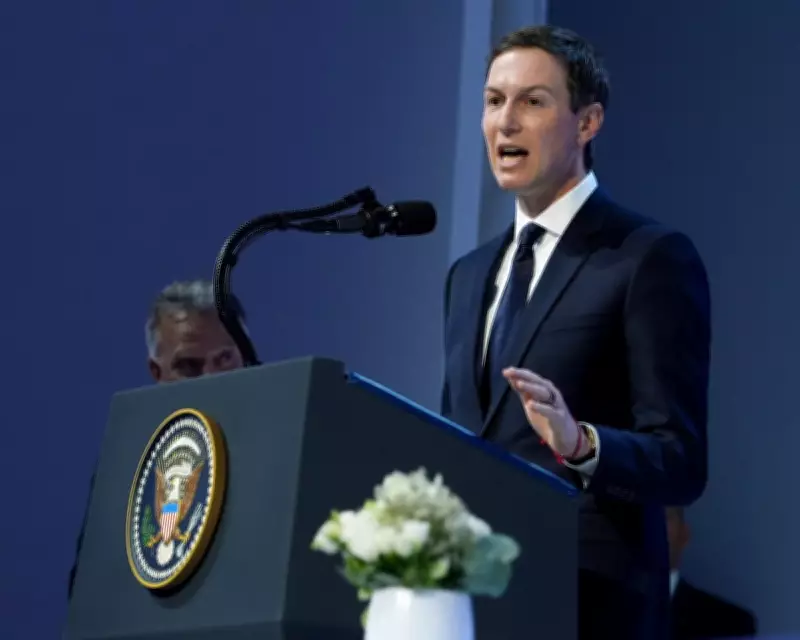
Jared Kushner's Dual Role as Peace Envoy and Fundraiser Sparks Ethical Debate
Jared Kushner, the son-in-law of former President Donald Trump, has re-emerged as a key figure in international diplomacy, despite holding no official government position. Since last summer, he has been instrumental in brokering ceasefires between Israel and Hamas in Gaza, steering negotiations to end the Russia-Ukraine war, and playing a central role in failed talks between the US and Iran over Tehran's nuclear program. Operating as a private citizen with direct access to the president, Kushner's influence extends across some of the most critical foreign policy agreements of the Trump administration.
Financial Ties to Authoritarian States Raise Red Flags
Simultaneously, Kushner is actively seeking at least $5 billion in new financing for his Miami-based private equity firm, Affinity Partners. This firm was largely built with billions from three authoritarian Arab states: Saudi Arabia, Qatar, and the United Arab Emirates. According to the New York Times, Kushner has approached investors, including foreign governments with stakes in his diplomatic work, while continuing his freelance diplomacy. The White House maintains that this dual role poses no conflict of interest, stating Kushner "only acts in the best interests of the American public."
However, critics argue that Kushner is leveraging his proximity to Trump and influence over US policy to benefit his company. This perception intensified when Iran's foreign minister, Abbas Araghchi, publicly criticized Kushner's actions during military conflicts, highlighting a headline about his fundraising efforts. The overlap between Kushner's diplomatic missions and business interests has drawn scrutiny, especially as the US engages in wars that impact global energy markets.

Historical Investments and Political Connections
Kushner's firm secured a $2 billion investment from Saudi Arabia's sovereign wealth fund in 2021, shortly after he left the first Trump administration. This deal occurred despite Kushner's limited track record in private equity and after Crown Prince Mohammed bin Salman overruled advisers who opposed the investment. During Trump's first term, Kushner fostered a close relationship between the president and Prince Mohammed, influencing US-Saudi policy, including Trump's first foreign trip to Saudi Arabia in 2017.
In December 2024, Affinity Partners revealed it had raised an additional $1.5 billion from Qatari and UAE wealth funds, with nearly 99% of its funding coming from foreign sources. This prompted an investigation by Senator Ron Wyden, who questioned whether these investments were attempts to buy influence with a potential second Trump administration. Wyden noted that Affinity's investors might be motivated by political considerations rather than commercial ones.
Broken Promises and Ongoing Scrutiny
Kushner initially promised to avoid fundraising during Trump's second term and stated he would not join the administration. However, he has backtracked on both counts, serving as an unofficial envoy while seeking new investments. At events like the World Economic Forum in Davos, Kushner presented a US-led plan for rebuilding Gaza while also meeting with foreign leaders to drum up funds for his firm. This blurring of lines has led to concerns about ethical breaches, as Kushner's firm earned $157 million in management fees by September 2024 without returning profits to investors, significantly boosting his personal wealth.
One proposed solution for Kushner to avoid conflict questions is to take a leave from running his firm during his diplomatic work or to refrain from soliciting investments from Middle Eastern governments. Yet, Kushner shows no signs of stepping back, continuing to engage with foreign entities that have vested interests in the conflicts he mediates. This ongoing situation underscores the challenges of separating personal financial interests from public diplomatic roles in high-stakes international affairs.