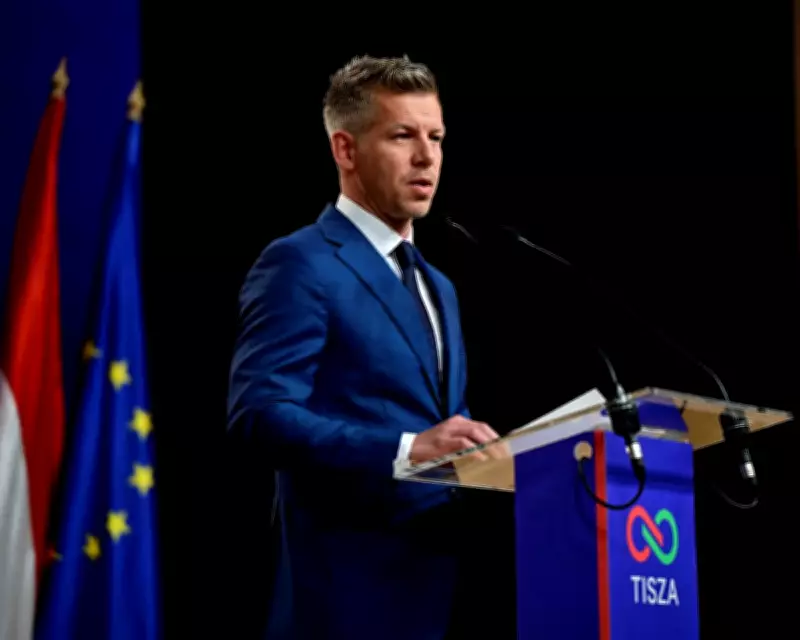
Péter Magyar's Landslide Victory Ends Orbán Era in Hungary
In a historic shift, Péter Magyar secured a resounding election victory on Monday, bringing an end to 16 years of rightwing populist rule under Viktor Orbán. At a press conference, Magyar pledged to work for "a free, European, well-functioning and compassionate Hungary", signaling a dramatic departure from his predecessor's policies. This political upheaval is poised to reverberate far beyond Hungary's borders, influencing dynamics in Brussels, Moscow, Kyiv, and Washington.
Implications for the European Union
Under Orbán's leadership, Hungary frequently undermined EU collective action, championing an "illiberal democracy" that strained relations with Brussels. His veto of a massive EU loan to Ukraine and delays on sanctions against Russia often left the bloc appearing divided and ineffective. Additionally, Orbán's erosion of democratic norms, failure to address corruption, and crackdowns on media led the European Commission to suspend billions in funding to Hungary.
Magyar has vowed to repair these frayed ties and address EU concerns. Ursula von der Leyen, President of the European Commission, expressed relief and optimism in a social media post, stating, "Hungary has chosen Europe. Europe has always chosen Hungary. Together, we are stronger. A country returns to its European path. The Union grows stronger." This sentiment underscores hopes for a renewed partnership and enhanced cohesion within the EU.

Impact on Russia and Ukraine Relations
Orbán maintained close ties with Moscow, continuing purchases of Russian oil and gas and meeting Vladimir Putin after the 2022 invasion of Ukraine. He also blocked a critical €90 billion EU loan to Ukraine, hindering military aid and government support. Reports suggest Budapest shared confidential EU information with the Kremlin, further angering European allies.
While Magyar's initial stance on Ukraine mirrors some of Orbán's positions—opposing arms shipments and fast-tracking EU entry for Kyiv—his government may adopt a more conciliatory approach. Dropping opposition to the EU loan could signal a shift, as Magyar aims to rebuild relations and avoid frequent vetoes. The Kremlin has expressed hope for "continued pragmatic contacts", and Ukraine's President Volodymyr Zelenskyy welcomed opportunities for "joint constructive work" to promote peace and stability in Europe.
Effects on European Rightwing and Far-Right Movements
Orbán's defeat leaves a void for rightwing and far-right parties across Europe, where he was a prominent figurehead for traditional Christian values. Critics viewed him as illiberal and undemocratic, while admirers celebrated his defiance of mainstream EU ideals. Marine Le Pen of France praised Orbán's "courage and determination" in defending Hungary's sovereignty, and Italy's Giorgia Meloni thanked him for years of collaboration.
However, Santiago Abascal of Spain's Vox party warned that Orbán's loss endangers Hungary's security from "Islamist invasion", highlighting the deep ideological divide. This outcome may prompt a reevaluation of strategies among far-right groups, as Orbán's departure diminishes a key symbol of their movement.
Consequences for Trump and the United States
Orbán's loss is a setback for Donald Trump and the Maga movement, with Orbán often seen as a precursor to Trump's illiberal politics. Trump had endorsed Orbán and promised economic support if re-elected. The recent visit by US Vice-President JD Vance emphasized Orbán's importance as a "partner for peace", though it drew accusations of electoral interference.
The scale of Magyar's victory has sparked debate on the effectiveness of Trump's endorsements internationally. Theo Francken, Belgium's defence minister, criticized Vance's support as "a really dumb campaign move", suggesting that such backing may harm rather than help rightwing candidates. This development could influence future US foreign policy engagements and campaign tactics in Europe.
Overall, Péter Magyar's election marks a pivotal moment for Hungary and its global relationships, with potential to reshape European politics and international alliances in the coming years.