Argentina's Memory Wars Intensify on 50th Anniversary of Military Coup
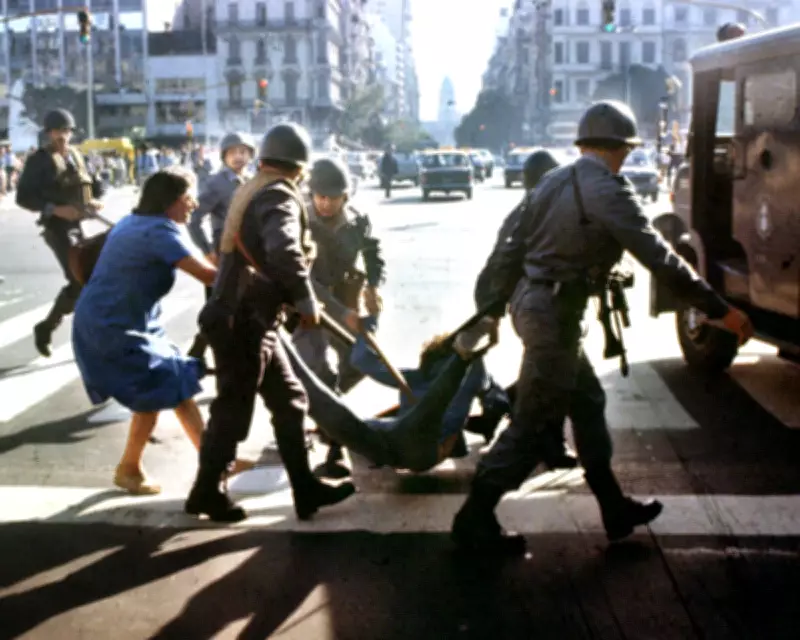
Today marks the solemn 50th anniversary of the military coup that ushered in Argentina's last dictatorship in 1976, a date that has traditionally served as one of the nation's most powerful civic rituals. For decades, tens of thousands of Argentinians have taken to the streets annually to commemorate victims of state terror and reaffirm their democratic commitment to memoria, verdad y justicia – memory, truth and justice. What began as desperate demands from grieving families searching for approximately 30,000 disappeared individuals gradually evolved into something far more significant: the moral language that fundamentally defined Argentina's post-dictatorship democracy.
Milei's Controversial Stance Challenges Historical Consensus
This landmark anniversary arrives at a critical juncture when Argentina's moral compass faces unprecedented assault. President Javier Milei, who relishes flouting taboos surrounding the country's democratic consensus, has systematically questioned the scale of the dictatorship's atrocities while celebrating military figures and deriding human rights activists as corrupt opportunists. Throughout his presidency, Milei has marked each coup anniversary with provocative videos that challenge victim numbers and equate state repression with violence perpetrated by leftist guerrilla groups.
Disturbing rumors now circulate that Milei might pardon military officers convicted in landmark crimes against humanity trials – a move that would shatter a central pillar of Argentina's post-dictatorship settlement. What was once treated as untouchable has transformed into a fierce ideological battleground, with the president's administration implementing concrete policy changes including slashing funding for human rights bodies and investigations into dictatorship crimes.

The Fragile Foundation of Argentina's Democratic Memory
While Milei represents a radical right-wing president challenging longstanding democratic settlements, his actions reveal a harder truth: Argentina's post-dictatorship consensus was always more fragile and incomplete than it appeared. From the beginning of the democratic transition in 1983, debates over past violence deeply divided the nation. Initial accountability efforts such as the Nunca Más (Never Again) report and the landmark Trial of the Juntas under former president Raúl Alfonsín were quickly followed by laws limiting further trials, passed under pressure from the armed forces.
The controversial "theory of the two demons" became a dominant interpretive lens during this period – an idea that minimized the reality of systematic state terror by framing the era as a tragic conflict between the government and leftwing guerrilla groups. Yet through persistent efforts by activists, many of them relatives of dictatorship victims, a broad moral framework gradually consolidated. Human rights organizations like the Mothers and Grandmothers of Plaza de Mayo evolved from activist groups into national moral authorities, with the dictatorship's crimes increasingly recognized as uniquely illegitimate.
Political Polarization and Generational Shifts
This consensus began fracturing precisely as it reached its peak consolidation. Between 2003 and 2015, leaders including Néstor Kirchner and Cristina Fernández de Kirchner overturned old amnesty laws, enabling prosecution of hundreds of dictatorship-era crimes while embedding human rights language across school curriculums and public commemorations. For critics, however, this approach came to represent ideological appropriation of historical memory for political legitimacy.
Milei's electoral victory reflects a significant generational shift in national priorities. Many Argentinians who supported him possess no personal memory of the dictatorship but have experienced profound democratic failures including economic instability, declining living standards, and a dysfunctional political elite. The inability of political and intellectual leaders to convince voters to reject Milei in the name of democracy during the 2023 elections suggests something deeply uncomfortable: the democratic consensus itself has become associated with an establishment widely perceived as having failed the nation.

Resilience Amidst Controversy
Despite these challenges, Argentina's human rights culture demonstrates remarkable resilience. When lawmakers aligned with Milei visited imprisoned dictatorship-era officers in 2024, the backlash proved swift and overwhelming. Similarly, in 2017, when the supreme court attempted to reduce sentences for convicted human rights violators, tens of thousands took to the streets and pushed congress to reverse the decision within days. According to recent polling, approximately seventy percent of Argentinians maintain negative opinions about the dictatorship.
The rumors regarding pardons for convicted officers likely serve more as political provocation than legislative intention – designed to keep opponents permanently mobilized while signaling to Milei's base his willingness to voice what others won't. This strategy channels political energy into cultural battles while his government implements painful austerity measures, creating a complex landscape where historical memory functions increasingly as partisan identity.
The Ongoing Struggle for National Narrative
Every 24 March, the same powerful slogans will continue echoing through Argentina's streets: memory, truth and justice. Yet fifty years after the coup, these marches can no longer pretend to express a settled national story. They have returned to their activist origins as struggles over how Argentina understands its painful past, debates its turbulent present, and contests its evolving national narrative – a narrative that has always been fiercely disputed and remains profoundly contested today. The extraordinary achievements of Argentina's human rights movement, including trials of former military officials, recovery of stolen children, and transformation of former torture centers into public memorials, stand as remarkable examples of democratic memory that continue shaping the nation's conscience despite current political challenges.