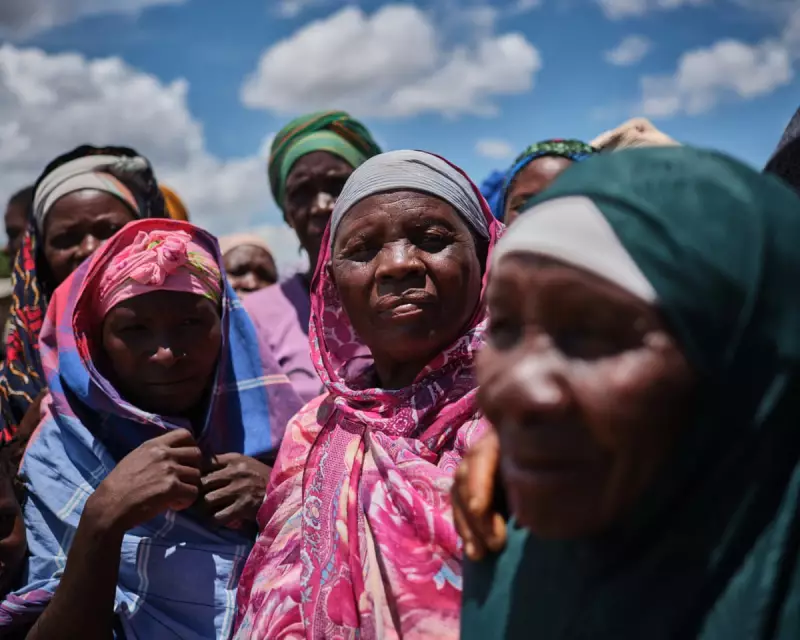
A brutal and expanding insurgency linked to Islamic State in northern Mozambique has forcibly displaced more than 300,000 people since July 2024, exacerbating a forgotten humanitarian catastrophe as international attention and aid focus elsewhere.
A Conflict Forgotten by the World
While global crises in Ukraine, Gaza, and Sudan dominate headlines, the grinding conflict in Mozambique's Cabo Delgado province has been largely overlooked. Since militants from Islamic State-Mozambique launched their first attacks in October 2017, the violence has uprooted over 1 million people, many displaced multiple times. This year, a critical shortfall in foreign aid has left these vulnerable populations with shrinking support.
According to the UN, donors have provided just $195 million for the humanitarian response in 2024, a mere 55% of what is needed and a significant drop from the $246 million given last year. "They just want this to end. They just want to be able to go back to their homes," said Sebastián Traficante of Médecins Sans Frontières, describing the dire conditions in displacement camps.

Military Efforts Fail to Stem the Violence
Despite military intervention, the insurgency is growing more audacious. In July 2021, Rwanda deployed 1,000 troops, later increasing its presence to an estimated 4,000-5,000 personnel. While initially successful, their effectiveness has waned. Researcher Tomás Queface noted that Rwandan forces are no longer conducting regular patrols and that the Mozambican government now wants its own army to take the lead.
The failure to protect civilians is stark. Data from the Armed Conflict Location and Event Data Project (Acled) shows 549 deaths in 302 attacks so far in 2024, with over half being civilians. The civilian death toll of 290 represents a 56% increase from the previous year. Since the conflict began, nearly 2,800 civilians have been killed.
Shifting Tactics and Deepening Crisis
The insurgents have recently pushed south into Nampula province, triggering the displacement of 100,000 people in November alone. This expansion has been accompanied by a sharp rise in the abduction of children for forced labour, marriage, or combat, as reported by Human Rights Watch in June.
"The displacement that is happening now is also increasing the risk of sexual violence, exploitation and abuse, particularly for women and children," warned Sheila Nhancale, a researcher for HRW. Of those displaced in November, an estimated 70,000 are children.
A Glimmer of Hope Amidst Stalemate?
Newly elected Mozambican President Daniel Chapo, who took office in January 2024, stated in September that he desired dialogue with the insurgents. However, analysts remain sceptical. Borges Nhamirre of the Institute for Security Studies emphasised that after eight years of conflict, there have been "no effective initiatives of dialogue."
Nhamirre suggested the primary military objective may not be civilian security but protecting the region's vast economic interests, notably the $20 billion Total liquefied natural gas (LNG) project. "If the objective is to secure the LNG project, then they have achieved some success," he conceded, noting the site is more secure than in 2021.
As the world's gaze turns away, the people of Cabo Delgado face a protracted crisis with no clear end in sight, caught between a resilient insurgency, inadequate military protection, and a devastating drop in life-saving international aid.