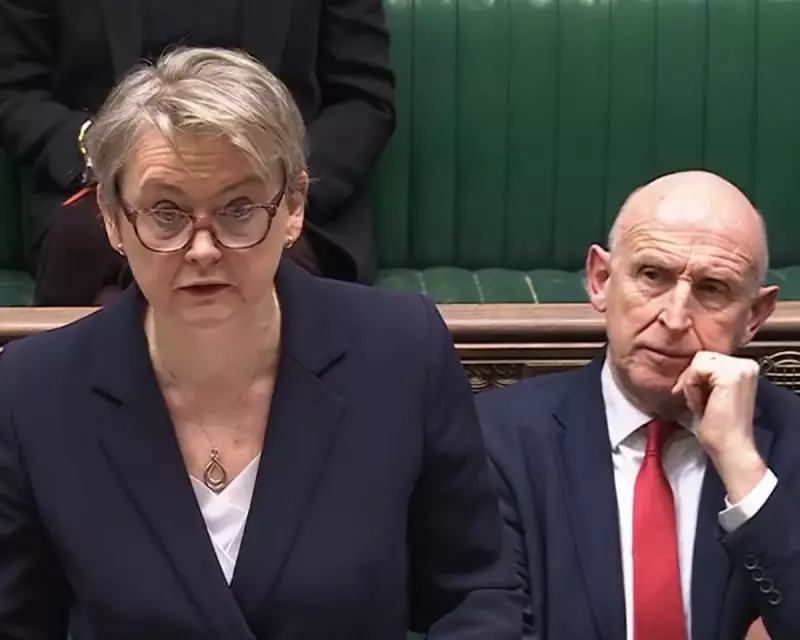
Foreign Secretary Yvette Cooper faced a barrage of criticism from MPs across the political spectrum on Monday night over the government's refusal to condemn the United States' military operation in Venezuela.
Cross-Party Fury Over Cautious Response
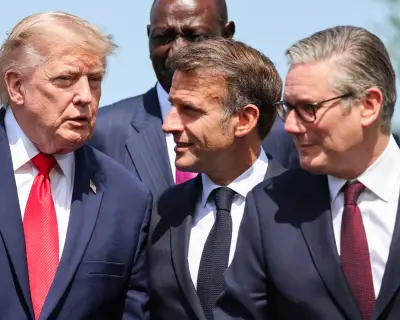
During a statement in the House of Commons, Cooper was challenged by Labour, Conservative, and Liberal Democrat MPs for the UK's guarded reaction to the weekend raid, which resulted in the capture of former Venezuelan president Nicolás Maduro. Both Prime Minister Keir Starmer and Cooper have been notably reluctant to criticise President Donald Trump's actions or to state clearly whether they believe the operation violated international law.
This hesitation has sparked significant concern among critics, who argue that the UK's muted response risks emboldening adversarial powers like China and Russia by signalling a weak commitment to global legal norms.

"A Breach of International Law"
Emily Thornberry, the Labour chair of the foreign affairs select committee, led the charge. She questioned how the government could fail to call out the actions of a large power abducting the leader of a smaller nation. "We should be calling it out for what it is: a breach of international law," Thornberry stated emphatically.
Her sentiments found support from colleagues on the Labour left, including Richard Burgon, who accused the prime minister of disregarding the UN charter. The Liberal Democrat leader, Ed Davey, concurred, stating that while Maduro is a "brutal, illegitimate dictator," this did not grant President Trump a free pass for illegal action.
Broader Fears Over NATO's Future
The debate widened to encompass broader anxieties about US foreign policy under Trump. Former Conservative foreign secretary Jeremy Hunt issued a stark warning, suggesting that the entire NATO alliance could be jeopardised if Western allies did not collectively face down American threats, such as the recent suggestion of annexing Greenland from Denmark.
"If the new US approach extends to the annexation of Greenland – the sovereign territory of a NATO member – it could mean the end of the alliance with disastrous consequences," Hunt cautioned, questioning the Foreign Office's contingency planning.
Diplomatic Tightrope and Government Defence
The parliamentary scrutiny followed a day of intense diplomatic activity. Cooper revealed she had spoken to both her US counterpart, Marco Rubio, and Venezuelan opposition figure María Machado. While she stressed the importance of international law in her conversation with Rubio, she declined to publicly label the US action as illegal, saying it was for Washington to provide its justification.
Prime Minister Starmer, who spent much of the day preparing for a meeting on Ukraine security, said he wanted to "establish the facts" before judging the legality of the Caracas raid. However, he was more forthright in defending Denmark over Greenland, asserting that its future was a matter solely for the Kingdom of Denmark.
This firm stance contrasted with earlier comments from Home Office minister Mike Tapp, who had refused to explicitly state the UK would defend Denmark, arguing that "diplomacy is delicate."
The episode highlights the difficult balancing act facing the UK government: upholding international law while managing a critical but unpredictable relationship with a key ally, the United States.