New York Primary Exposes Thin Anti-Trump Consensus Among Democrats
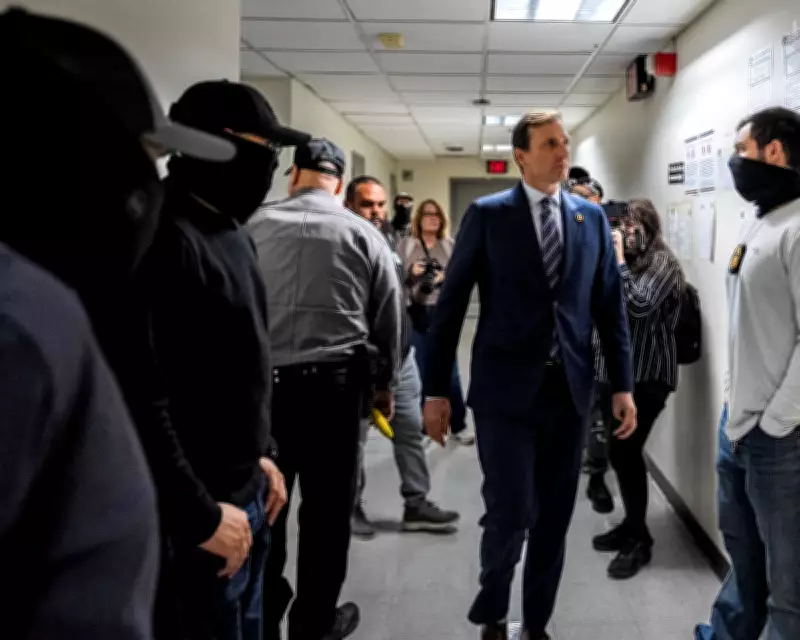
In a Manhattan federal court hallway on October 23, 2025, Representative Dan Goldman stood as a symbol of the Democratic party's current predicament. While opposition to Donald Trump has created unprecedented unity among Democrats, this consensus is proving remarkably thin. A contentious New York congressional primary is now exposing the fundamental gap between Democrats who merely want to fight Trump and those who want to fight for substantive policy changes.
The Fragile Coalition
The Democratic party appears more united than it has been in years, thanks primarily to one unifying force: Donald Trump. Opposition to the former president has effectively papered over what would otherwise be serious disagreements about economic policy, civil liberties, foreign affairs, and the role of corporate money in politics. As long as Democrats can point to Trump as their common enemy, their coalition holds together, making the ideological conflicts that once defined the party during the 2016 primary or battles over Gaza policy during the Biden administration seem like distant memories.
However, these divisions have not disappeared entirely. In New York's 10th congressional district, they are beginning to surface with renewed intensity. Representative Dan Goldman faces a primary challenge from former New York City comptroller Brad Lander, creating a contest that will determine whether being "anti-Trump" constitutes a complete political platform or merely represents the bare minimum for Democratic candidates.

Two Visions of Opposition
Goldman launched his re-election campaign on the fifth anniversary of January 6, building his pitch almost entirely around his role leading the first impeachment inquiry against Trump. Lander, in contrast, is a veteran organizer with years of experience in city government. Both candidates identify as progressives, and both are running against Trump, but they represent fundamentally different approaches to what that opposition should entail.
Across the Democratic party, a growing divide has emerged between those whose opposition to Trump is essentially defensive—aimed at preserving norms and institutions—and those who see the Trump era as an opportunity to challenge concentrated wealth, the security state, and the corporate power that shapes both major political parties. The former group tends to be wealthier and more comfortable with the pre-Trump status quo, while the latter wants to harness the energy of the anti-Trump coalition to deliver a genuine left-of-center alternative.
Goldman's Contradictory Record
Despite his carefully cultivated anti-authoritarian credentials, Goldman's voting record reveals significant contradictions. On November 21, 2024, he was one of just fifteen Democrats to vote for HR 9495, legislation that allows the executive branch to designate any non-profit organization as a "terrorist supporting organization" and revoke its tax-exempt status with limited transparency and due process protections.
The American Civil Liberties Union warned that this bill grants the executive branch "extraordinary power to investigate, harass, and effectively dismantle any nonprofit organization," including news outlets, universities, and civil liberties groups. Goldman, who impeached Trump for abusing executive authority, subsequently voted to provide him with new tools for doing exactly that.
This pattern repeated itself in April 2024, when Goldman voted to reauthorize FISA Section 702 without requiring a warrant for surveillance of United States citizens. Goldman argued on the House floor that "requiring a warrant would render this program unusable and entirely worthless." A bipartisan amendment co-sponsored by Pramila Jayapal and Andy Biggs would have added that warrant requirement, and it failed by a vote of 212 to 212, making Goldman's vote decisive in its defeat.

Financial and Foreign Policy Alignments
On cryptocurrency regulation, Goldman has broken with his Democratic caucus three separate times to support the speculative industry's agenda. In March 2025, he voted to nullify a Biden-era rule designed to prevent cryptocurrency from being used to evade tax laws. In July 2025, he backed the Clarity Act, which shifted oversight from the Securities and Exchange Commission to the weaker Commodity Futures Trading Commission.
On the same day, Goldman voted for the Genius Act, which established a framework for stablecoins that makes it easier for Trump, tech billionaires, or anyone with sufficient capital to issue effectively their own currencies. Representative Maxine Waters criticized colleagues for making "it easier for Trump's personal financial interests to dictate US policy," while Senator Elizabeth Warren's office noted that the stablecoin framework opened new loopholes for offshore issuers exploitable by terrorists, cartels, and criminals.
Goldman's alignment with establishment interests extends to foreign policy as well. In November 2023, he voted to censure his colleague Rashida Tlaib over her criticism of Israel, breaking with almost all of his Democratic caucus. In February 2024, he backed a standalone $17.6 billion military aid package to Israel that seventy-eight percent of Democrats opposed. In January 2025, he supported sanctions on the International Criminal Court, legislation that United Nations officials called "a blatant violation of human rights" that strikes at "the core of judicial independence and the rule of law."
The Fundamental Fault Line
Goldman's record illustrates a particular kind of Democrat: one who leverages credibility earned through articulate attacks on Donald Trump while declining to challenge the policies that gave Trump political fodder in the first place. As a Levi Strauss heir worth as much as $253 million, Goldman embodies an opposition to Trump that, on virtually every other front, protects established power structures.
This represents the fundamental fault line that primaries like the one in New York's 10th congressional district are designed to expose. The Democratic party's anti-Trump consensus cannot be denied, but it remains remarkably thin. This consensus can encompass both Brad Lander—a stalwart if not always stirring progressive—and Dan Goldman, who offers soaring rhetoric and compelling theatrics about fighting Trump while repeatedly siding with the very forces that made Trumpism politically viable.
The primary contest will ultimately determine whether Democratic voters prioritize theatrical opposition to Trump or substantive challenges to the economic and political systems that enabled his rise to power. As the campaign unfolds, it reveals that fighting Trump alone may no longer be sufficient for a party seeking to define its post-Trump identity and policy agenda.