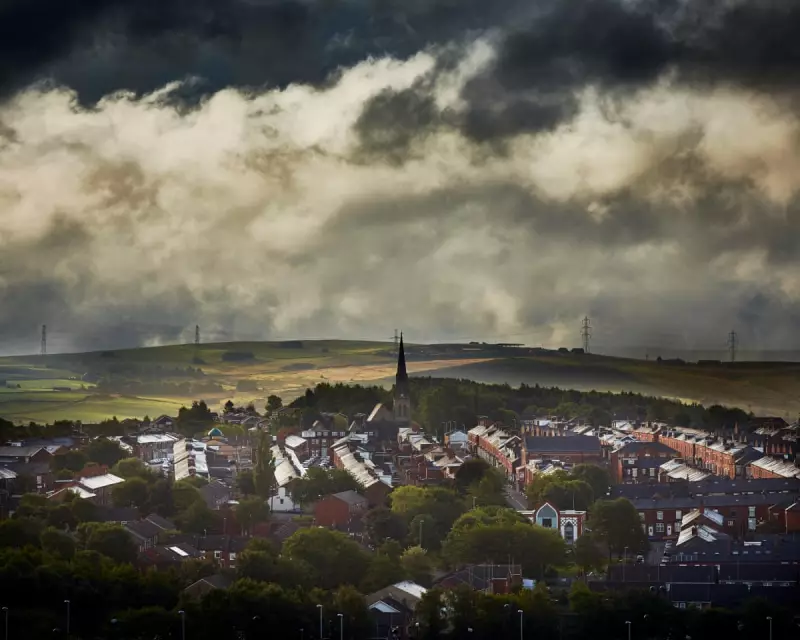
A major national inquiry into grooming gangs across England and Wales will place the historic failings in Oldham, Greater Manchester, under a harsh spotlight. The investigation, forced into being after a media storm involving Elon Musk, will specifically examine how ethnicity, religion, or culture influenced the response of authorities who repeatedly let down vulnerable children.
‘A Conveyor Belt of Children’: The Systemic Failures in Oldham
Concerns in Oldham emerged long before the term ‘grooming gang’ was widely used. As early as 2003, social workers noted girls from children’s homes vanishing, only to be found with the same groups of older men. By 2006, the problem had escalated, with groups targeting schoolchildren. One victim, known in court as Child X, was just 12 when she was first exploited. By age 14, she had been abused by an estimated 300 men and was addicted to crack cocaine and heroin.
Ruth Baldwin, Oldham Council’s then executive director for young people, warned in December 2006: “Unless you scratch below the surface you do not realise the enormity of the problem. We are not talking about teenage relationships. These are men in their 20s, 30s, and beyond.”

The council’s response was Operation Messenger, a multi-agency taskforce launched in 2006 involving police, social care, health services, and Barnardo’s. Praised as groundbreaking and award-winning, its reputation masked a grim reality. A 2022 safeguarding review commissioned by Mayor Andy Burnham found the casework by police and social care was “generally very poor,” failing to protect children at known risk.
Race, Fear, and a ‘Conspiracy of Silence’
While Operation Messenger investigated offenders of various backgrounds, a significant portion of its caseload involved British Asian men, particularly of Pakistani and Bangladeshi heritage. Internal documents reveal authorities were paralysed by the fear of fuelling racial tension and far-right groups like the BNP and English Defence League.
A 2011 Greater Manchester Police memo acknowledged the “perception that there is a conspiracy of silence due to political correctness.” It warned that further cases could bring wider media interest and exploitation by far-right groups, increasing the risk of demonstrations and hate crimes. The memo also noted that Muslim communities felt “demonised.”
This tension had deep roots in a town still scarred by the 2001 Oldham riots. The safeguarding review found no evidence to support rumours of a council cover-up to protect votes, but the fear of inflaming community relations clearly hampered decisive action.
Victims Treated as ‘Problem Children’
The human cost of these failures is starkly illustrated by survivor Samantha Walker-Roberts. In October 2006, aged 12, she was kidnapped from a police station while trying to report a sexual assault. She was trafficked around Oldham and raped for hours by five men at the home of Shakil Chowdhury.
Only Chowdhury was convicted. Vital forensic evidence was destroyed or returned to him, and named accomplices were not pursued. Years later, Walker-Roberts discovered neighbours had recalled a “conveyor belt” of children arriving at Chowdhury’s house in taxis, with at least one attempting to alert the council.
“They thought we were problem children causing chaos,” Walker-Roberts, now 32, said. “In reality, we were being abused. We weren’t being listened to properly.” She was once described in files as “attention-seeking” for disclosing her abuse.
In another shocking case, an older teenager who had herself been exploited was prosecuted for her role in the abuse of Child X. She received a suspended sentence, with the judge noting her life had “not been too dissimilar.” This raises serious questions about how victims were criminalised.
The national inquiry, announced after Elon Musk’s controversial intervention on X regarding Minister Jess Phillips, represents a long-awaited chance for accountability. For survivors like Samantha Walker-Roberts, it must scrutinise not only the cultural factors but the professional attitudes that left children unprotected for decades.