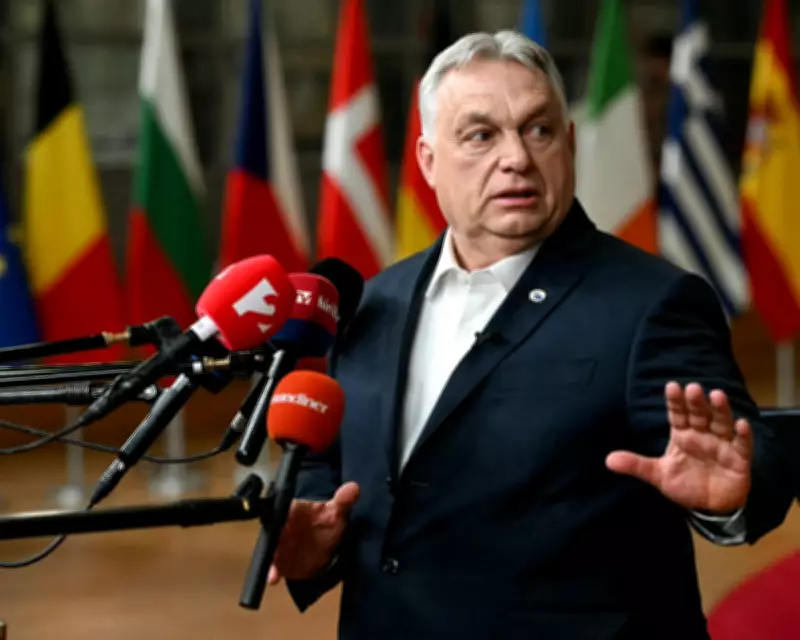
Hungary's Election Becomes Global Geopolitical Battleground
As Hungary approaches its crucial April 12 parliamentary election, Prime Minister Viktor Orbán finds himself in an unprecedented position of receiving overt support from both Moscow and Washington. This dual endorsement, however, may prove to be a political liability rather than an asset as Hungarian voters increasingly prioritize domestic concerns over international alliances.
Russia's Coordinated Campaign Support
On March 3, 2026, Orbán held a significant phone conversation with Russian President Vladimir Putin, officially discussing energy matters. The subsequent events revealed a deeper political coordination when Hungarian Foreign Minister Péter Szijjártó traveled to Moscow and returned with two freed prisoners of war who held dual Ukrainian-Hungarian citizenship. This diplomatic maneuver served as a clear signal of Putin's endorsement for Orbán's re-election campaign.
Evidence suggests a comprehensive Russian effort to influence the Hungarian election outcome. Reports indicate Russian operatives are actively assisting Orbán's campaign, while Moscow has promised favorable energy deals and launched disinformation operations portraying the Hungarian opposition as Ukrainian puppets. The Russian foreign intelligence service openly expressed preference for Orbán over opposition challenger Péter Magyar in an August communique, alleging a Brussels conspiracy to install Magyar in power.

Transatlantic Conservative Alliance
Simultaneously, Orbán enjoys visible support from American conservative networks. During a February visit to Hungary, U.S. Senator Marco Rubio declared a "golden age" in U.S.-Hungarian relations, emphasizing the strong personal bond between Donald Trump and Orbán. American campaign consultants are reportedly advising Orbán's team, while Senator JD Vance plans a pre-election visit to Budapest. Trump himself has signaled his endorsement, and Hungary recently hosted the Conservative Political Action Conference, cementing Orbán's position within the global hard-right movement.
Domestic Campaign Focuses on Foreign Threats
After sixteen years in power, Orbán's campaign lacks substantial domestic achievements to highlight. Instead, the government has constructed a foreign policy narrative centered on portraying Ukraine as an existential threat to Hungary. Government slogans absurdly claim that Kyiv seeks to "colonize" Hungary, despite previous official messaging characterizing Ukraine as a failed state.
This rhetoric extends beyond mere words. Hungary has restricted energy cooperation with Ukraine and provoked diplomatic tensions. Pro-government media outlets routinely warn that Ukraine, in coordination with Brussels, could "attack Hungary at any time." In a world destabilized by multiple conflicts, Orbán positions himself as the "safe choice" who can guarantee peace through his connections to global powers, while portraying Magyar as unstable, inexperienced, and controlled by foreign interests.
Polling Reveals Voter Priorities
Despite the international backing and extensive information campaign, reliable polling indicates Orbán faces significant challenges. The governing Fidesz party trails the opposition by as much as fifteen percentage points, a substantial deficit even within Hungary's skewed electoral system. More importantly, surveys show Hungarian voters are primarily concerned about domestic issues including inflation, corruption, and healthcare—precisely the topics the opposition emphasizes—rather than the geopolitical battles Orbán highlights.
The Double-Edged Sword of Foreign Support
International backing presents a complex dilemma for Orbán. While it reinforces his image as a global player, it risks alienating voters wary of external interference in Hungarian politics. The controversial war in Iran has exposed tensions within the government over its self-proclaimed "pro-peace" stance, complicating the political landscape further.

European governments have grown increasingly alarmed by Hungary's obstructionism within the EU and NATO. Media reports, often citing unnamed European intelligence sources, have detailed alleged Russian influence operations, including the presence of GRU operatives and even potential assassination plots. These disclosures serve to both inform the public and disrupt covert operations.
Uncertain Election Outcome
Interestingly, Orbán's powerful international backers appear to harbor doubts about his electoral prospects. Reporting suggests Russian intelligence considered drastic measures to influence the vote precisely because they feared Orbán might lose. Similarly, Trump may hesitate to expend political capital visiting Budapest to support a candidate facing potential defeat, despite Orbán's persistent invitations.
In the final weeks before the election, the campaign may take darker turns. Potential developments include leaked compromising material targeting Magyar, intensified voter intimidation, unprecedented disinformation campaigns, and aggressive vote-buying efforts. The government's communications strategy has shifted from promoting a coherent narrative to generating a relentless stream of contradictory messages, creating confusion and information overload that may push voters toward the incumbent as the safest choice in a chaotic world.
Historic Stakes for Hungary
This election represents an unprecedented moment in European Union politics. Since the fall of communism and the advent of free elections, Hungary has not witnessed a campaign so saturated with misinformation, dirty tricks, and fearmongering. The international stakes have never been higher, with Hungary facing a historic decision between remaining within democratic Europe or drifting toward Russia's sphere of influence. The country has transformed into a geopolitical battleground where domestic concerns about economic stability and governance quality may ultimately outweigh the allure of international alliances.