Scotland's Political Landscape Shifts Ahead of Holyrood Election
As Scottish voters prepare to go to the polls in May for the seventh Holyrood election since devolution in 1999, the political terrain is marked by weakening trust in the long-governing Scottish National Party (SNP). The SNP has held power since 2007, a remarkable 19-year run, but recent polling indicates a decline in confidence among voters regarding its ability to deliver on promises. This election could significantly realign Scotland's politics, with Labour, Reform UK, and the Conservatives all vying to capitalize on the SNP's vulnerabilities.
SNP: Dominance Without Enthusiasm?
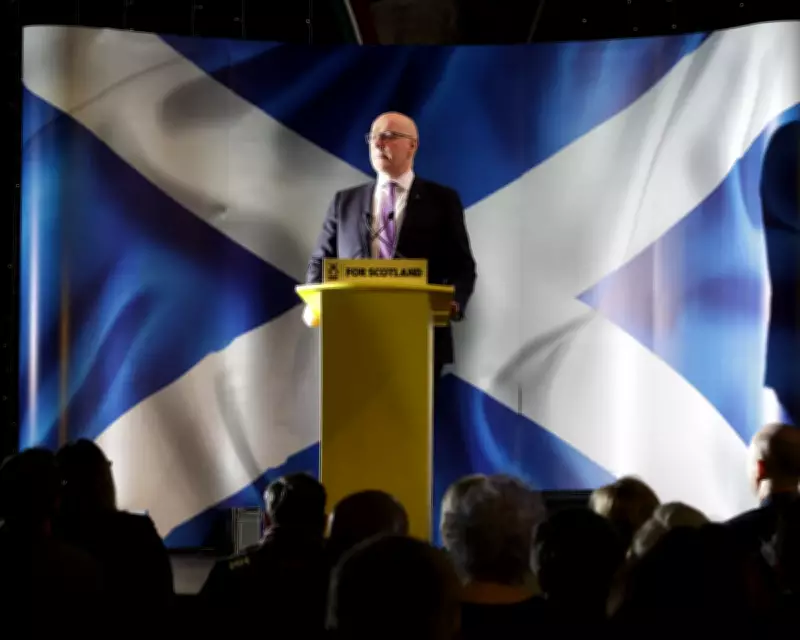
The SNP enters this election campaign from a position of historical dominance, yet it faces unprecedented scrutiny. After nearly two decades in government, the party is no longer judged solely on its future pledges but on its past performance—or perceived failures. While the SNP's campaign heavily emphasizes Scottish independence, this message has been undermined by a lack of a clear, plausible path to a second referendum. Despite these challenges, the party continues to poll favorably, though broader indicators suggest declining satisfaction with public services and trust in the Scottish government.
John Swinney's leadership has provided stability following the resignations of Nicola Sturgeon and Humza Yousaf, but grassroots enthusiasm appears thinner than in previous campaigns. Reports indicate that only the most dedicated activists are engaged in leafleting efforts, a stark contrast to the party's once-vibrant activist base. This shift highlights a potential disconnect between the SNP's electoral strength and its connection with voters on the ground.

Labour: Struggling with Westminster Baggage
Scottish Labour faces a complex dilemma: it operates as an opposition party at Holyrood but carries the brand damage associated with the unpopular Westminster government led by Keir Starmer. Anger among voters is palpable, often directed at decisions around winter fuel payments, the two-child benefit cap, and disability benefit cuts. Even subsequent U-turns on some policies have failed to resonate, prompting Scottish Labour leader Anas Sarwar to make a bold call for Starmer's resignation last week—a move that risked painting him as disloyal and isolated.
However, Labour may find solace in its organizational strengths. Unlike the SNP, the party has substantial financial resources and a well-honed ground operation. The recent Hamilton byelection serves as a case study: despite strong Reform presence and frustration with Westminster, Labour's campaigning machine proved highly effective, securing a victory over both the SNP and Reform. This demonstrates that tactical organization could be a key factor in the upcoming election.
Reform UK: Making Inroads in Scotland
Reform UK is emerging as a significant force in Scottish politics, with steady polling numbers placing it second to the SNP. The party aims to translate this support into meaningful elected presence at Holyrood for the first time. Early defections from the Scottish Conservatives to Reform have occurred in the north-east of Scotland, an area with a strong Conservative tradition, farming communities, and ties to the oil and gas industry. This region, which voted for Brexit in 2016, represents a strategic target for Reform.
The party has installed Malcolm Offord, a multimillionaire financier born in Greenock, as its new Scottish leader to bolster its local credentials. Reform has earmarked £1 million for its Scottish election campaign, investing in staff and nationwide mailshots. Focus-group findings suggest that some voters feel overlooked by mainstream politicians on issues like immigration and gender recognition—a sense of grievance Reform is actively exploiting. The unanswered question remains whether this substantial investment will convert into seats.

Smaller Parties and Tactical Dynamics
The Scottish Greens, now led by co-leaders Ross Greer and Gillian Mackay, face challenges after their governing partnership with the SNP collapsed. Their radical positioning has become harder to sustain, and compromises made during power have left them vulnerable to attacks. Meanwhile, the Scottish Conservatives are grappling with an identity crisis and the growing threat from Reform on their right. Leader Russell Findlay has struggled to define the party beyond reacting to Reform, and without the "stop independence" appeal, they have lost a key electoral driver.
The Liberal Democrats may benefit from Scotland's proportional voting system, where small gains can lead to increased leverage in a potential minority government scenario. As the election approaches, tactical voting could play a decisive role. Recent polls indicate that majorities of both Labour and SNP supporters are willing to vote against their usual preferences to keep Reform out, suggesting that fear and prevention may outweigh enthusiasm in shaping the outcome.
Conclusion: A Contest Defined by Fatigue and Calculation
May's Holyrood election is shaping up as a contest where almost every party is burdened—by incumbency, Westminster unpopularity, organizational weaknesses, or ideological confusion. The sophisticated Scottish electorate, shaped by decades of referendums and tactical voting, may ultimately decide the result based on what they aim to prevent rather than what they hope to achieve. As polling day nears, the key question is whether any party can make a persuasive affirmative case, or if the election will be defined by resignation, tactical calculation, and a lack of viable options.