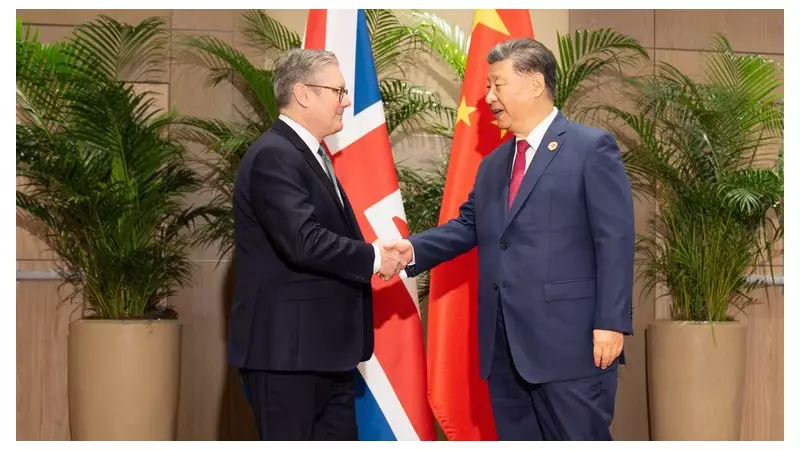
Prime Minister Sir Keir Starmer is on the brink of a final, controversial decision that risks branding him ‘Kowtow Keir’ amongst critics: granting planning permission for a vast new Chinese embassy in London.
Security Fears and Political Revolt
Despite overwhelming opposition from MPs across all parties, including senior figures in his own Labour Party, Sir Keir is poised to approve the contentious development. The plans for the so-called ‘super embassy’ on the former Royal Mail site near the Tower of London have ignited a fierce new security row.
The hostility intensified after leaked, unredacted plans revealed a secret chamber planned within the embassy complex, situated just metres from sensitive underground fibre optic cables. These cables transmit crucial financial data for the City of London and millions of private emails.

Shadow Security Minister Alicia Kearns warned in the Commons that this access could give the Chinese Communist Party a “launch pad for economic warfare” against the UK. Senior Labour backbencher and national security strategy committee member Sarah Champion emphasised that every security briefing identifies China as a hostile state, with multiple government agencies raising concerns.
The Prime Minister's Calculated Push
So why the push for approval now, after months of delay? The answer lies in an upcoming diplomatic mission. Sir Keir is expected to visit China later in January 2026, following the World Economic Forum in Davos which concludes on 23 January.
Business leaders had privately expressed doubt to Sky News that the high-stakes trade trip would proceed without the embassy being signed off. The PM has signalled his intent clearly, lamenting the UK's lack of engagement with Beijing compared to allies like the US, France, and Germany.
In a Guildhall speech in December 2025, Sir Keir acknowledged China poses “real national security threats” but argued that “the absence of engagement is just staggering - a dereliction of duty.” He declared this period of distance was over, stating: “Well, no more.”
A Decision With No Way Back
Unlike the many policy U-turns that have characterised his premiership, this choice is permanent. Once approved, the embassy cannot be ‘disapproved’. This irrevocable nature has sharpened the criticism, with opponents like former shadow justice secretary Robert Jenrick claiming “no one committed to our national security could possibly sign this off.”
The political nickname has swiftly shifted from “Never Here Keir”—a jab at his perceived absence—to the more damning “Kowtow Keir”, suggesting subservience to Beijing. As Sir Keir prepares to dine with President Xi Jinping, a man he last met in November 2024, the backlash at home promises to leave a lasting, bitter aftertaste from an embassy decision his allies and foes alike have opposed with near-unanimous hostility.