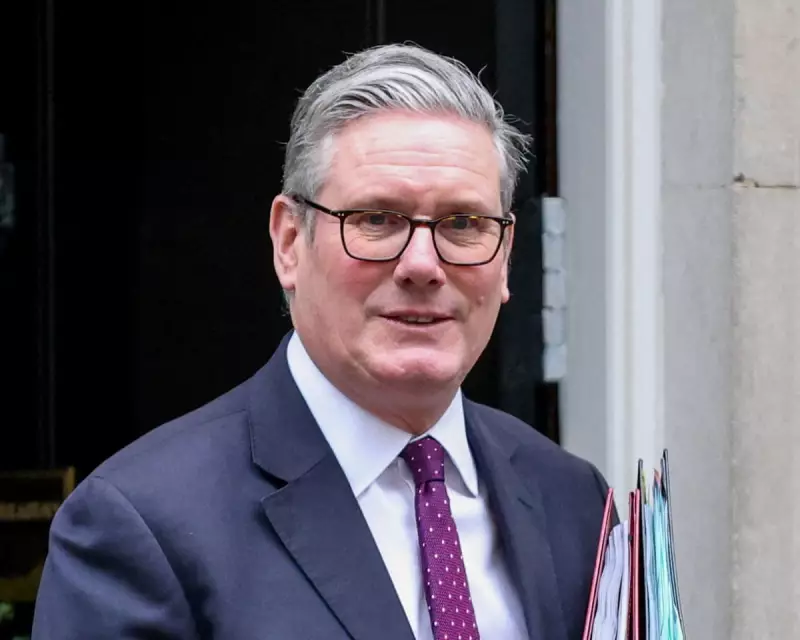
Prime Minister Keir Starmer is approaching his second full year in office facing a stark reality: he is currently one of the least popular premiers in modern history, a dramatic fall from the landslide victory he secured just 18 months ago.
Despite this, Starmer and his inner circle are convinced that 2026 will mark a turning point. His chief of staff, Morgan McSweeney, has labelled it "the year of proof", a period where the Labour government must demonstrate to voters that the change they voted for in 2024 is finally being delivered.
The Prime Minister will launch the year with a major address on the cost of living, aiming to highlight recent interest rate cuts and the removal of green levies from energy bills as evidence that financial pressures are easing. However, a series of formidable political hurdles loom that could make or break his beleaguered administration.

Domestic Minefields: Send and the Ballot Box
The first major flashpoint will be the government's planned overhaul of the Special Educational Needs and Disabilities (Send) system. Education Secretary Bridget Phillipson is due to publish a white paper early in the year, outlining reforms intended to create a cheaper and more efficient framework amid soaring demand.
Parents' groups fear the potential scrapping of Education, Health and Care Plans (EHCPs), which guarantee legal support. Crucially, Labour backbenchers have privately warned they are prepared to rebel if the changes appear primarily cost-driven rather than focused on improving outcomes. A repeat of last year's welfare rebellion would deliver another severe blow to Starmer's authority.
The moment of maximum political danger, however, arrives in May 2026. Voters across Scotland and Wales will elect their devolved administrations, while local elections will be held in parts of England, including London. Labour is braced for heavy losses, with officials fearing the party could finish third in both Wales and Scotland.
Such a dismal result, combined with council seat losses in the capital, could theoretically trigger a leadership challenge. Starmer's team is already planning a New Year offensive against Reform UK and Nigel Farage, branding them as "far right" to mitigate their electoral threat.
Starmer's Fightback and Foreign Policy Tests
In anticipation of a difficult May, the Prime Minister is plotting a political comeback centred on a new legislative agenda. Plans are being drawn up to prorogue parliament and return with a fresh King's Speech. This package is expected to include Phillipson's Send reforms, a new immigration bill, changes to the House of Lords, and long-awaited leasehold reforms, including a ban on new flats being sold as leasehold.
On the international stage, Starmer faces arguably his most delicate challenge: managing the relationship with the United States under President Donald Trump. The coming year is critical for UK-US relations, with Starmer aiming to finalise a technology deal covering AI and quantum computing, while also navigating potential peace talks for Ukraine that could sideline European allies.
Negotiations have been complicated by US objections over unrelated trade complaints, including British food standards. Starmer will be assisted by the new ambassador to Washington, Christian Turner, a career diplomat with extensive experience in the Middle East and South Asia.
The Culture War Flashpoint
A final, deeply contentious issue awaits resolution in 2026. Ministers have yet to approve official guidance from the Equality and Human Rights Commission (EHRC) on access to single-sex spaces, following a Supreme Court ruling in April that the legal definition of a woman should be based on biological sex.
The guidance, likely to be published this year, is expected to reflect interim advice suggesting transgender people should not use toilets matching their gender identity. The government's final decision is certain to ignite fierce debate, with trans rights campaigners and some within the EHRC itself having already criticised the interim advice as overly restrictive.

For Keir Starmer, 2026 represents a year of profound tests. His ability to navigate these domestic reforms, electoral pressures, and diplomatic tightropes will ultimately determine whether this year becomes one of recovery or further decline for his premiership.