Keir Starmer's Popularity Plummets as Voters Deliver Harsh Verdict
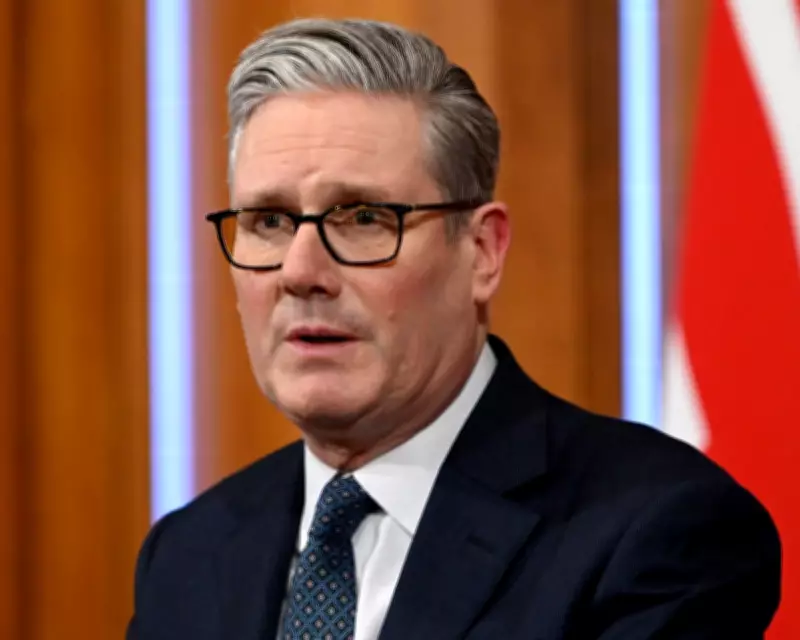
A recent documentary has exposed the depth of public dissatisfaction with Prime Minister Keir Starmer, revealing poll results where voters overwhelmingly describe him as "useless" and "weak." The investigation into Starmer's historically low approval ratings highlights a growing disconnect between his campaign promises of change and the harsh realities facing ordinary citizens.
Poll Reveals Stark Public Discontent
The documentary commissioned a new survey that produced headline-grabbing findings about Starmer's leadership. A majority of respondents believe the Prime Minister should resign, citing his slow pace of change and lack of clear direction. When asked to describe Starmer in one word, the most common responses were "incompetent," "useless," and "weak"—a damning assessment of his political performance.
Political broadcaster Lewis Goodall, who conducted the investigation, notes that despite Starmer's campaign bus prominently displaying the word "CHANGE," life for ordinary Britons has only become more difficult. The program emphasizes that while the extent of national disgruntlement is well known, these survey results quantify the severity of Starmer's popularity crisis.

The Riddle of Starmer's Political Strategy
Goodall explores the fundamental question of how Starmer reached this point of widespread unpopularity. The documentary presents a straightforward explanation: Starmer lacks a grand political strategy and defining vision. According to Goodall's analysis, the Prime Minister appears "fundamentally anti-political" and operates without strong political convictions.
The program features interviews with political figures across the spectrum, including former Home Secretary Alan Johnson and Education Secretary Bridget Phillipson defending Starmer, while left-leaning Labour MPs John McDonnell and Kim Johnson offer more critical perspectives. Conservative MP Michael Gove provides moderate analysis, with all participants agreeing that Starmer demonstrates no strong political convictions.
Policy Reversals and Political Missteps
Goodall recalls that during Starmer's Labour leadership campaign, he presented a suite of left-wing policy positions that he subsequently abandoned upon becoming leader. This move rightward, while potentially "smart politics at the time," has created space for the Greens to capture progressive votes.
The documentary examines several policy decisions that have fueled public discontent, including cuts to winter fuel payments and the retention of the two-child benefit cap—neither of which appeared in Starmer's election manifesto. Both policies required subsequent U-turns, highlighting what critics describe as a hapless lack of direction.
Starmer's controversial "island of strangers" immigration speech receives attention as part of a broader discussion about whether the Prime Minister has ceded too much rhetorical ground to Reform UK in an effort to combat their electoral threat.
Unexamined Questions and Missed Opportunities
The documentary raises questions about whether Westminster etiquette prevents a more critical examination of Starmer's leadership. The program suggests that an alternative, less palatable interpretation exists: that Starmer hasn't improved people's lives because he doesn't want to, and his gaffes reveal conservative instincts when in power.
Notably absent is a thorough interrogation of Starmer's position on Gaza—mentioned only briefly in connection with the Gorton and Denton byelection loss—and his authoritarian-leaning response to protests. The documentary also overlooks how Labour's funding sources have shifted from numerous small membership fees to relatively few corporate donations.
These omissions might have created space for considering whether Starmer maintains an ideology focused on preserving the status quo, regardless of voter anger. The possibility that his promise of change was a cynical lie appears to remain outside the documentary's analytical boundaries.

A Benign Interpretation of Controversial Decisions
Goodall offers a similarly benign interpretation of the Peter Mandelson affair, presenting the appointment of the arch-schmoozer of plutocrats as US ambassador as a sincere, if misguided, attempt to secure beneficial trade deals from Donald Trump. The documentary identifies Starmer's dealings with Trump as a potential strength, with supporters arguing that his stance on Iran demonstrates backbone.
The Urgent Need for Change
Goodall concludes by expressing hope that Starmer can tap into latent dynamism, asking: "Can Keir Starmer find those qualities in himself?" The documentary effectively summarizes why Starmer's polling remains dismal, emphasizing that regardless of one's interpretation of his governance, the survey numbers indicate his current course is unsustainable.
The presenter's final question—"Can he do it to save the old order before it gives way to something new?"—frames Starmer's challenge as not merely personal but systemic. For both the Prime Minister and the political system as traditionally understood, the documentary suggests, it's now or never for meaningful transformation.