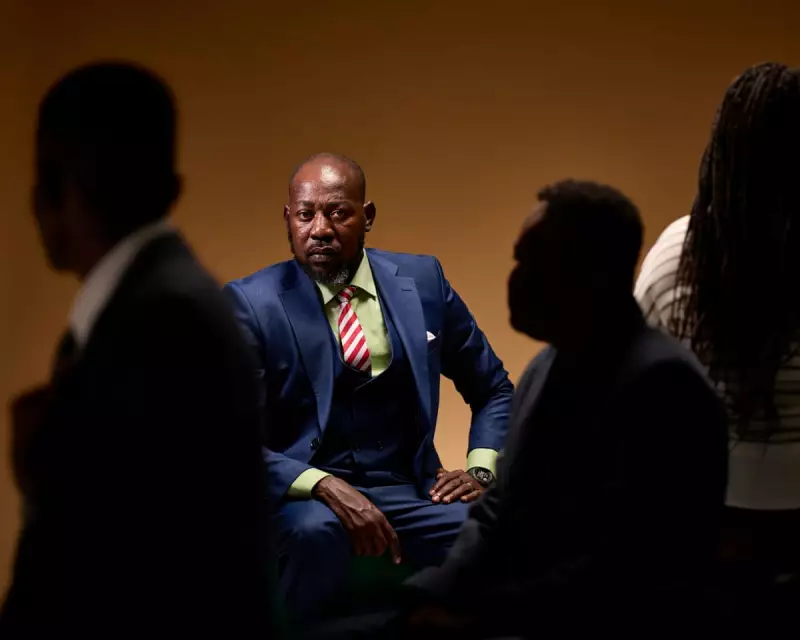
In the shadows of Sudan's catastrophic war, where doing good can get you killed, a vast underground network of ordinary citizens is risking everything to stave off famine and provide care for millions. This is the story of the Emergency Response Rooms (ERRs), a grassroots movement of 26,000 volunteers who have become the de facto state in a country torn apart by conflict.
The Perilous Daily Grind of a Volunteer
Each morning, volunteers like Amira secretly cross the shifting frontlines of Sudan's civil war, entering territory held by the Rapid Support Forces (RSF) – paramilitaries accused of genocide and countless war crimes. "I'd never tell anybody, especially my mother, where I was going," Amira confesses. "You have to sneak in and hope you make it back." Her days are spent counselling women and children who have been raped, before creeping back at nightfall to army-controlled land, viewed with suspicion by both sides.
This backdrop of fear and mistrust defines their work. Since the war erupted in April 2023, the RSF and the Sudanese military are believed to have killed up to 400,000 people. Volunteers are hunted, detained, and executed. More than 145 have been killed, with about 100 currently detained in Shala prison in El Fasher. "You risk anything from intimidation to death. From torture to being killed – and anything in between," says volunteer Alsanosi Adam, who lost a friend to torture in detention.

A Network Replacing a Collapsed State
Despite the extreme danger, the ERR network has grown to become a lifeline for a nation. Active in 96 of Sudan's 118 districts, the ERRs have provided meals or help to over 29 million people – more than half the population. They are often the only aid providers in areas where international agencies cannot reach, uniting communities across ethnic and regional divides in a country where 21.2 million face acute food insecurity and seven million are on the brink of famine.
Their effectiveness, however, has made them a target. Both warring factions are envious of the deep community trust the ERRs command. Volunteer Jamal was arrested and tortured while distributing food in South Kordofan, accused of collaborating with outside forces. He believes he was only released due to massive community protest. "Most of the protection we get actually emanates from the community itself," he says.
International Recognition and a Fight for Survival
The group's critical work recently brought three volunteers – Amira, Alsanosi Adam, and Jamal – to London under a secretive trip arranged by the UK's Foreign, Commonwealth and Development Office. There, they briefed Foreign Secretary Yvette Cooper, who later praised these "incredibly brave Sudanese volunteers" in Parliament. Adam confirmed that Cooper pledged direct funding to the ERRs during their meeting, a vital commitment for a network operating at a 77% deficit.
Despite propping up the country, the ERRs' future is precarious. They have received less than 1% of all international aid funding for Sudan, even though they deliver aid at a fraction of the cost of large UN agencies. Funding cuts have forced hundreds of community soup kitchens to close. While nominated for the 2024 Nobel Peace Prize, the volunteers were not motivated by acclaim. "We only want to help," says Jamal, though he acknowledges that winning such a prize would offer crucial protection.
For Amira, the constant peril eventually became too much to bear alone. After a year of secret crossings, she told her family about her work. "To my relief, she was 100% supportive," Amira says of her mother. "She could not be more proud." It is a rare moment of open acknowledgement for the silent army of Sudanese civilians who, every day, choose to hope they make it back.