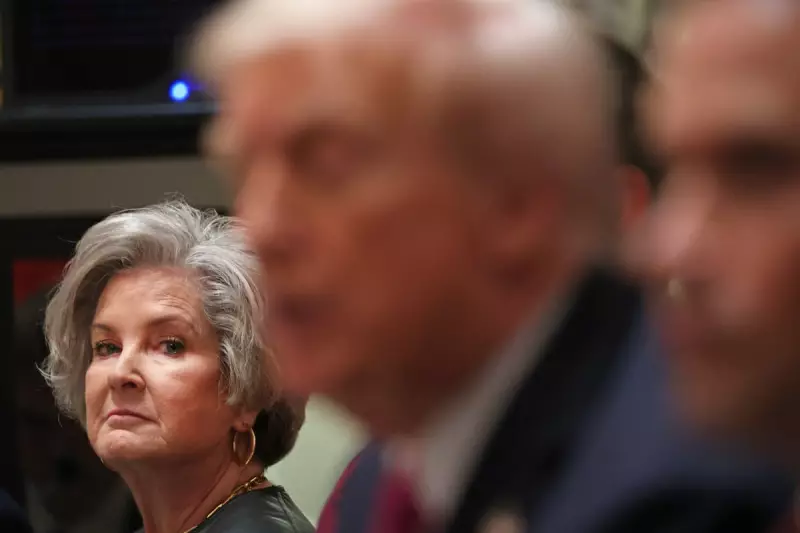
Donald Trump's White House chief of staff, Susie Wiles, has delivered a remarkably candid assessment of the president's second term, stating he believes "there's nothing he can't do, nothing, zero" while in office. The revelations come from a series of 11 interviews given to Vanity Fair, starting before the election, painting an unvarnished picture of the administration's inner workings.
"An Alcoholic's Personality" and Pursuit of Retribution
Wiles, whose late father was broadcaster and NFL star Pat Summerall, drew on personal experience to describe the teetotal president. She characterised Trump as having "an alcoholic's personality," explaining that high-functioning alcoholics exhibit exaggerated personalities, and she considered herself an expert in dealing with such traits.
In strikingly unguarded comments, Wiles admitted that Trump pursues retribution against political opponents when he sees an "opportunity." She revealed she had forged a "loose agreement" with him to conclude any score-settling within the first 90 days of his administration. However, the president did not adhere to this timeline. Indictments have been served more than six months into his term, targeting figures like New York Attorney General Letitia James and former FBI director James Comey.

"In some cases, it may look like retribution," Wiles conceded. "And there may be an element of that from time to time. Who would blame him? Not me." She clarified that she doesn't believe he wakes up thinking about it, but will act when the chance arises.
Clashes Over Pardons, Musk, and Cabinet Appointments
The chief of staff detailed internal disagreements, notably her initial opposition to Trump pardoning all 1,500 individuals involved in the 6 January 2021 Capitol insurrection. She praised the FBI for doing "an incredible job" in establishing guilt, a stance at odds with Trump's vengeance against some agents. She ultimately relented after Trump argued sentences were disproportionately heavy.
Wiles expressed strong misgivings about billionaire entrepreneur Elon Musk, who heads the unofficial Department of Government Efficiency (Doge). She called him "an odd, odd duck" and was "initially aghast" at his approach, particularly the dismantling of the overseas development agency USAID. She attributed a controversial social media post by Musk about historical figures to his drug use, stating, "He's an avowed ketamine [user]."
She also criticised Attorney General Pam Bondi for mishandling the release of Jeffrey Epstein-related files, which risked alienating Trump's Maga base. While acknowledging Trump was in the files, she insisted it was not for "doing anything awful."
Defending Disrupters and Acknowledging Policy Disquiet
Despite criticism that many cabinet picks are unqualified, Wiles described the team—including Defence Secretary Pete Hegseth and Homeland Security Secretary Kristi Noem—as "a world-class cabinet" and "disrupters" perfect for tackling the "deep state." She affectionately referred to controversial Health Secretary Robert F Kennedy Jr., known for anti-vaccine views, as "my Bobby" and "quirky Bobby."
She was less complimentary about Vice President JD Vance, describing his conversion to a Maga diehard as "sort of political" and noting he has been "a conspiracy theorist for a decade." Russell Vought, a key architect of the Project 2025 blueprint, was labelled "an absolute rightwing zealot."
On policy, Wiles admitted disquiet over Trump's signature immigrant deportation scheme, which has involved mass roundups of non-criminals despite pre-election promises. "We've got to look harder at our process for deportation," she said.
Trump, Bondi, and Musk have not publicly responded to the Vanity Fair articles. The interviews, conducted by author Chris Whipple, provide a rare and unfiltered window into the convictions and conflicts shaping the second Trump presidency.