Syrian government forces have dramatically expanded their control over the country's north, moving into towns and strategic sites previously held by Kurdish-led forces in a move described as a 'betrayal' of a stalled peace accord.
A Swift Military Advance
On Saturday, the Syrian army announced it had taken control of the northern city of Tabqa and its critical adjacent dam, along with the major Freedom dam west of Raqqa. This followed the capture of two neighbourhoods in Aleppo last week and areas to the city's east.
The advance came despite direct calls from the United States to halt offensive actions in the region between Aleppo and Tabqa, approximately 160km apart. US Central Command chief Brad Cooper issued a written statement urging Syrian troops to cease their operations.

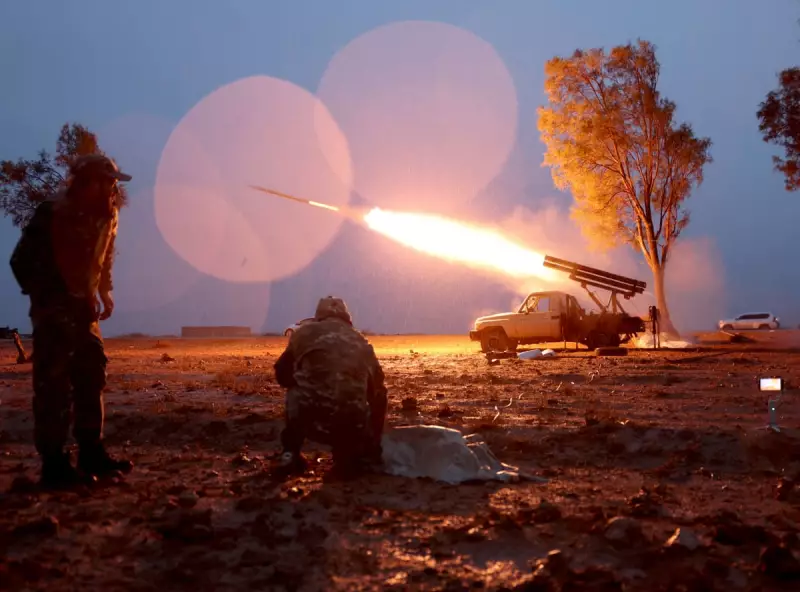
For days, Syrian troops had been amassing around villages west of the Euphrates River, calling on the Kurdish-led Syrian Democratic Forces (SDF) to redeploy to the opposite bank. Clashes have centred on strategic posts and oilfields along the Euphrates.
A Deal Unravels and Accusations Fly
The military push follows the stalling of a March 2025 deal intended to integrate Kurdish forces into the national army. Initial withdrawals under this agreement saw the SDF leave the main town of Deir Hafer and surrounding villages peacefully, with residents celebrating the army's arrival.
However, the SDF has accused Damascus of violating subsequent agreements. After withdrawing from further areas as a gesture of goodwill early on Saturday, the SDF stated that Syrian troops continued to push east into towns and oilfields not included in the original deal.
"Damascus has violated the recent agreements and betrayed our forces," the SDF said on Saturday, reporting clashes with troops south of Tabqa. The Syrian army, in turn, urged the SDF to immediately fulfil its commitments and withdraw fully east of the Euphrates.
Strategic Stakes and International Concern
The Syrian Petroleum Company confirmed that government troops had captured the nearby Rasafa and Sufyan oilfields, which could now be brought back online. The SDF, having withdrawn east towards the flashpoint town of Tabqa, vowed to fight to retain control of the town and another oilfield in its vicinity after the army announced its intention to capture it.
The violence has drawn international concern. France's President Emmanuel Macron and Iraqi Kurdistan leader Nechirvan Barzani joined calls for de-escalation and a ceasefire. US envoy Tom Barrack travelled to Erbil in northern Iraq on Saturday to meet with SDF commander Mazloum Abdi and Iraqi Kurdish leader Masoud Barzani in an effort to end the fighting.
The situation underscores a major recalibration of US policy in Syria, balancing years of support for the SDF—which was instrumental in fighting Islamic State—against Washington's newer support for President Ahmed al-Sharaa, whose rebel forces ousted dictator Bashar al-Assad in late 2024.
The latest clashes deepen the faultline between Sharaa's government, which has vowed to reunify Syria after 14 years of war, and local Kurdish authorities wary of his Islamist-led administration. With Arab tribal leaders in SDF-held territory reportedly ready to take up arms if ordered, and Kurdish fears heightened by sectarian violence in 2025, the path to a diplomatic resolution appears increasingly fraught.