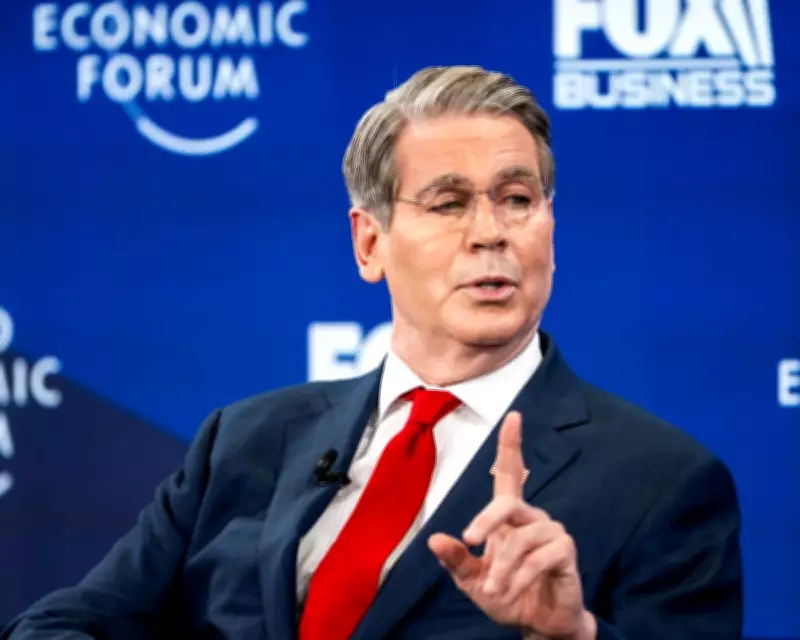
US Treasury Department Escalates Complaint Over Financial Times Reporting on Federal Reserve
The United States Treasury Department has issued a formal demand for the Financial Times to retract a recent article regarding Treasury Secretary Scott Bessent's alleged views on increasing oversight of the Federal Reserve. In a strongly worded complaint escalated to the newspaper's parent company, Nikkei Inc., treasury officials accused the FT of publishing what they termed "false claims" and a "manufactured" narrative.
Formal Complaint Details Alleged Misrepresentations
In an email addressed to senior editors at both the Financial Times and Nikkei, treasury representatives disputed multiple assertions within the story and criticized its headline for misrepresenting the underlying reporting. The FT's article, published on March 26, reported that Secretary Bessent had discussed adopting elements of the Bank of England's oversight model for the Federal Reserve, including regular communication between the central bank governor and Britain's chancellor regarding inflation targets.
Treasury officials categorically denied that Bessent had endorsed such views or engaged in discussions about implementing similar practices within the United States government framework. They particularly took issue with the headline's claim that Bessent had "praised" the Bank of England model, noting this characterization did not appear in the actual text of the story.

Official Denials and Defense of Reporting
"The Secretary has never made any of the above statements in public or private," wrote Elliott Hulse, the acting assistant secretary for public affairs, in the email which was subsequently forwarded to the Guardian by an anonymous source familiar with the matter. Hulse emphasized that at no time had Bessent "discussed tightening the US Treasury's oversight of the Federal Reserve by adopting elements of the Bank of England's model in a step that would shake up the central bank's relationship with government."
He further clarified that the secretary had never "indicated, implied, or asserted that he 'could support the UK system in which the BoE governor corresponds regularly with the chancellor about the central bank's inflation target.'"
In response to inquiries about the complaint, the Financial Times maintained confidence in their reporting. "We stand by our reporting and have included US treasury responses in the article," stated Finola McDonnell, a spokesperson for the FT.
Broader Context of Federal Reserve Independence Concerns
This complaint represents the latest effort by treasury officials to discredit the FT's reporting. Just one day prior to the formal complaint, Secretary Bessent himself took to social media to issue denials, writing: "In short, FT has literally manufactured an entirely fake policy position for me and the Administration."
While treasury officials stopped short of issuing explicit legal threats, they referenced provisions within the editors code of practice established by the UK's Independent Press Standards Organization (Ipso), which mandates that publications avoid publishing misleading or distorted information. Notably, the Financial Times is not a member of Ipso, leaving it unclear whether treasury officials would pursue additional actions against the newspaper.
The FT's report emerges during a period of heightened sensitivity within financial markets and among treasury officials regarding the Federal Reserve's political independence. This concern has been amplified by former President Donald Trump's repeated threats to dismiss Fed Chair Jerome Powell for allegedly ignoring demands to reduce borrowing costs.
Trump has additionally accused Powell of mismanaging renovations at the central bank's headquarters and subsequently lying to Congress about those plans—allegations that sparked a criminal investigation and created investor unease, perceived as pressure tactics against Powell.
Investors consistently emphasize the importance of the Federal Reserve maintaining its independence in policy decisions, separate from presidential political preferences. There is widespread concern that excessively aggressive rate cuts could trigger rapid inflation, necessitating sharp rate increases to correct the economic imbalance.