Justin Trudeau's Unconventional Post-Prime Ministerial Path
While former Canadian prime ministers typically fade into quiet retirement or corporate roles, Justin Trudeau has charted a strikingly different course. Since stepping down in March 2025 after nearly a decade in office, Trudeau has embraced a public life intertwined with celebrity culture, most notably through his relationship with pop star Katy Perry and appearances at high-profile events like the Coachella music festival.
A Statement from the Festival Grounds
When Hungary's Viktor Orbán faced political downfall, progressive leaders worldwide issued statements celebrating democratic renewal. Among them, Trudeau's message stood out not for its content, but for its context. Posting from Coachella, where he and Perry watched Justin Bieber perform, Trudeau wrote, "Hungarians voted for change and a renewed commitment to democratic institutions after years of erosion under Viktor Orbán." He added, "A powerful and positive signal to democracies around the world that citizens can reclaim institutions and restore respect for rights."
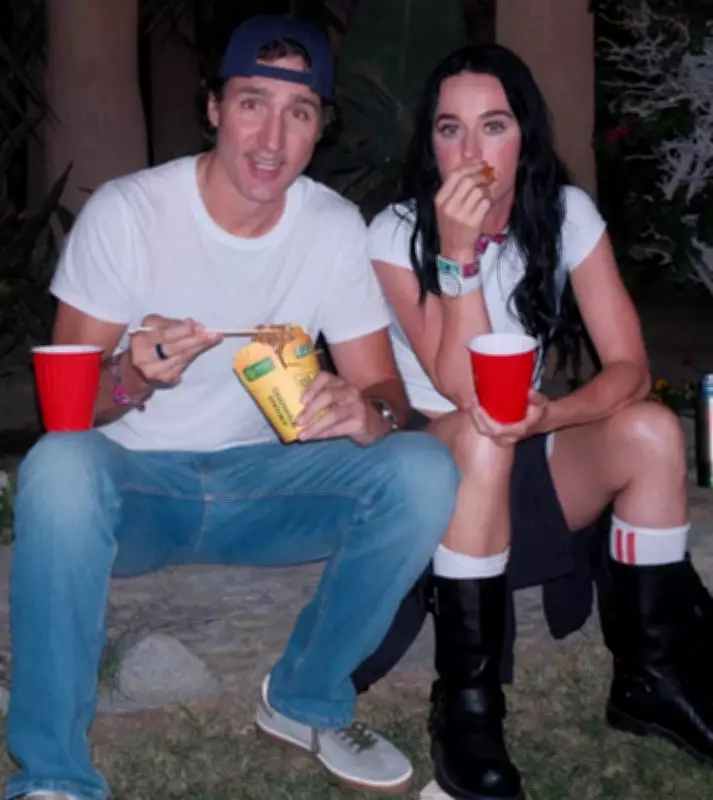
This boilerplate political language, delivered amidst festival crowds, highlighted the tonal dissonance defining Trudeau's current existence. Earlier that day, Perry had shared an image of Trudeau in a backwards baseball cap and jeans, eating takeout noodles—a far cry from the statesmanlike image of a former head of government.

The Celebrity Versus Statesman Dilemma
Susan Delacourt, a political columnist for the Toronto Star who has covered Trudeau since before his 2013 Liberal leadership win, notes, "The contradiction we’re seeing with Justin Trudeau is one that he dealt with before he came into office: is he a celebrity, or is he a man of depth?" For loyalists, this sparks debate about balancing legacy-building with personal enjoyment.
Trudeau's initial post-office social media activity suggested a shift toward normalcy—a selfie at Canadian Tire, captioned in French and English, implied an everyman retreat. However, sightings with Perry on yachts, at restaurants, and on ski slopes, alongside other celebrities like Prince Harry and Olympian Eileen Gu, quickly countered that narrative.
Historical Precedents and Public Expectations
Traditionally, Canadian ex-prime ministers have pursued low-key paths: roles at law firms, business travels, or returns to pre-political lifestyles. Delacourt observes that Canadians generally expect former leaders "to go away – and largely, they do." Yet Trudeau, at 54, breaks this mold as the first ex-PM with a massive social media following. "He has an active presence because people are interested in him and because he remains interested in the world," she says.
His fame is deeply rooted. The son of Pierre Trudeau, Canada's original "rock-star" politician, Justin entered public life bearing that legacy. In office, features in Vogue and Rolling Stone (which dubbed him "The North Star") amplified his celebrity, though sometimes eliciting domestic eye-rolls.
Legacy and Political Calculations
Stephen Maher, author of The Prince: The Turbulent Reign of Justin Trudeau, argues that Trudeau's tenure achieved significant policy wins, such as expanding the welfare state and advancing Indigenous rights, despite ending with low popularity. "He reflected a growing multicultural society of Toronto, Montreal and Vancouver," Maher states.
However, Trudeau's penchant for viral moments—from explaining quantum computing to shirtless photo ops—sometimes backfired, as seen in a poorly planned India trip and a controversial surfing incident on an Indigenous remembrance day. These episodes fueled perceptions of style over substance.
Contrast with Successor and Future Trajectory
Trudeau's post-office image sharpens in contrast to his successor, Mark Carney, who projects a pragmatic, technocratic demeanor. At events like Davos, where Carney eulogized the rules-based order, Trudeau discussed soft power in geopolitics—with Perry in the front row. Notably, Trudeau's absence at a recent Liberal convention, where Carney offered measured praise, signals a shifting dynamic within the party.

Maher reflects, "Trudeau’s team very astutely built a global brand for him. But part of managing a global brand is having a good sense of how things that you do will land in order not to damage that brand, and they misjudged that at times." Yet, he concludes, "He was – and still is – famous around the world. People around the world know his name, and that’s going to last."
As Trudeau navigates this hybrid existence, his legacy remains unsettled, debated among peers and public alike. Whether as a celebrity statesman or a private figure, his unique path continues to captivate and provoke discussion on the expectations for former leaders in the modern era.