Trump's Photo Op Fiasco Reveals Deep Disconnect with Voters
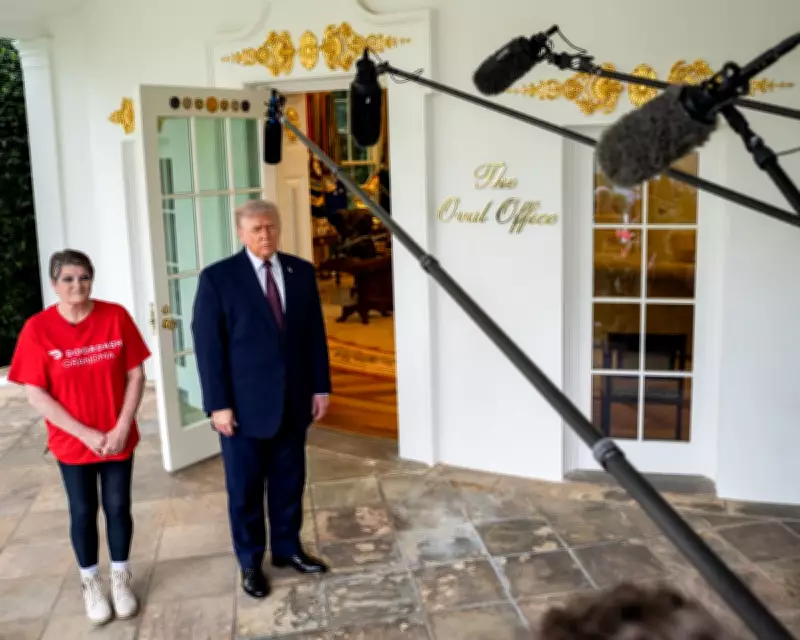
In a meticulously planned White House event on April 13, 2026, former President Donald Trump welcomed DoorDash delivery driver Sharon Simmons, a 58-year-old grandmother from Arkansas with ten grandchildren. The staged moment was designed to highlight Trump's "no tax on tips" policy, which Simmons had previously advocated for before Congress, explaining she took the delivery job to help pay for her husband's cancer treatment.
What should have been a straightforward policy promotion quickly derailed when Trump veered off message. "Do you think men should play in women's sports?" he unexpectedly asked Simmons, referring to trans women athletes. Showing more discipline than the president himself, Simmons replied, "I really don't have that opinion. I'm here about 'no tax on tips.'"
A Presidency Losing Its Way
This small exchange encapsulates the broader crisis facing Trump's second administration. The president who won re-election in 2024 by tapping into widespread economic discontent has since become fixated on culture war battles that alienate the very working-class voters who propelled him to victory. Trump's approval ratings have plunged to historic lows, with only 37% of Americans approving of his job performance and a staggering 63% expressing disapproval.

The 2024 election was initially interpreted as a permanent cultural shift toward right-wing populism, with pundits declaring the triumph of conservative values and institutions scrambling to adapt to an administration with authoritarian tendencies. However, less than eighteen months into Trump's second term, that narrative has completely collapsed.
Economic Promises Unfulfilled
Voters who supported Trump expecting economic relief have seen exactly the opposite. Gas prices have soared from an average of $3.10 per gallon in 2025 to over $4, while housing costs continue to climb beyond reach for many Americans. Employment and wages remain stagnant despite Trump's campaign promises of economic revitalization.
Meanwhile, the administration has pursued an aggressive cultural agenda that includes slashing funding for what they term "woke" research, transforming federal equality programs into discrimination mechanisms, and pressuring athletic organizations from the NCAA to the International Olympic Committee to ban trans women athletes. The military has faced criticism for what appears to be an effort to resegregate through stymied promotions for women and people of color.
The Backlash Against Backlash
Following the 2024 election, many political analysts blamed Democrats for focusing too heavily on social issues rather than economic concerns. They pointed to effective Trump campaign ads targeting Kamala Harris's support for publicly funded transition care for transgender prison inmates. Yet the Republican campaign itself became a festival of male grievance, celebrated in online subcultures and manosphere podcasts.
Now in power, the Trump administration seems primarily concerned with serving these narrow constituencies rather than the broader electorate that delivered their victory. The result has been a fracturing of the once-unified Maga coalition, with Latino men who shifted toward Republicans in 2024 alienated by draconian immigration policies including mass detention and deportation programs.
Policy Failures Mount
Trump's signature economic policy of tariffs was thrown out by the Supreme Court, which also appears poised to block his attacks on birthright citizenship. The ongoing Epstein scandal continues to embarrass the administration, while Trump has repeated the mistake he once criticized in his Republican predecessors: launching an unwinnable regime-change war in the Middle East.
As the November midterm congressional elections approach, Trump finds himself increasingly isolated, unable to deliver on major policy initiatives and presiding over a divided coalition. Democrats, despite their own struggles to present a coherent alternative agenda, may benefit from the administration's self-inflicted wounds. The fundamental question remains whether 2024 represented a permanent cultural shift or simply a desperate plea for economic change from a working class feeling left behind.

For voters like Sharon Simmons, who came to the White House concerned about practical economic issues like tip taxation, the administration's preoccupation with culture war battles represents a profound misunderstanding of what motivated their support. As prices continue to rise and economic conditions stagnate, that disconnect grows ever more apparent to the ordinary Americans who once believed Trump would champion their economic interests.