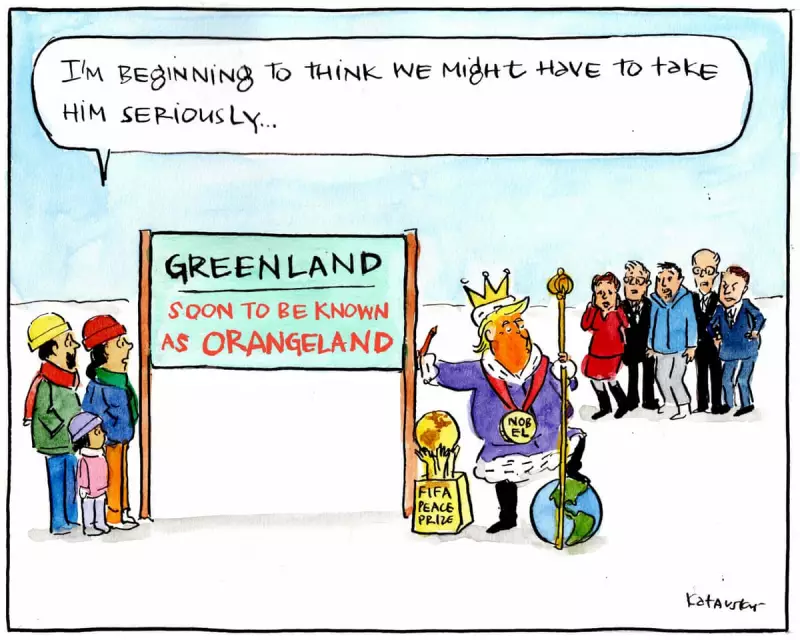
In 2019, a startling proposal from the Oval Office made global headlines: then-President Donald Trump expressed a serious interest in purchasing Greenland from Denmark. While widely reported as a curious geopolitical footnote, this episode is now being re-examined as a revealing precursor to the environmental and foreign policy approach that could define a potential second Trump term, with the 2026 presidential election on the horizon.
The 2019 Proposal: More Than a Real Estate Whim
The idea was not a passing joke. Senior administration officials confirmed in August 2019 that Trump had repeatedly discussed the acquisition, inquiring about Greenland's vast resources and strategic location. The Danish government, led by Prime Minister Mette Frederiksen, swiftly and publicly dismissed the notion as "absurd," leading to a diplomatic spat and Trump cancelling a planned state visit to Copenhagen.
Behind the sensational headlines lay a calculated interest in the island's significant untapped mineral wealth, including rare earth elements critical for modern technology, and its growing geopolitical importance in an increasingly accessible Arctic. This move signalled a transactional, resource-focused view of global geography, prioritising economic and strategic gain over environmental stewardship or international diplomatic norms.

Greenland as a Climate Change Bellwether
The timing of Trump's interest is profoundly symbolic. Greenland's ice sheet is melting at an accelerating rate due to human-induced climate change, contributing directly to global sea-level rise. The very conditions that make the island's resources more accessible and its northern sea routes more navigable are a direct consequence of the planetary warming that Trump's first-term policies often sought to downplay or deregulate.
His administration systematically rolled back numerous environmental protections, withdrew the United States from the Paris Climate Agreement, and promoted fossil fuel development. The Greenland bid can be seen as an extension of this philosophy: viewing a climate-vulnerable territory not as a place to protect, but as an asset to exploit amidst its own environmental transformation.
Implications for 2026 and Beyond
As Donald Trump positions himself for the 2026 presidential race, the Greenland episode serves as a potent case study. It illustrates a potential future where national interests are narrowly defined by resource extraction and strategic positioning, potentially at the expense of cooperative international climate action and the protection of fragile ecosystems.
Analysts suggest this mindset could translate into renewed pressure on Arctic territories, weakened commitments to global environmental treaties, and a foreign policy that prioritises deals over diplomacy. The reaction from US allies, particularly in Europe, to the original proposal demonstrated the diplomatic friction such an approach can generate.
The story of Trump's Greenland fascination is more than a historical oddity. It is a window into a governing ideology that sees the natural world—even parts undergoing drastic climate-induced change—primarily as a repository of value to be claimed and utilised. As voters look ahead to 2026, understanding this perspective is crucial for evaluating the potential long-term environmental and geopolitical legacy of future political leadership.