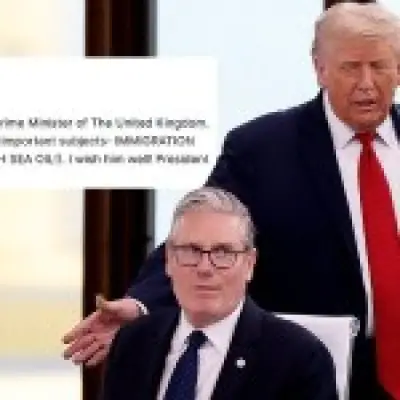
A new political cartoon by acclaimed illustrator Nicola Jennings delivers a biting satire of former US President Donald Trump's reported geopolitical and economic ambitions. Published in The Guardian, the artwork visualises a controversial proposal that has stirred international debate.
The Cartoon's Chilling Premise
At the heart of Jennings' illustration is the concept of a 10% tariff being unilaterally imposed on Greenland. This is not a fictional device but a reflection of genuine reports that emerged during Trump's presidency. The idea was reportedly considered as part of a broader, aggressive trade strategy.
The cartoon masterfully juxtaposes this economic threat with the stark reality of the climate crisis. It depicts the immense Greenland ice sheet, a critical component of the global climate system, subtly linking political manoeuvring with environmental vulnerability. The artwork implies that such punitive trade measures are not just geopolitically risky but are proposed against a backdrop of accelerating ice melt and global warming.

Factual Basis: More Than Just Satire
Jennings' work is rooted in well-documented political discourse. During his time in office, Donald Trump openly expressed interest in purchasing Greenland, an autonomous Danish territory. When that idea was rebuffed, discussions reportedly turned towards using trade tools as leverage. The 10% tariff concept exemplifies the "America First" approach to international relations, where traditional alliances and diplomatic norms were often secondary to unilateral economic actions.
The cartoon's publication date, 18 January 2026, is itself a satirical projection, placing this retroactive policy idea in a future context. This technique amplifies the warning, suggesting the enduring nature of such protectionist ideologies and their potential resurgence.
Broader Implications for Trade and the Planet
The illustration serves as a powerful critique on multiple fronts. Firstly, it highlights the weaponisation of trade policy, where tariffs become tools for political coercion rather than purely economic instruments. Targeting a vast, sparsely populated island known for its climate significance sends a disturbing message about global priorities.
Secondly, and perhaps more profoundly, the cartoon forces a conversation about climate change. By setting the tariff proposal against the imagery of Greenland's icy landscape, Jennings connects short-sighted political gambits with the long-term existential threat of environmental collapse. It questions the logic of pursuing territorial or trade disputes while the very geography in question faces fundamental, rapid change.
The work of Nicola Jennings continues a long tradition of using political cartooning to distill complex geopolitical issues into a single, impactful image. Here, she encapsulates fears about transactional diplomacy, the undermining of international cooperation, and the glaring disconnect between political power plays and the pressing needs of the planet. The cartoon is not just a joke; it is a stark visual warning about the direction of global politics in an age of crisis.