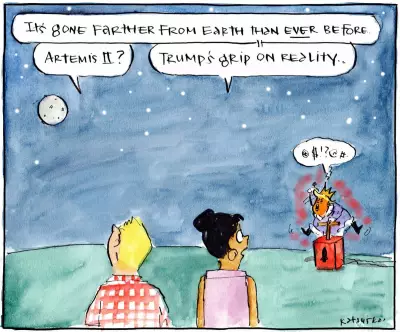
Questions are mounting regarding the physical and political state of former President Donald Trump, as observers note a significant reduction in his public schedule and a change in his demeanour during his second term in office.
Visible Signs and a Lighter Schedule
At 79, Trump is the oldest person ever elected to the US presidency. Recently, his appearance has drawn scrutiny. His complexion has been described as more sallow, and he has been seen nodding off during official meetings and press events. His public appearances have decreased by nearly 40% compared to his first year in office, according to a New York Times report.
His daily schedule now frequently starts after noon, and he is often at his golf clubs. The large stadium rallies that once defined his political style have become rare. There have also been unexplained physical signs: his right hand is often seen with a bandage or discoloured makeup, with the White House offering the unconvincing explanation of bruising from excessive handshaking. In some photographs, his ankles appear swollen.

Conflicting Health Information and Political Context
The administration has released unclear details about his wellbeing. In October, Trump revealed he had undergone an MRI scan but claimed ignorance of its purpose, stating he had "as good a result as they’ve ever seen." His physician called the heart and abdomen scan "preventative," a description medical experts contested, noting such scans are typically for monitoring existing conditions.
This scrutiny comes after Trump spent much of the 2024 campaign attacking President Joe Biden's age and fitness. Upon taking office in early 2025, he symbolically replaced Biden's portrait on a "presidential walk of fame" with a picture of an autopen, mocking his predecessor's capability.
A Political Decline Mirrors Physical Speculation
Analysts suggest the focus on Trump's health is amplified by his dramatic fall in public opinion polls. Recent surveys show him underwater in a majority of states and with almost every demographic group. The aggressive policy moves that characterised the start of his second term have given way to a recognition of his waning influence, as the depth of his support has proven shallow.
This political weakness appears to have curtailed his most audacious ambitions. The "changing winds of public opinion have now seemed to quiet Trump’s ambitions to seek an unconstitutional third term," as Republican allies show less willingness to support such an overtly illegal move for a diminishing leader. He is increasingly viewed as a lame duck president.
Trump himself has seemed more reflective, speaking more often about mortality. In October, he mused, "I think I’m not maybe heaven-bound. I’m not sure if I’m going to be able to make heaven." While it is irresponsible to diagnose from afar, the speculation underscores a fundamental reality: his reign as the centre of American politics is finite, and its end is now a visible part of the political calculus.