Four Key Takeaways from Donald Trump's Recent Public Appearances
Donald Trump's latest series of public comments and musings have sparked significant analysis and raised serious questions about the information the US president consumes and believes, particularly from social media sources. Sky's US correspondent Mark Stone highlights several critical points from these appearances that shed light on Trump's current thinking and decision-making processes.
Inconsistencies in Discussions with Iran
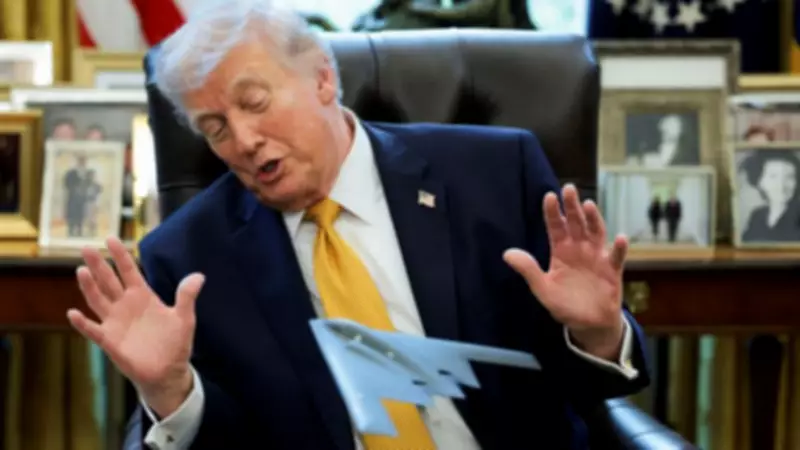
The US president has repeatedly stated over the past twelve hours that dialogue with Iranian officials is actively ongoing. "They want to make a deal," Trump emphasized during his flight back to Washington DC on Sunday night, reiterating this claim again on Monday. However, when pressed with straightforward questions about who exactly he was speaking with and what such a deal might entail, the president provided no clear answers.
Instead, Trump offered a puzzling explanation, suggesting that all the individuals previously engaged in discussions were now deceased. He has made similar statements before, attributing this situation to what he described as the overwhelming success of military operations. Furthermore, Trump expressed uncertainty about whether he would actually want to pursue an agreement with Iran even if they demonstrated genuine interest, despite his repeated assertions about their desire to negotiate.

Artificial Intelligence and Misinformation Concerns
During his remarks, Trump revealed that he had viewed a video, presumably on social media, depicting the US aircraft carrier Abraham Lincoln under attack and engulfed in flames. The president described contacting his military generals to inquire about the vessel's status, asking "what's with the Abraham Lincoln? Looks like it's on fire." He was subsequently informed that the footage was fabricated.
This incident raises substantial concerns about the type of content the president is exposed to and appears to accept as credible through social media platforms. The episode highlights potential vulnerabilities in how misinformation might influence presidential understanding of critical military and security matters.
The Phone Conversation with Keir Starmer
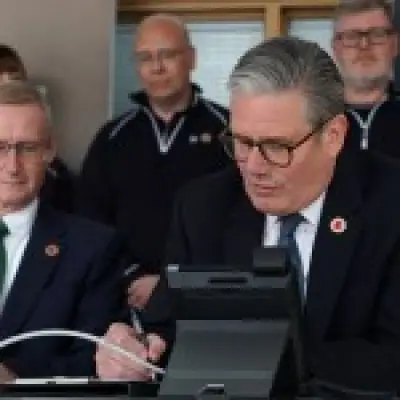
President Trump and UK Prime Minister Keir Starmer held a telephone discussion on Sunday. Official statements from Downing Street provided minimal details about the conversation, describing it only in broad terms. However, sources later indicated that the call was productive, with both leaders expressing a "clear shared interest in keeping the Strait of Hormuz open."
Contrary to any public displays of frustration, insiders suggest the actual conversation remained cordial. Trump later offered additional insight into their exchange, recounting how Starmer mentioned needing to consult with his team before making determinations. Trump responded by questioning why the prime minister required team consultations, suggesting "you're the prime minister. You can make your own... why do you have to meet with your team to find out whether or not you send some mine sweepers to us..."
Surprising Admissions About Lebanon's Geopolitics
In another revealing moment, Trump acknowledged that he had only recently been educated about Lebanon's complex geographical power structure—knowledge that proves crucial given current US support for Israeli military operations in the region. During the same remarks, Trump expressed astonishment that people continue to reside in conflict zones like Ukraine and Lebanon.
The president shared a verbatim account of his conversation: "...substantial person, wealthy person, whose parents live in Lebanon. I said: 'Really, how do you live in Lebanon? Your parents? Oh, yeah, they live there. And over the years, they've gotten used to the fact that it's being bombed.'"
Trump continued, explaining how he learned that "it's really a different section of Lebanon. It's the section where Hezbollah is, and they get used to it I guess... I mean people live in Ukraine. You would think they wouldn't live in Ukraine, but they live in Ukraine. I don't know that I'd do that, but they live in Ukraine. They live in Lebanon."

These four aspects of Trump's recent public appearances provide valuable insights into his current perspectives on international diplomacy, his susceptibility to misinformation, his diplomatic interactions with key allies, and his understanding of complex geopolitical situations. The comments collectively underscore ongoing questions about how the president processes information and forms policy decisions in critical areas affecting global stability.