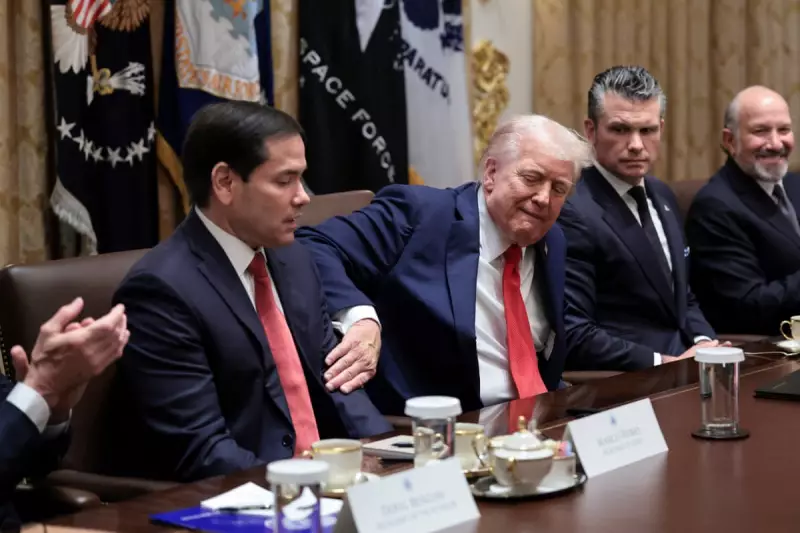
In a stark departure from the turbulent staffing of his first administration, President Donald Trump is presiding over a remarkably stable second-term cabinet, where loyalty appears to be the paramount qualification.
From 'You're Fired' to Firmly Hired
The president, who once built a public persona on the catchphrase "You're fired!" and oversaw the highest cabinet turnover in a century during his first 14 months, has undergone a significant transformation. Since resuming office in January 2025, Trump has become an uncharacteristically reticent boss, offering strong praise for his team's performance.
"I think my cabinet is fantastic," Trump stated recently, directly countering rumours of discontent with figures like Defence Secretary Pete Hegseth or Homeland Security Secretary Kristi Noem. "I read these same stories that I'm unhappy with this one or that one – and I'm not. I think the cabinet has done a great job."

Controversy and Loyalty in the Cabinet Room
This professed satisfaction persists despite a series of controversies dogging key officials. Secretary Hegseth has faced scrutiny over his use of the encrypted Signal app and his management of military operations in the Caribbean. Secretary Noem has been criticised for lavish spending and public clashes with Border Czar Tom Homan.
Elsewhere, FBI Director Kash Patel has drawn bipartisan criticism for his handling of sensitive probes, and Director of National Intelligence Tulsi Gabbard caused alarm with a video warning that the world was "on the brink of nuclear annihilation." The most significant change saw National Security Adviser Mike Waltz quietly replaced by Marco Rubio, only to be reassigned as the nominee for US Ambassador to the UN.
Analysts argue the cabinet's stability stems from a culture of unwavering personal allegiance. "They're functioning in an environment now when it's loyalty über alles," said Bill Galston, a senior fellow at the Brookings Institution. "If you are loyal and a fighter, the scales will tend to tip in your favour, even if you make mistakes."
The Practical Hurdles to Firing
Beyond loyalty, practical political barriers make dismissing cabinet members less appealing for Trump. Replacing a secretary would trigger a potentially messy Senate confirmation process. Even at the peak of his political capital earlier this year, confirmations were nail-bitingly close: Hegseth was confirmed by a single vote, while Gabbard and Health Secretary Robert F. Kennedy Jr. cleared the bar by just two.
With the president's approval ratings declining and midterm elections approaching, the Senate is likely to be even more sceptical of unconventional nominees. "Trump knows at this point there are fewer possibilities for a Senate confirmation for the kind of people he wants now," noted Rick Wilson, a former Republican strategist. "He's not going to get another Hegseth... Those days are done."
Furthermore, Trump is reportedly reluctant to concede error or give the media a perceived victory by firing a senior figure. This restraint marks a clear contrast with his first term, which featured dramatic, high-profile dismissals including FBI Director James Comey, Chief of Staff Reince Priebus, and Secretary of State Rex Tillerson.
The current cabinet is defined by pre-existing loyalty, unlike first-term appointees such as Defence Secretary Jim Mattis, who resigned over policy disputes. "This time around the reason you don't see the same amount of firings is because the sycophancy is the point," said Tara Setmayer of the Seneca Project. "Trump has loaded his cabinet up with people who are loyalists first and foremost and not competent."
While the upper echelons of government remain static, purges have occurred elsewhere. The administration encouraged millions of federal workers to resign, removed holdovers from advisory councils, and the Justice Department dismissed dozens of career prosecutors—including those linked to investigations involving Trump himself.