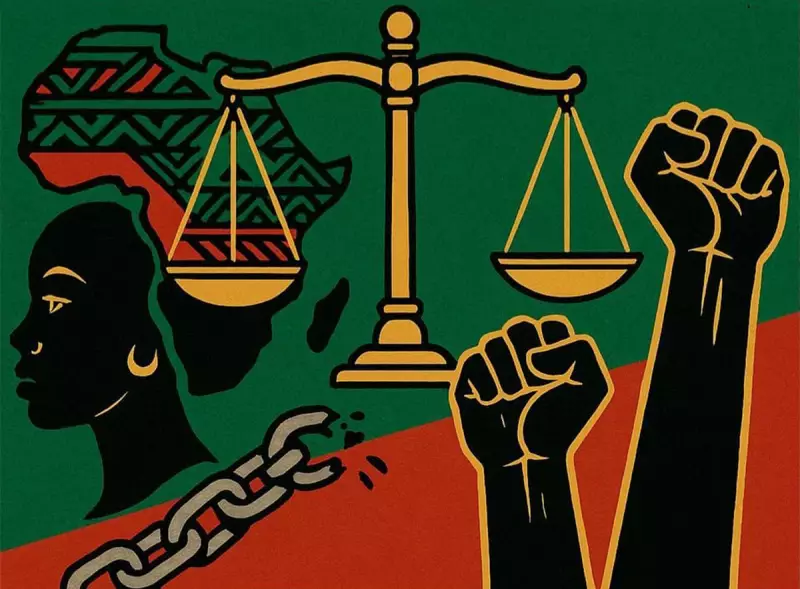
As 2025 draws to a close, the global movement for reparations has reached a pivotal moment, creating a stark divide between former colonial powers and the nations seeking justice for the legacies of slavery and exploitation. While Caribbean and African states are consolidating their claims with unprecedented institutional backing, the British government continues to deflect the issue, framing it as a backward-looking distraction rather than a contemporary political imperative.
The Growing Momentum for Restorative Justice
This year has seen the reparations debate shift from the fringes to the centre of international discourse. In a landmark move, the African Union (AU) declared 2025 the Year of Reparations, later expanding this commitment in July 2025 by endorsing 2026–2036 as the Decade of Reparations. This ten-year framework commits the AU to mobilising global support, promoting education and research, and developing policies addressing the lasting impacts of slavery, colonialism, and exploitation.
This institutional push builds on decades of groundwork, including the Abuja proclamation of 1993, the Durban declaration of 2001, and the Accra declarations of 2022 and 2023. Simultaneously, the Caribbean Community (Caricom) Reparations Commission, led by Sir Hilary Beckles, has intensified its campaign. In November 2025, a Caricom delegation visited the UK, meeting with civil society, academics, and some parliamentarians. However, the reception at Westminster was notably cool, with no senior ministers available for talks and no indication the UK government treats reparations as a live policy issue.

Britain's Stance: "Moving Forward" or Managed Silence?
Prime Minister Keir Starmer has previously dismissed the prospect of engaging in what he termed "long, endless discussions about reparations on the past." This phrasing, critics argue, deliberately frames reparations as an indulgent historical debate rather than a claim arising from the very foundations of the modern British state and its enduring global advantages.
This perspective is challenged in the new book The Big Payback by Lenny Henry and Marcus Ryder. The work systematically dismantles common objections, arguing that reparations are not about personal guilt but about historical responsibility and contemporary inequality. The authors contend that slavery was an economic system that financed Britain's rise, creating lasting disparities. They assert that the argument that "no one alive today owned slaves" is irrelevant when states, corporations, and institutions that directly benefited persist as legal entities.
The UK's position appears increasingly isolated. The asymmetry is clear: while Africa and the Caribbean are building frameworks for reparations as a development and justice agenda, former colonial metropoles like Britain remain stuck in avoidance. This disconnect is further highlighted by the Commonwealth's failure to place reparations on its agenda and by UK immigration policies that impose stringent visa requirements on citizens of African and Caribbean nations, descendants of those whose lands and labour were once freely exploited.
Reparations Defined: A Process, Not a Cheque
Proponents emphasise that reparations are not a single financial transaction but a long-term process aimed at systemic repair. Potential mechanisms being discussed include:
- Strategic investment in education, health, and cultural institutions in affected regions.
- Institutional reforms that address entrenched inequalities.
- Wealth-building mechanisms for diaspora communities.
- Formal apologies backed by material commitments.
The movement has moved beyond moral pleading to articulate a concrete political claim rooted in law, economics, and historical analysis. The Caricom visit, however limited, succeeded in opening dialogue and mobilising support within the UK, proving that silence does not equate to stasis.

As the African Union's Decade of Reparations begins, the pressure on Britain and other European nations will only intensify. The core question, as framed by Caribbean and African voices, is no longer about dwelling on the past but about what kind of future relationship Britain wishes to build. Will it be one grounded in selective memory and managed silence, or one willing to confront the historical foundations of modern global inequality through truth and repair? Britain's leaders say they want to look forward. The world is now asking: forward from where, and on whose terms?