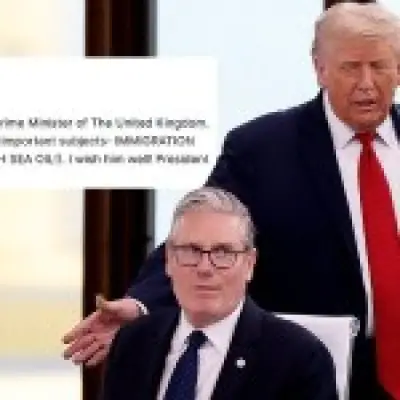
Prime Minister Keir Starmer has firmly rejected the idea of the United Kingdom imposing retaliatory trade tariffs on the United States, following provocative threats from former President Donald Trump.
Trump's Tariff Ultimatum to NATO Allies
The controversy stems from comments made by the former US president, who suggested he would levy tariffs against NATO allies if they did not support his controversial plan to acquire Greenland. This extraordinary geopolitical proposition has sent ripples through international diplomatic circles, putting the UK and other European nations in a difficult position.
Addressing the media at an emergency press conference, Sir Keir Starmer was unequivocal in his response. The Prime Minister stated that engaging in a tit-for-tat trade war by imposing UK tariffs on American goods would be the "wrong thing to do". His comments signal a deliberate attempt to de-escalate tensions and avoid a damaging economic confrontation with a key strategic partner.

A Strategic Decision for UK Trade Policy
This decision highlights the delicate balancing act facing the UK government. On one hand, there is a need to stand in solidarity with European Union and other NATO allies. On the other, there is the pragmatic necessity of maintaining a stable trading relationship with the United States, a critical economic partner.
Starmer's stance suggests a calculated, long-term view of international relations, prioritising diplomatic channels over immediate economic retaliation. The move is likely informed by the potential harm such tariffs could inflict on British businesses and consumers, already navigating a complex post-Brexit trading landscape.
Broader Implications for International Relations
The episode underscores the ongoing volatility in transatlantic relations linked to Donald Trump's political agenda. His focus on Greenland—a vast, autonomous Danish territory—has been a recurring theme, framed around strategic and resource interests.
By ruling out retaliatory measures, the UK government is attempting to chart a course of stability. The response avoids being drawn into a conflict that could undermine the NATO alliance's unity at a time of global uncertainty. Analysts will be watching closely to see if other affected nations follow the UK's lead or choose a more confrontational path.
The Guardian's senior political correspondent, Peter Walker, provided further insight into the situation, emphasising the significant political and economic calculations behind Starmer's announcement.