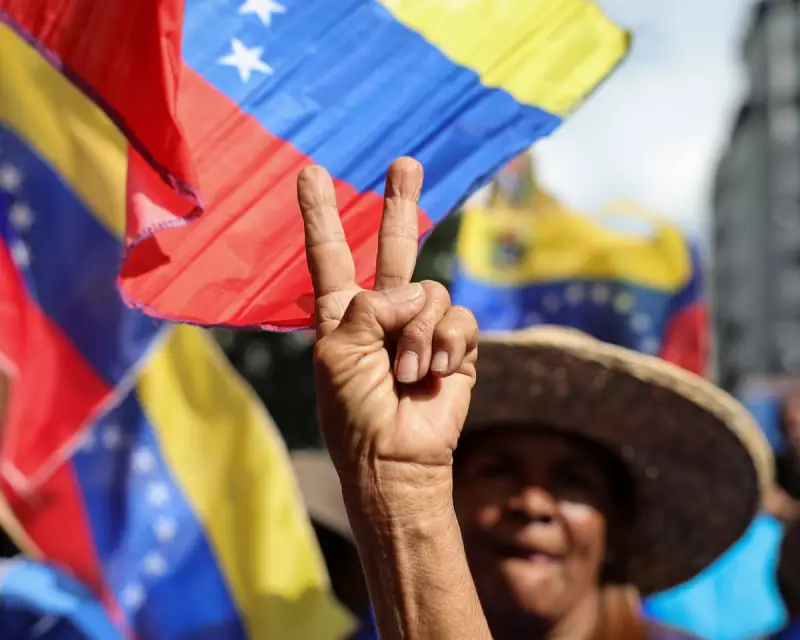
A profound tension grips the streets of Caracas, not born of trust in either the ousted regime or its foreign interveners, but from a fragile, palpable sense that a window for change has been forced open. This follows the dramatic capture of President Nicolás Maduro on 3 January 2026, after a United States military operation targeted the Venezuelan capital.
A Night of Chaos and a Nation's History
The personal stories emerging from that night paint a vivid picture of sudden upheaval. Coromoto Escalona, a 35-year-old mother in the central Caracas neighbourhood of La Pastora, was preparing a feeding bottle in the early hours when her daughter shouted that the city was under attack. Grabbing essentials, they fled to an underground room, their experience echoing that of many residents who compared the bombardment to the military uprising led by Hugo Chávez on 4 February 1992.
To comprehend the weight of the current moment, one must look back. Historian and journalist Jesús Piñero of the Central University of Venezuela draws a parallel to 1936. That year marked the nation's first fraught transition toward democracy following the death of long-ruling dictator Juan Vicente Gómez. His successor, Eleazar López Contreras, initiated reforms, freeing political prisoners and allowing free speech, spurred by public pressure like the pivotal demonstration of 14 February 1936.

From Democratic Hope to Authoritarian Rule
Venezuela experienced another significant democratic shift in 1958 with the fall of Marcos Pérez Jiménez. This ushered in a consensual party system that, for decades, ensured peaceful power transfers, economic development based on oil, and became a regional beacon of stability.
It was this very system that Hugo Chávez attempted to overthrow in 1992. After his release and election in February 1999, he concentrated power, a process completed by his successor. Following Chávez's death in March 2013, Nicolás Maduro assumed the presidency. His rule steered the country into a starkly different transition—away from democracy and towards a repressive, totalitarian model. His regime was characterised by:
- The violent repression, torture, and killing of opposition figures.
- The exodus of millions of Venezuelans.
- Strategic alliances with anti-western, undemocratic states.
- The overt disregard for electoral results, as seen in July 2024.
The Dilemma of an Uncertain Future
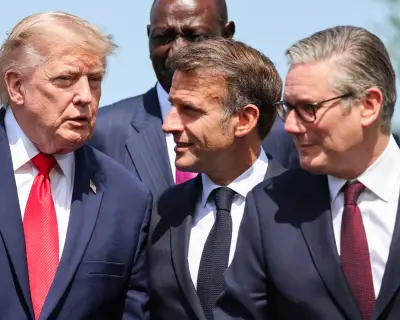
Now, in the wake of Donald Trump's ordered incursion, Venezuela finds itself at another historic inflection point. The central question haunting the population is whether this transition will lead back to a democratic system or merely mutate into another form of authoritarian control.
The hopes of many citizens are clear and immediate:
- The unconditional release of all political prisoners.
- An end to media censorship and state propaganda.
- Full respect for fundamental human rights.
- The facilitated return of those forced into exile.
As of now, none of these demands have been met. The prevailing mood, Piñero notes, oscillates between fear and a cautious, weary hope. This sentiment is not rooted in faith in the US or its former president, whose motives are viewed with deep scepticism, but in the hard-earned knowledge from Venezuela's own past: the country has navigated such precarious junctures before.
The legacy of the 27-year Chavista era looms large, but so does the historical memory of 1936 and 1958. The outcome hinges on whether the political will for genuine democracy can be matched by sustained, peaceful pressure from a society that has endured profound suffering. The path forward remains Venezuela's to choose, but the world watches to see if this chapter ends in liberty or further oppression.