Victoria's Premier Jacinta Allan Reshapes Cabinet Ahead of Crucial Election
In a strategic move to reposition her long-standing administration, Victorian Premier Jacinta Allan has unveiled a significantly reshuffled cabinet featuring four new ministers. This calculated restructuring arrives as her Labor government prepares to pursue an unprecedented fourth consecutive term in the November state election, aiming to project an image of renewal and stability during a period marked by global economic and political uncertainty.
A Message of Renewal Amidst Political Fatigue
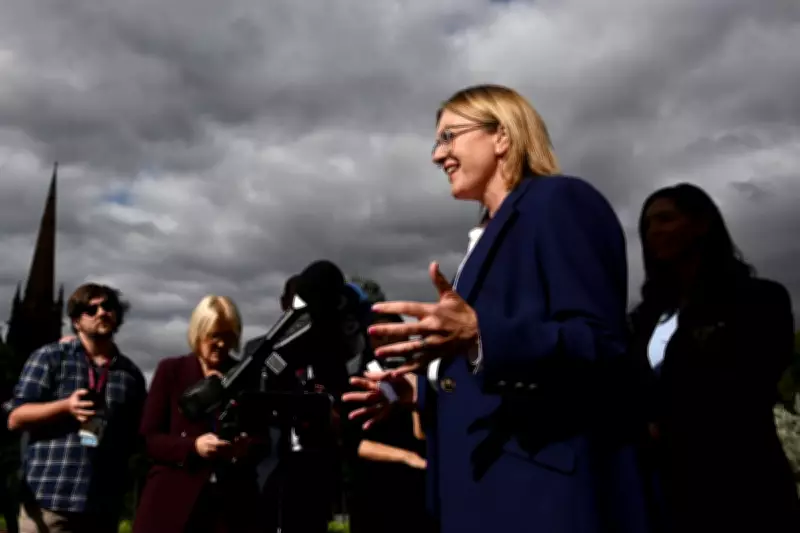
Standing before reporters with her refreshed ministerial team, Premier Allan delivered a clear, repetitive message centered on novelty. In her opening remarks, she emphasized the word "new" seventeen times, referencing her "new cabinet," "new portfolios," "new solutions," and "new areas" for governmental progress. This linguistic strategy was complemented by repeated assertions of her government being a "team" (six times), "united" (four times), and "strong" (twice).
This rebranding effort seeks to counteract potential voter fatigue with a government that has held power for twelve years. While politically astute—incumbents often benefit during times of international instability—the effectiveness of this pitch in silencing internal leadership murmurs remains uncertain. These internal rumblings notably disrupted parliamentary proceedings in March, highlighting underlying tensions.

Cabinet Turnover and New Appointments
The reshuffle follows the resignations of three senior ministers—Mary-Anne Thomas, Danny Pearson, and Gayle Tierney—who announced they would not contest the upcoming election and would immediately step down from cabinet. They join Natalie Hutchins, who moved to the backbench in December. Collectively, these departures strip over three decades of ministerial experience from the government, leaving a cabinet nearly unrecognizable from the one sworn in alongside former Premier Daniel Andrews after the 2014 election. Only Premier Allan and Energy Minister Lily D'Ambrosio remain from that original group.
Opposition Leader Jess Wilson swiftly criticized the changes as akin to "shuffling deck chairs on the Titanic." However, such extensive turnover before an election is not without precedent in Australian politics.
Filling the vacancies are four backbenchers elevated to cabinet: Frankston MP Paul Edbrooke, Kororoit MP Luba Grigorovitch, Box Hill MP Paul Hamer, and Eureka MP Michaela Settle. All were elected unopposed by the Labor caucus following weekend factional negotiations. Grigorovitch, a former state secretary of the Rail, Tram and Bus Union, represents the right faction, while the other three align with the left.
Portfolio Assignments and Factional Dynamics
While the premier does not select who enters cabinet, she holds authority over portfolio assignments. The distribution of roles reveals strategic considerations. Luba Grigorovitch, whose past support for former CFMEU boss John Setka has raised concerns among Labor sources about potential opposition attacks, received relatively junior portfolios: youth, carers, and volunteers.
In contrast, Michaela Settle, a former sheep farmer, takes on agriculture and regional development. Paul Hamer assumes the challenging portfolios of corrections, youth justice, and local government. Paul Edbrooke's appointment includes consumer affairs and three newly created portfolios: cost of living, renters, and "men and boys"—the latter aimed at addressing mental health, family violence, and the influence of the manosphere.
Other significant promotions went to MPs closely aligned with Premier Allan. These include Harriet Shing (health), Nick Staikos (housing, building, and the Suburban Rail Loop), Ingrid Stitt (government services and special minister of state), and Treasurer Jaclyn Symes (development Victoria and precincts).
Sonya Kilkenny, already holding the substantial roles of attorney general and planning, adds violence reduction and finance to her responsibilities. This latter addition raised eyebrows within caucus, though her supporters insist she is capable of the increased workload.

Internal Reactions and Unresolved Challenges
Reactions among Labor MPs to the reshuffle have been mixed. One MP quipped that promotions within the party have "never been a meritocracy." Another conceded that while it might be "starting to get too late" for a leadership change, the reshuffle did not fully mend internal fractures. This MP pointed to a vote within the premier's socialist left faction, where Allan's push to elevate Mordialloc MP Tim Richardson was overruled in favor of Paul Hamer—a move interpreted as a blow to the premier's authority within caucus.
Beyond cabinet dynamics, several challenges persist. Parliamentary secretary positions remain unfilled as of Friday. Candidates must still be selected to replace the departing Pearson and Thomas. Upper house preselections have been delayed until May due to factional maneuvering over ballot positions, particularly if group voting tickets are retained.
An immediate legislative concern is Wednesday's High Court judgment, which scrapped the state's election donation laws. Premier Allan has stated the government will expedite retrospective legislation to prevent a surge of unregulated donations.
Additionally, external pressures loom, including the fallout from the Geelong refinery fire threatening fuel supplies and broader budget strains exacerbated by international conflicts. While not directly of the premier's making, these issues ultimately land on her desk, testing her government's capacity for "new solutions" and genuine unity beyond political spin.