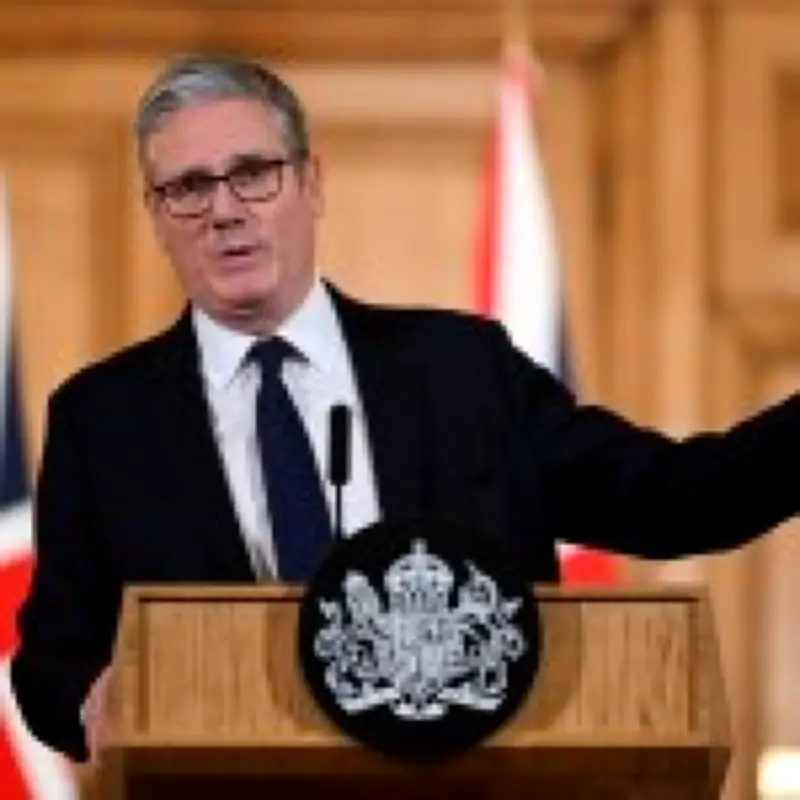
Prime Minister Andy Burnham? These words may have sounded impossible only months ago, but the mayor of Greater Manchester now represents Makerfield in Parliament. Burnham easily defeated a field of more than a dozen candidates – including Reform – after securing 24,937 votes in yesterday’s by-election. Becoming an MP is a pivotal step in his plans to challenge Sir Keir Starmer for leadership of the Labour Party – and the country.
Sir Keir has clung to power since his party lost more than 1,400 councillors in May, a damning indictment of its drooping popularity among voters. Close to 100 Labour MPs have called on the PM to hand back the keys to Number 10, with his refusal pushing some cabinet ministers to quit. So what would happen if the Prime Minister were to step down?
What happens if Starmer resigns as Prime Minister?
From the get-go, it’s good to know two things. The UK also must have a Prime Minister at all times. So if Starmer was to offer his resignation, he would need to lead until a replacement is found. Secondly, anyone can technically be a PM – yes, even a giant fox or some guy with a bin over his head. But in practice they’re the leader of the party with the most MPs. This is why a leadership election – automatically triggered when a leader quits – is usually how the UK winds up with a new prime minister. This can take several weeks, meaning the sitting PM may remain in office for a while.

Let’s say Starmer steps down right this second, what then? First, Labour MPs will put themselves forward as Starmer’s potential replacements. All Labour MPs will then vote to whittle down the options until two candidates remain. At this point, Labour Party members will vote to choose their new leader, who will automatically become Prime Minister.
There is one other way – Starmer steps down without a leadership contest. Burnham has reportedly secured support from at least 81 Labour MPs – or 20% – to formally trigger a leadership contest. Once a Labour leadership election is triggered, other candidates could join the contest if they also had 81 backers. Starmer would automatically be on the ballot as he doesn’t need to shore up support, but could choose not to try to stick it out. Burnham will present the list of nominations to Starmer in the hopes he stands down without a contest. The new MP has no plans to do so this week, with one insider saying Burnham’s team just hopes Starmer ‘comes to his senses’. Starmer, however, told reporters this morning he plans to stand in any leadership contest that comes his way. ‘I have said repeatedly, I am not going to walk away from that,’ he added.
Would there be a general election?
You might have noticed that unless you’re an MP or a card-carrying member of Labour, you don’t have much of a say in this leadership process. This is because there is no rule saying the Prime Minister has to call a general election, which would put every MP’s seat up for grabs. It’s unlikely Starmer or, if he does go, his successor would do so anyway, if Labour’s disastrous results in the local elections are any indicator.
Several PMs have come into office this way and have chosen not to hold an election. These include Gordon Brown, who ran uncontested as Tony Blair’s replacement in 2007 but was ousted from power in the subsequent general election three years later and replaced by David Cameron. Theresa May similarly came to power via a Conservative leadership election in 2016 after Cameron stepped down. However, she called a general election the following year to strengthen her hand in Brexit negotiations.
When is the next general election?
The next general election must be called by August 2029. However, the Prime Minister can choose to hold it sooner than this. This is called a snap election. The UK has seen its fair share of snap elections over the years. May’s 2017 snap election came just two years after the previous general election.