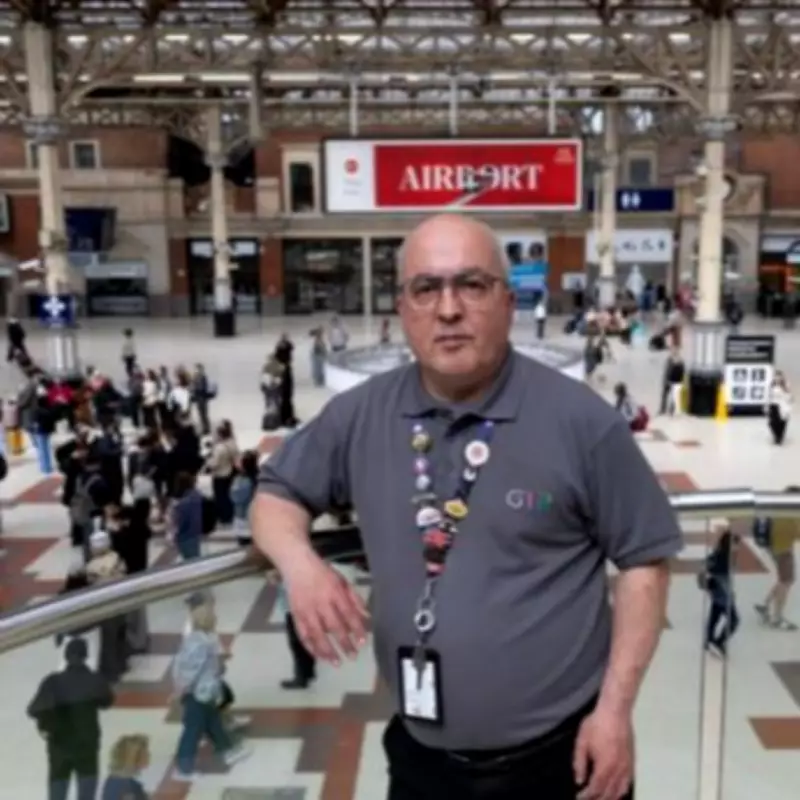
On a dim afternoon in 1996, Tom Starbuck stood in Trafalgar Square and realized he was homeless. Aged 26, a confrontation with a family member had triggered a mental breakdown, leading him to walk from Walthamstow to Central London with nowhere to go. Now 57, Tom works as a customer ambassador at Victoria Station, a role he credits with saving his life.
Childhood Trauma and a Spiral into Homelessness
Tom told MyLondon that a mix of childhood trauma and broken family relationships left him feeling completely alone. “I was bullied really badly at school, almost on a daily basis, and it left me very secluded,” he said. “I didn’t have friends, so I spent a lot of time in my own bedroom watching television. Because of this, there were a couple of older people who took advantage of me, so I went into my 20s with a lot of mental issues.”
After realizing he was homeless, Tom called a helpline that directed him to a shelter in Clapham. Nine months later, he moved out and found a job, but he had not addressed his childhood trauma. Within a year and a half, he suffered another mental breakdown and was back on the streets. He stayed in a winter shelter in Shepherd’s Bush for nine months before moving into a halfway house in Norwood, where he finally began receiving proper mental health support.

The Turning Point: A Job at Victoria Station
This was the turning point for Tom. In 2001, he got a job with Connex (now Govia Thameslink) working on the gate line at Victoria Station and quickly became a team leader. In 2005, he moved to the station’s control point, where he has worked ever since. “Having that stability of the halfway house to eventually get me housed in Thornton Heath in 2001 gave me roots,” Tom said. “Something changed within me.”
“My family used to call it a self-destruct button where I’d finally get stable and then implode. A lot of my confidence that has grown over the years has come from working here. This job requires you to be extremely confident,” he added.
Pushing On with Therapy and Career Growth
Tom’s role now involves controlling customer information boards and screens at Victoria Station to provide real-time updates. In recent years, he has undergone cognitive behavioral therapy to understand the underlying issues causing his problems and develop tools to manage them. Now 57, Tom believes mental health support is crucial to ensuring homeless people stay off the streets once rehoused.
“In some homeless shelters there was support where staff offered one-to-ones, but in a lot of them it was just a bed,” Tom said. “There were so many people there suffering from really bad issues with no support at all. This meant a lot of people had drug issues as they didn’t want to deal with their everyday problems.”
“These are normal people, they’re not what other people see. People seem to have this view of what a homeless person is, what the person looks like, and it’s simply not the case. There are people out on the streets who want to be out on the streets, that’s a fact, but the majority are out there for no fault of their own. The majority have tipped that little thin line between stable and homeless. They’ve just come on hard times and suffer because of it,” he concluded.
Tom’s message to others struggling with past issues: “If anyone is struggling from issues you’ve had in the past, one of the most important things you can do is talk to somebody about it. This stops it from becoming a controlling factor in your life.”