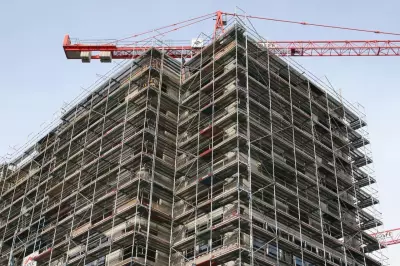
Shockingly, just two per cent of newly constructed homes in England make it to the open sales market, according to fresh data analysis. This revelation highlights a severe limitation in access for prospective homeowners, as the vast majority of new build properties are diverted to alternative channels.
A Market in Seclusion
Information sourced from estate agent CRM provider Alto, combined with Office for National Statistics figures, indicates that of the estimated 200,000 new properties built across England during the 2024/25 period, a mere 21,261 were available on the open market. This is where regular buyers can view listings and make direct offers, typically through estate agents.
Instead, many new homes are being allocated to build-to-rent developments, direct sales by developers, and affordable housing or shared ownership schemes. This trend significantly restricts the opportunities for individuals aiming to purchase new builds, exacerbating the housing crisis.

Regional Disparities Exposed
London emerges as the region with the fewest properties reaching the open market, with only two per cent of new build homes available for public purchase. Even within this context, Manchester as a city recorded an even lower figure, with just one per cent of new properties making it to market, while Birmingham saw three per cent.
This pattern signals a broader shift towards a more European-style model of living, where homeownership is less common, and long-term renting becomes the norm. Countries like France and Germany exemplify this approach, with large-scale rental developments forming a substantial part of the housing mix.
Public Sentiment and Government Responsibility
Accompanying research involving 2,000 adults found that 48 per cent of Londoners feel there are insufficient properties available for them to buy. Additionally, 69 per cent believe new builds in their area are targeted at investors and landlords rather than local buyers.
As a result, 26 per cent of capital residents doubt they will ever own a property, citing an overly expensive market (68 per cent) and inadequate earnings (53 per cent) as primary barriers. Interestingly, 15 per cent expressed a preference for renting, aligning with the emerging European-style lifestyle.
The study also revealed that 61 per cent of respondents think it is the government's responsibility to ensure an adequate supply of homes for people to live in. More than half (52 per cent) called for increased support for first-time buyers, and 37 per cent advocated for stricter regulation of rental prices.
Investor Influence and Market Dynamics
Property investors and landlords are perceived to be crowding out first-time buyers, according to 70 per cent of those surveyed. Furthermore, 40 per cent would support tougher restrictions on investors purchasing new properties.
Riccardo Iannucci-Dawson, CEO of Alto, which developed a free tool to show how many newly built properties are actually available for purchase locally, commented: "People see homes being built and assume they'll be available to buy, but the reality is many never reach the market buyers interact with daily. This isn't just about how many homes are built, but how many are accessible—and in some areas, that's a small fraction of total supply."
He added: "The open market is often estate agent-led and follows the traditional path of buyers finding properties through agents. It's clear a large proportion of homes aren't making it to the 'typical' sales stream, removing opportunities for many to get on the ladder."
Regional Breakdown of Market Access
The data provides a detailed regional analysis of where the fewest properties make it to the open market:
- London – 2.12 per cent
- North West – 7.51 per cent
- North East – 8.49 per cent
- East of England – 9.67 per cent
- South East – 10.10 per cent
- East Midlands – 11.67 per cent
- Yorkshire and the Humber – 13.66 per cent
- West Midlands – 13.86 per cent
- South West – 17.01 per cent
This regional disparity underscores the uneven distribution of housing opportunities across England, with London facing the most acute challenges.