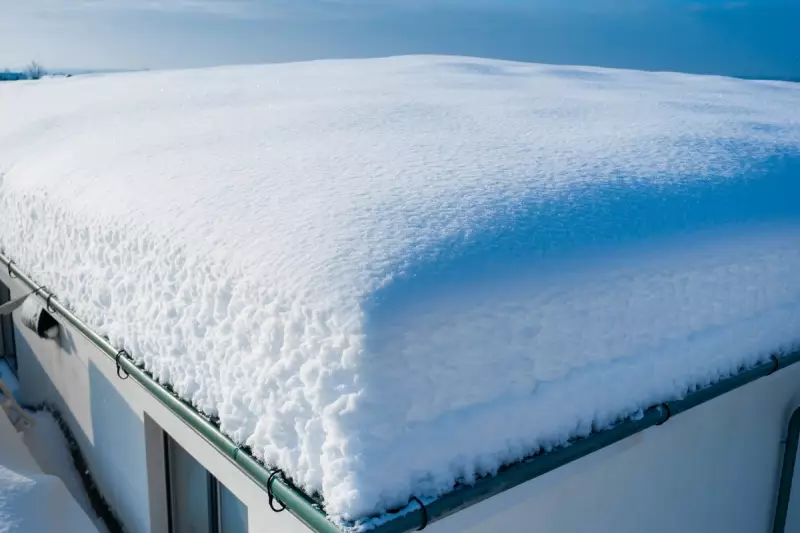
Homeowners across the UK are being urged to take immediate action as Storm Goretti batters the country, with experts warning of a dangerous ‘triple threat’ to flat roofing systems. The combination of heavy snowfall, powerful winds and fluctuating temperatures poses a severe risk of structural failure and water ingress.
The High-Risk 'Triple Threat' Explained
As Met Office amber and yellow warnings remain in effect for England and Wales, forecasters predict heavy snow accumulations of up to 30cm across the Midlands, Wales, Yorkshire and southern England. Roofing specialists highlight that this, combined with 90mph winds and a cycle of freeze-thaw conditions, creates a uniquely hazardous scenario.
"Snow load is one of the most underestimated and dangerous threats flat roofs face," said Lee Moore, specialist products manager at PermaRoof UK. He explained that compacting snow and subsequent thawing dramatically increases weight. "If the predicted accumulations hit, this could place extreme, uneven stress. As it melts, it becomes standing water – one cubic metre of water weighs a tonne – and if drainage is blocked, that weight can sit for days."

Key Risks and Hidden Vulnerabilities
The storm's impact could expose weaknesses in even trusted waterproofing systems like EPDM, which have been tested by recent torrential rain. The primary dangers include:
- Excess Structural Load: Compacted snow exerts extreme pressure on roof decks and supports.
- Deflection and Sagging: Minor dips can worsen, causing long-term damage.
- Blocked Drainage: Snow and ice can prevent meltwater escape, leading to pooling.
- Freeze-Thaw Damage: Water refreezing in cracks can exploit and widen existing faults.
Moore stressed that on older or poorly maintained roofs, this extra load can push structures beyond their design limits, leading to deflection, damage, and in severe cases, sudden failure that may not be immediately visible from inside the property.
Snow-Smart Actions for Homeowners
Experts advise precautionary steps that can be taken safely from the ground, emphasising that roof work during icy conditions is extremely dangerous and should be left to qualified professionals.
Key advice includes visually monitoring snow build-up from ground level, ensuring drains and gutters are clear before conditions worsen, and watching for internal signs of stress like sagging ceilings, new cracks, or doors that stick. Homeowners should act quickly if any leaks appear, as small drips can signal trapped meltwater.
"Your roof is your home’s first line of defence," added Moore, whose company has over 25 years' experience. "Awareness and preventative checks can avoid serious structural issues and costly repairs once the thaw begins. If you’re unsure about your roof’s condition, seeking expert advice now could save thousands later."