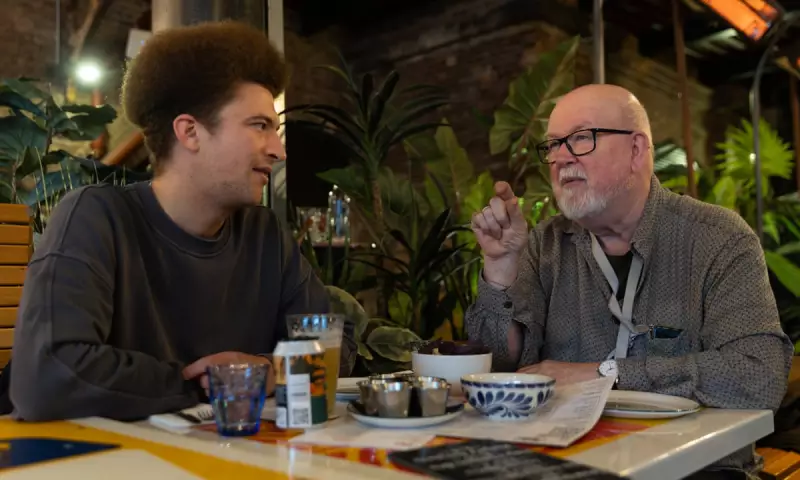
In a London restaurant, two documentary producers from different generations sat down for a meal and a conversation that spanned some of the UK's most contentious political and social issues. Alex, 28, and Mike, 74, met as part of a series aiming to bridge divides, tackling topics from property taxes to the meaning of 'woke' and the role of public broadcasting.
A Meeting of Minds Over Mexican Food
Alex, an assistant producer and lifelong Labour voter, was born on the very day Tony Blair was elected Prime Minister. Mike, a retired documentary producer, has voted Liberal Democrat for years, albeit with reservations after their stance on tuition fees. Despite the 46-year age gap and different political leanings, they connected over a shared professional background and a meal of tortilla chips, guacamole, and tacos at El Pastor in London N1.
"We got on straight away," Alex noted, while Mike found his dining companion "remarkably thoughtful, grounded and likable." The stage was set for a civil but pointed discussion on the issues dividing the nation.

Taxing Second Homes and Solving the Housing Crisis
The conversation quickly turned to the UK's acute housing shortage. Alex argued that while there is nothing morally wrong with owning a second home, higher taxes on them could be a useful tool to alleviate pressure in communities like Tenby in south Wales, where a 150% council tax premium applies.
Mike, however, was sceptical of the policy's effectiveness. He questioned whether such taxes actually free up homes for local people or simply price out less wealthy second homeowners, only for the properties to be bought by even richer individuals undeterred by the levy.
Both ultimately agreed that taxation alone is not a silver bullet. "The only way to truly solve a housing crisis is to build," Alex concluded, highlighting a rare point of consensus that the root cause is a chronic undersupply of homes.
The 'Woke' Debate and Teenage Lecturers
On the culturally charged term 'woke', their perspectives highlighted a generational chasm. For Alex and his friends, the word is often used ironically or in jest. They recognise it can represent progressive values but are wary of its association with shallow virtue-signalling.
Mike expressed a more visceral reaction, acknowledging the irritation of being lectured. "There's nothing more irritating than being told you're an idiot by a teenager," he said. Yet, in a significant concession, he added, "but it doesn't mean they're wrong." He admitted he often agrees with the principles behind so-called 'woke' culture, even if the delivery can be grating.
Impartiality vs. Truth: The BBC's Balancing Act
Both men affirmed the vital importance of the BBC to British culture. However, they critiqued its sometimes rigid interpretation of impartiality. Mike argued that the corporation seeks a false balance on settled issues like climate change, where the overwhelming scientific consensus should be reported as fact, not one side of a debate.
Alex agreed with the problem but drew a different conclusion. In a fragmented media landscape where climate deniers can easily find affirming content elsewhere, he believes the BBC's commitment to impartiality is more crucial than ever, even if it is imperfectly executed.
Key Takeaways from Across the Divide
The meal ended on a hopeful note. Alex reflected on the importance of engaging in mindful conversation with those holding different views. Mike saw in Alex a hopeful future for broadcasting, praising his lack of interest in "manipulating things for journalistic profit."
Their discussion proved that even on heated topics like housing policy, cultural semantics, and media bias, respectful dialogue can uncover unexpected common ground—especially when facilitated by good food and a shared professional passion.