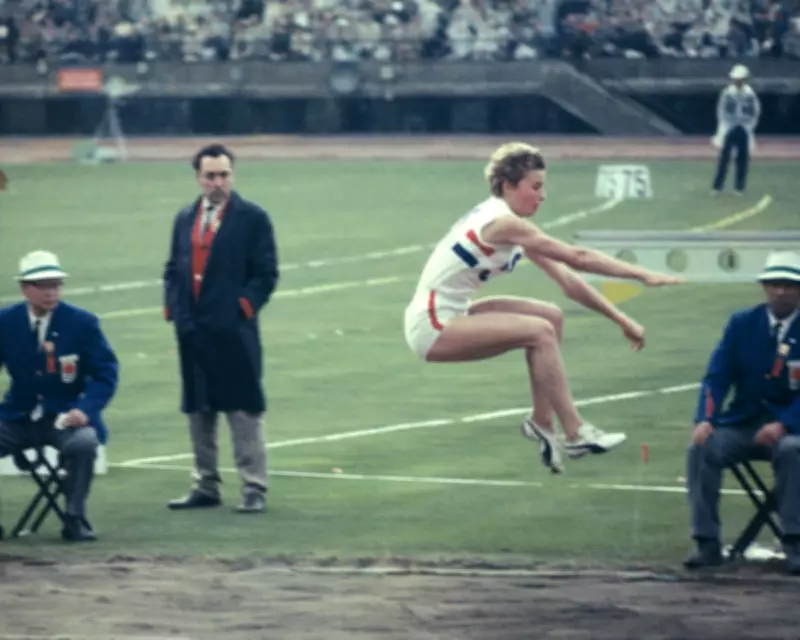
Mary Rand: Britain's Pioneering Olympic Champion
The sporting world mourns the passing of Mary Rand, the trailblazing British athlete who became the first woman from her nation to claim Olympic gold in athletics. Rand, who has died at age 86, achieved legendary status with her historic long jump victory at the 1964 Tokyo Games, where she shattered the world record under challenging conditions.
A Historic Triple Medal Achievement
During that memorable Tokyo competition, Rand not only secured gold in the long jump but also added silver in the pentathlon and bronze in the sprint relay. This remarkable triple medal haul made her the first British athlete ever to win three medals at a single Olympic Games. Her performance transformed her into one of the most celebrated sports figures of the 1960s.
The world record leap of 6.76 meters came despite adverse weather conditions, with Rand competing on a wet cinder track while facing a significant headwind. Her photogenic appearance and charismatic personality made her an instant media darling, with newspapers and television broadcasts following her every move.

Early Life and Athletic Development
Born in Wells, Somerset, Mary grew up in modest circumstances as the daughter of a nurse and a chimney sweep. Her natural athletic talent emerged early, earning her a scholarship to Millfield, Britain's premier sports-focused public school. By age 17, she had already broken the British pentathlon record and claimed All England Schools titles.
"I was always a tomboy," Rand once recalled. "I followed my brothers around, running through orchards in Wells. The scholarship to Millfield changed everything - I found proper coaching there, and the rest became history."
Road to Olympic Glory
Rand's international breakthrough came at the 1958 British Empire and Commonwealth Games in Cardiff, where she won long jump silver. Her journey to Olympic success faced setbacks at the 1960 Rome Games, where she failed to medal despite entering as a favorite. The subsequent press criticism fueled her determination for Tokyo.
In Japan, Rand shared accommodations with fellow athletes including Mary Peters and Ann Packer, who later described her as "the most gifted athlete I ever saw. There never has been anything like her since, and I don't think there will be again."
Life Beyond the Podium
Following her Olympic triumph, Rand continued to dominate British athletics, winning multiple national titles across various disciplines. She claimed long jump gold at the 1966 Commonwealth Games in Jamaica before an Achilles tendon injury ended her competitive career prematurely.
Her personal life included marriages to Olympic rower Sid Rand, decathlon champion Bill Toomey, and finally John Reese until his death in 2019. She settled permanently in the United States, living near Reno, Nevada in her later years.
Legacy and Recognition
Despite achieving fame during an era of strict amateurism that prevented commercial endorsements, Rand received numerous honors including the BBC Sports Personality of the Year award in 1964, an MBE the following year, and induction into the England Athletics Hall of Fame in 2009. Before the 2012 London Olympics, she received a hero's welcome in her hometown of Wells, where she was granted the freedom of the city.
Mary Rand's pioneering achievements paved the way for generations of British female athletes, leaving an indelible mark on Olympic history and national sporting identity. She is survived by her three daughters.