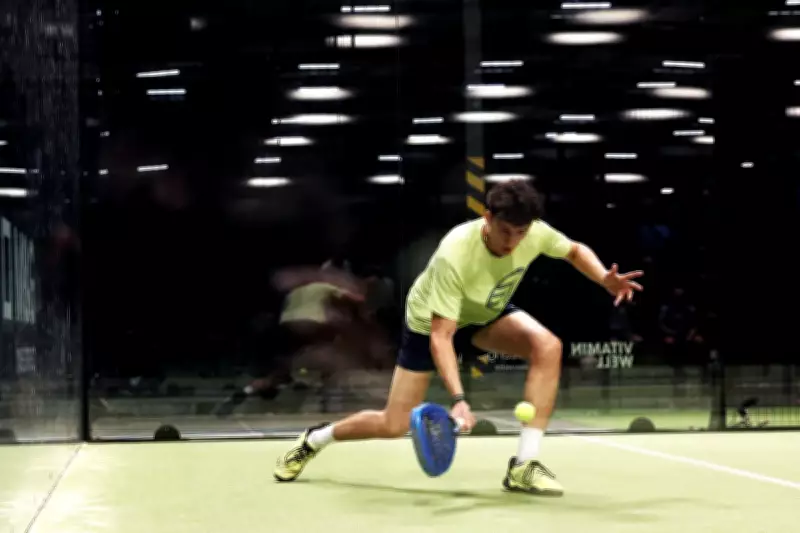
Padel's UK Boom Enters Critical Build Phase After Rapid Growth
Padel has not taken off in the United Kingdom by mere chance. Its swift ascent can be attributed to perfect timing, capitalizing on a post-pandemic era where individuals sought active, social, and straightforward recreational activities. The sport, easy to learn and played in intimate groups, attracted a fresh audience, including many who had never before handled a racket.
Investment and Momentum in Padel
Following this initial surge, significant investment has flowed into the padel sector. New courts have been constructed, dedicated venues have opened their doors, and participation rates have consistently climbed. This momentum is now evident at the elite level, with London preparing to host its inaugural Premier Padel event this summer, underscoring the UK's rapid integration into the global padel calendar.
The latest statistics from the Lawn Tennis Association (LTA) reinforce this positive trajectory, indicating that over 800,000 people across Britain are now engaged in the sport. However, growth alone does not tell the complete narrative. The crucial question now revolves around the foundational elements supporting this expansion.

Navigating Risks and Opportunities
One of the most significant risks for padel in the UK is the assumption that demand will automatically foster a sustainable market. History offers a cautionary tale from Sweden, where unchecked rapid expansion and heavy investment led to a dramatic boom-and-bust cycle. Clubs were erected too hastily, often lacking a clear long-term operational model, resulting in numerous failures.
The UK, being at an earlier developmental stage, faces both an opportunity and a risk. A key distinction lies in the involvement of governing bodies. Here, padel operates under the umbrella of the LTA, unlike Sweden's market-driven, standalone development. This structured approach has fostered a clearer emphasis on infrastructure and a more measured pace of growth, aiming to establish a stable foundation for the future.
Addressing Key Challenges
Nevertheless, maintaining discipline is essential. Several genuine challenges must be addressed for padel to progress beyond its current phase. Cost remains a primary concern. Currently, regular participation can be expensive, particularly where court availability is limited and demand is high. While this is typical for a sport in its early growth stages, long-term success necessitates greater accessibility. Expanding the use of public spaces, coupled with enhanced support from the LTA and government initiatives, will be pivotal in achieving this goal.
Capacity presents another hurdle. Simply put, there are insufficient courts in many regions to meet existing demand. This creates barriers for new players and constrains the sport's potential for sustainable growth.
Developing Elite Pathways
On the performance front, the UK is still cultivating its pathway for elite players. Although there are encouraging signs, a historical lack of funding and infrastructure has placed British athletes behind some European counterparts. This landscape is beginning to shift. More structured support is emerging within the sport, including initiatives from organizations like VVV Sports, which is investing in player development and competition frameworks.
Emerging talents such as Catherine Rose, Tia Norton, and Christian Medina Murphy represent the next wave of British padel players. However, these systems require time to mature, and top-level results are likely to follow rather than lead this developmental process.
The Path Forward for Padel
All these factors point to a singular conclusion: padel's initial growth phase is largely concluded. What lies ahead is a critical build phase that will determine whether the sport can transform its current momentum into a lasting legacy.

This entails strategic investment in appropriate infrastructure, the creation of sustainable venues, and robust support for players at all levels. If these elements are successfully implemented, the UK possesses a genuine opportunity. Padel is not merely a fleeting participation trend; it is a sport that aligns with contemporary preferences—social, accessible, and flexible. The present opportunity is to ensure that the surrounding structures are built to endure. If achieved, this marks only the beginning of padel's promising journey in the UK.