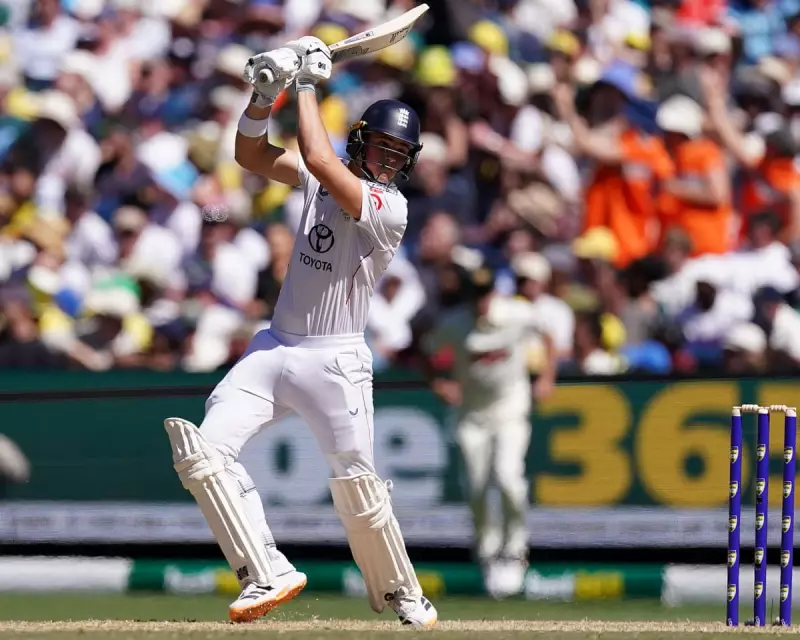
Former England batter Mark Ramprakash has criticised the team's handling of young prospect Jacob Bethell during what he describes as a "bewildering" Ashes tour of Australia, arguing that selectors have failed to support a talented but inexperienced player.
A Tough Ask For A Young Talent
Ramprakash expressed particular frustration at seeing Jacob Bethell thrown in to bat at number three during the fourth Test in Melbourne. Drawing from his own experiences of being elevated up the order early in his career, Ramprakash highlighted a stark contrast in approach. "They did everything they could to help me succeed and find my feet, and I feel England have done the opposite with Bethell," he stated.
While acknowledging Bethell is highly rated, plays quick bowlers well and possesses a good temperament, Ramprakash emphasised the batter's youth and inexperience. Walking out just 15 balls into England's first innings represented a "really tough ask" for the youngster. The pundit conceded that Test cricket is inherently tough, but argued that if selectors have faith in a young player, they should create an environment to help them succeed, not hinder it.

Positives Amid The Confusion
Amid the criticism of Bethell's treatment, Ramprakash identified several bright spots for England in their Melbourne victory. He praised the opening partnership of Zak Crawley and Ben Duckett in the second innings, who enjoyed the clarity of chasing a small target. Bethell himself, batting at number four due to Brydon Carse's surprise promotion, looked assured and displayed a calmness at the crease that contrasted with some of his predecessors.
The greatest bonus from the game was fast bowler Josh Tongue, whom Ramprakash labelled as the big success story of the talent identification system under managing director Rob Key. Tongue's seven-wicket haul was built on brilliant execution of the basics: a simple run-up and a high release point that makes him difficult for right-handed batters to line up.
Ramprakash also credited Brydon Carse for rediscovering a good length after being punished earlier in the series, and expressed hope that Matt Potts, likely to play in Sydney, can learn from how Australia's Pat Cummins successfully returned from a lengthy spell without match practice.
A Tour Marred By Self-Inflicted Wounds
Ramprakash did not shy away from criticising the broader management of the tour. While acknowledging the team's ability to shake off negative headlines about a mid-series trip to Noosa and focus on cricket, he was blunt about where responsibility lay. "It's tinged with the knowledge that this was a situation of their own making. There's no one else to blame here," he wrote.
He argued that the negative press was effectively written by England's own coaches and management for sanctioning a "lads' trip by the sea" in the middle of the biggest series of the players' lives. The entire episode was, in his view, "very hard to comprehend".
As the series moves to its final Test in Sydney, with the Ashes already lost, Ramprakash concluded that while the destiny of the urn is decided, the future of the England setup and those responsible for it remains "all to play for". The tour has been both bewildering and disappointing, but the Melbourne victory and the emergence of players like Tongue offer fragile hope for ending on a high.