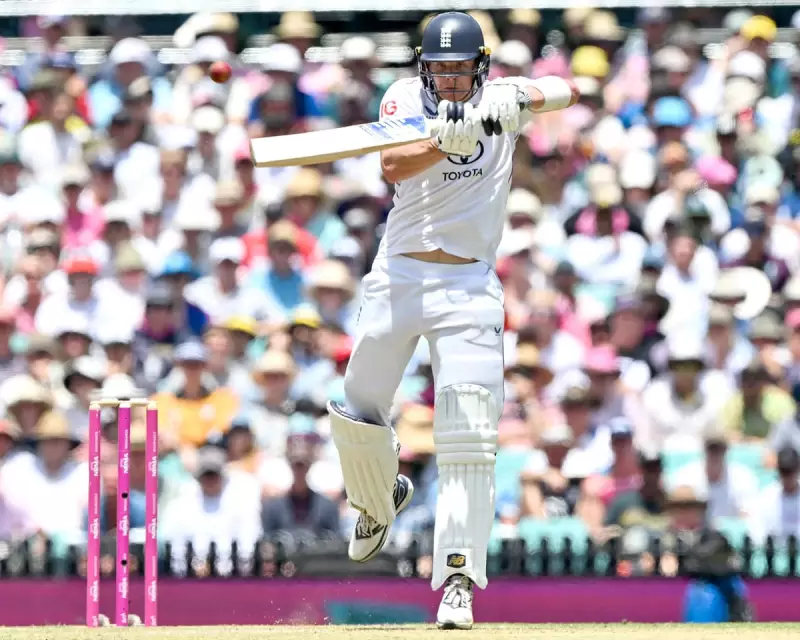
The meek concession of the Ashes series by England has been labelled a waste of talent, and one moment on the second day in Sydney has come to symbolise the entire structural failure. It was the shot heard around the world, a brain-fade that triggered a collapse and laid bare the team's vulnerabilities.
The Shot That Changed the Session
Just a quarter of an hour before lunch at the Sydney Cricket Ground, England were in a commanding position at 320 for 5. Joe Root was unbeaten on a masterful 128, and wicketkeeper Jamie Smith was looking settled on 41. The pair were building a partnership, putting pressure back on the Australian bowlers.
With Australia waiting for the new ball, part-time spinner Travis Head and the occasional medium pace of Marnus Labuschagne were operating. Labuschagne, in particular, was serving up unthreatening deliveries. One ball was so short it was called a wide, drawing laughter from the crowd. The mood was relaxed, with thoughts turning to lunch.

A Moment of Madness at the SCG
What happened next was a moment of pure cricketing chaos. Labuschagne bowled another loopy, short delivery. Smith decided to attack, reaching up and losing his balance as he played a wild, cross-batted forehand. The contact was poor, sending the ball in a gentle arc to Scott Boland at mid-on, the only fielder in front of square on the leg side.
The crowd gasped in unison. Labuschagne leapt in disbelief. Smith walked off despondently, knowing a position of strength had been squandered. Three overs later, it was lunch. Soon after, the English tail was exposed to the new ball. The innings unravelled, losing 5 wickets for just 62 runs, handing momentum decisively back to Australia.
A Symptom of a Bigger Problem
While the shot itself was poor, the context made it worse. Smith had already enjoyed slices of luck, edging over the slips and spooning a pull shot. At the other end, Root was a picture of serene control. The game was whispering for caution, but the message wasn't heeded.
This incident is seen not as an isolated error, but as a visible symptom of England's regime under Brendon McCullum and Ben Stokes. Critics argue the endlessly aggressive, yet sometimes vague, messaging—'play your natural game', 'create impact'—leaves players underprepared for nuanced match situations. It is a structural failure, where talent is being wasted by a one-note philosophy.
There is precedent. Last summer against India, Smith hit three sixes then skied a fourth trying to save a Test. He was praised for 'sticking to his guns'. In Adelaide this series, on 60, he holed out attempting a huge shot off Mitchell Starc with the game in the balance. Again, the leadership defended the intent.
The concern is that a talented player like Smith, who holds the highest Test batting average of any England wicketkeeper, is producing below his potential. The shot in Sydney was the punchline to an era, a stark illustration of good intentions undermined by sloppiness and a lack of situational awareness. As England left the field, the damage of the brain-fade was already spreading across the scoreboard and the series.